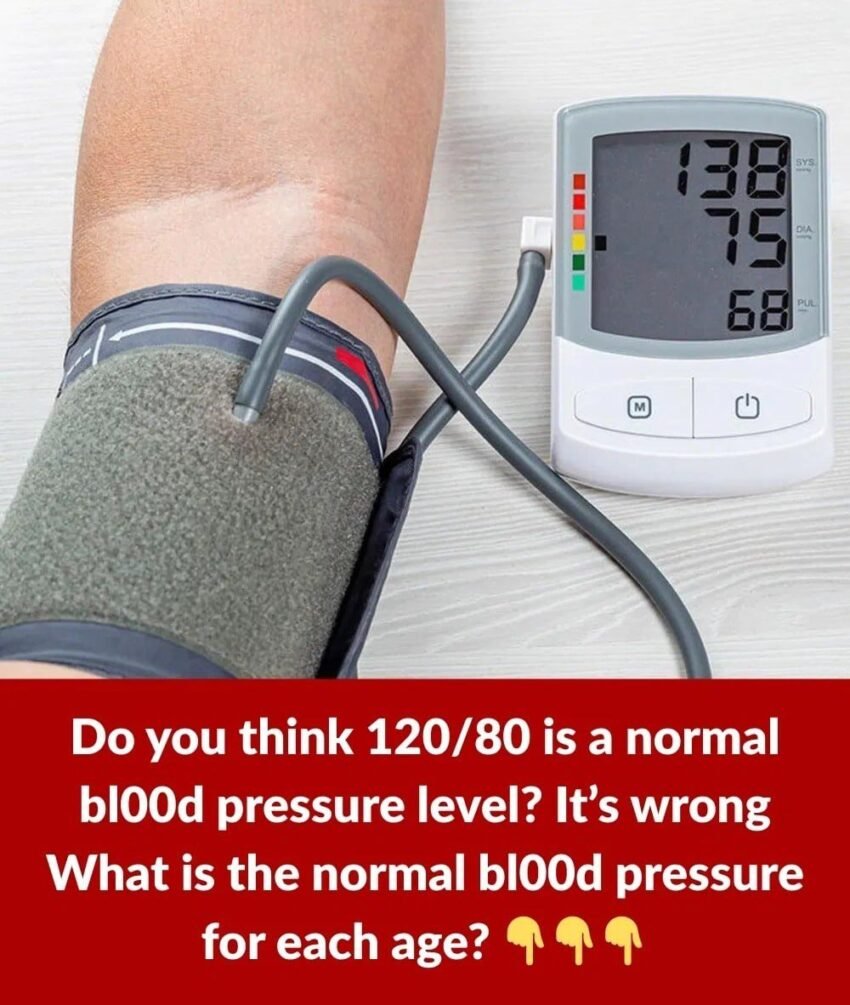
The “everyone has made this mistake” framing is just clickbait. Blood pressure isn’t defined as a totally different normal for each age in the way viral posts suggest. Instead, there’s a standard healthy range for most people, with only modest variation across age groups.
The condition doctors are mainly concerned about is Hypertension, which is when readings stay consistently too high.
What Is Normal Blood Pressure?
Blood pressure is measured as:
- Systolic (top number): pressure when the heart beats
- Diastolic (bottom number): pressure when the heart rests
Standard Adult Classification (Most widely used)
- Normal: below 120/80 mmHg
- Elevated: 120–129 / below 80
- High blood pressure (Stage 1): 130–139 / 80–89
- High blood pressure (Stage 2): 140/90 or higher Hypertension
Blood Pressure by Age (Typical Ranges, Not Strict Rules)
Children (approximate ranges)
Children’s blood pressure depends on age, height, and sex:
- 1–5 years: ~80–110 / 50–80
- 6–12 years: ~90–120 / 60–80
Doctors use percentile charts, not fixed numbers.
Teenagers (13–19 years)
- Around: 100–125 / 60–80
- Gradually approaches adult levels
Adults (20–59 years)
- Ideal: below 120/80
- Common healthy range: 110–130 / 70–85
Even if slightly higher with age, this is still monitored under adult guidelines.
Older Adults (60+ years)
- Often slightly higher due to stiffer arteries:
- Common range: 120–140 / 70–90
- However, many guidelines still aim for below 130/80 if possible, depending on health conditions
Important Reality Check
- There is no age where high blood pressure becomes “normal”
- Age can slightly change averages, but not safe limits
- Persistent readings above 130/80 may still require attention depending on risk factors
The main risk condition remains Hypertension, which increases the risk of heart disease and stroke.
When Blood Pressure Is Dangerous
Seek medical help if:
- Consistently above 140/90
- Sudden spike above 180/120
- Symptoms like chest pain, severe headache, confusion, or vision changes
Bottom Line
“Normal blood pressure by age” is mostly a myth used in viral posts. The key standard is:
- Around 120/80 mmHg or lower for most adults
Age may slightly shift averages, but it does not change what is considered healthy.
If you want, I can also show a simple chart to help you track your blood pressure at home correctly.