Common causes
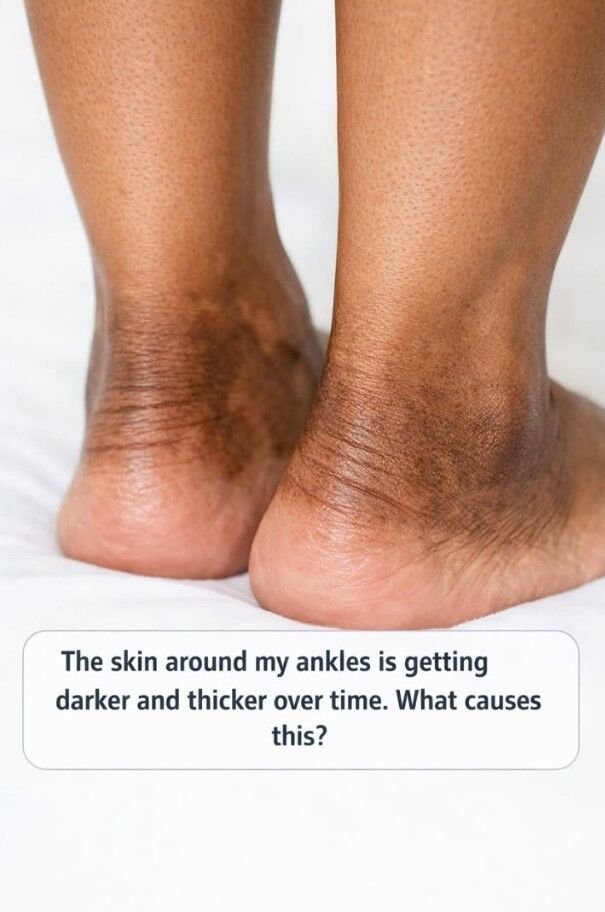
1. Chronic venous insufficiency (most common cause)
This happens when the veins in the legs don’t return blood efficiently back to the heart.
What you may notice:
- Brown or dark discoloration around ankles (often both sides)
- Skin becomes thick, tight, or “leathery” over time
- Swelling in the lower legs or ankles
- Itching or heaviness in legs
- Varicose veins may be present
Why it happens:
Blood pools in the lower legs, causing leakage of iron pigments (hemosiderin) into the skin, which leads to darkening and inflammation over time.
2. Repeated friction or irritation
- Tight shoes, sandals, or socks
- Frequent rubbing or scratching
- Long-standing dryness
This can cause:
- Thickened skin (like calluses)
- Gradual darkening (post-inflammatory hyperpigmentation)
3. Eczema or chronic skin inflammation
Conditions like eczema can lead to:
- Itching and scratching
- Thickened, darkened skin over time (lichenification)
4. Diabetes-related skin changes
In some people with long-standing diabetes:
- Poor circulation can contribute to skin darkening
- Repeated minor injuries heal slowly and may leave pigmentation
Not specific to diabetes alone, but important if other symptoms exist.
5. Fungal infection (less common for thickening alone)
Sometimes chronic fungal infections can:
- Darken skin
- Cause scaling or itching
But usually do not cause strong thickening unless long untreated.
6. Other less common causes
- Obesity (increases pressure in leg veins)
- Previous injury or inflammation
- Rare skin conditions
When to take it more seriously
You should consider a medical check if you notice:
- Swelling in legs or ankles
- Pain, heaviness, or cramps when standing
- Skin ulcers or slow-healing wounds
- Rapid progression of discoloration
- One leg worse than the other
These can suggest vascular (vein) problems that may need treatment.
What you can do in the meantime
If it’s mild or early:
- Elevate your legs when resting
- Walk regularly to improve circulation
- Avoid long periods of standing or sitting
- Use moisturizing creams to reduce thickening
- Avoid tight footwear
Compression stockings may help if venous issues are suspected, but it’s better to confirm with a doctor first.
Conclusion
The most common reason for dark, thick skin around the ankles is poor vein circulation in the legs, but friction, skin conditions, or metabolic issues can also contribute. Because circulation-related causes can progress over time, it’s worth getting it checked if it’s persistent or worsening.
If you want, you can describe whether there is swelling, itching, or varicose veins, and I can help narrow down the most likely cause.