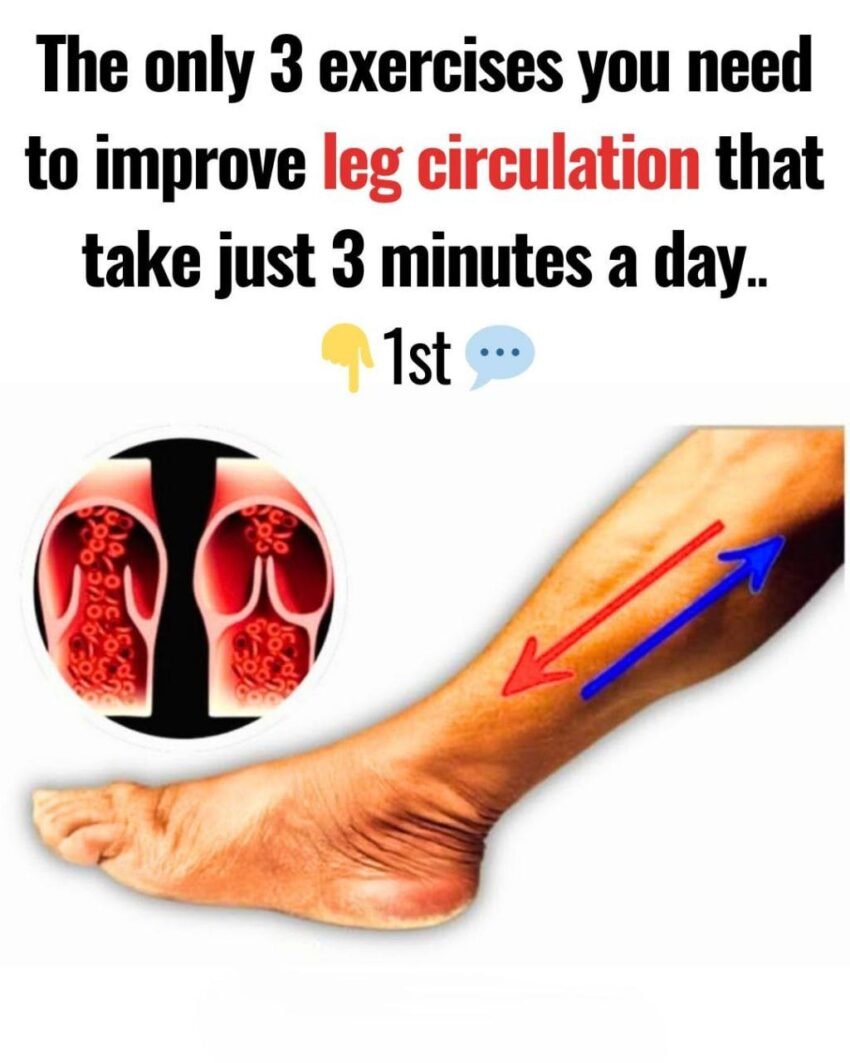
First: what “poor leg circulation” usually means
People often mean:
- heaviness or aching in legs
- swelling around ankles
- visible varicose veins
- cramps or fatigue when walking
True arterial blockage is less common; most everyday symptoms are from vein return problems or inactivity, not blocked arteries.
3 simple movements that actually help circulation
These don’t “cure” anything, but they do improve blood flow when done consistently:
1) Ankle pumps
- Sit or lie down
- Point toes away, then pull them toward you
- Repeat 20–30 times
Why it works: activates the calf muscle “pump,” which pushes blood upward toward the heart.
2) Heel raises (calf raises)
- Stand holding a chair for balance
- Rise onto your toes, then lower slowly
- Do 10–20 repetitions
Why it works: strengthens calf muscles, which are key for venous return.
3) Leg elevation
- Lie down and raise legs above heart level
- Hold for 1–3 minutes
Why it works: uses gravity to reduce pooling of blood in the lower legs.
Important reality check
These exercises:
- improve circulation efficiency
- reduce swelling and heaviness
- support vein function
But they do not replace medical treatment if there is:
- significant vascular disease
- diabetes-related circulation problems
- arterial blockages
- severe varicose veins
When to get checked
See a doctor if you have:
- one leg swelling more than the other
- persistent pain when walking
- cold or discolored feet
- non-healing wounds
Bottom line
There is no magical “3-minute cure,” but simple calf activation + ankle movement + leg elevation is genuinely one of the most effective quick routines to support leg circulation.
If you want, I can turn this into a daily 5-minute routine for seniors or desk workers that also helps prevent swelling and nighttime cramps.