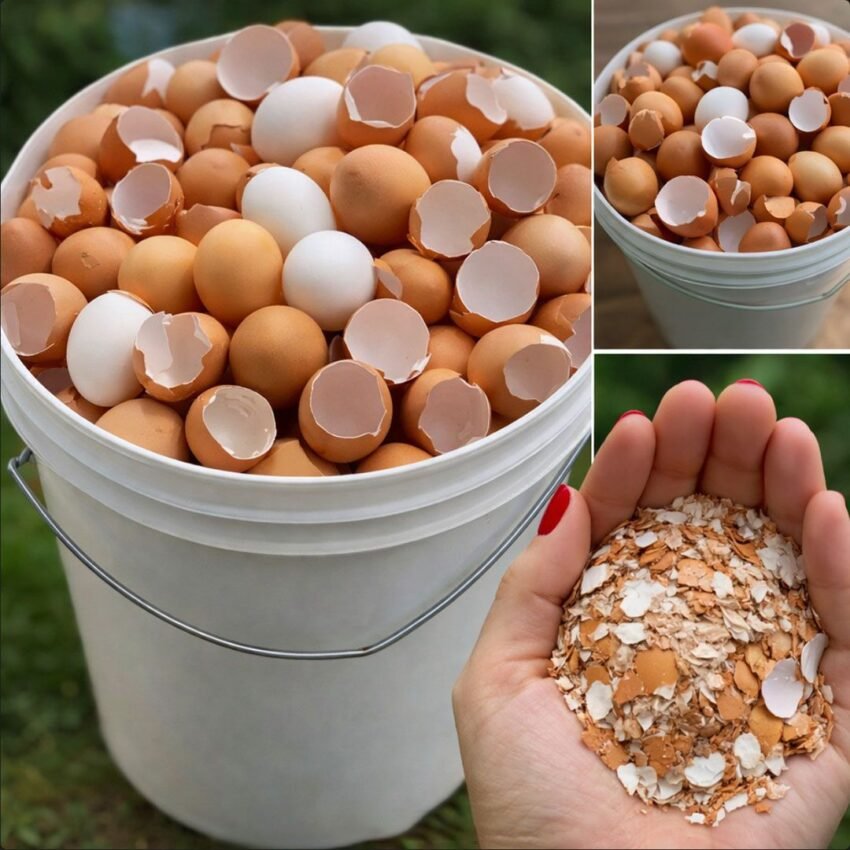
That “stop throwing them away” line is usually referring to Eggshells, which actually do have a few practical uses—but some claims online are exaggerated.
Here’s what they are really good for, and how to use them safely:
🥚 What eggshells are useful for
1) Natural calcium source (limited but real)
- Eggshells are mostly calcium carbonate
- Can support calcium intake in theory, but:
- absorption is not very efficient
- not a replacement for dairy or supplements
👉 Sometimes used in powdered form in traditional remedies, but should be done carefully.
2) Garden fertilizer 🌱 (most effective use)
- Crushed eggshells add slow-release calcium to soil
- Help prevent issues like:
- blossom end rot in tomatoes and peppers
- Improve soil structure over time
3) Pest deterrent
- Crushed sharp pieces can deter:
- slugs
- snails
- Works best in dry gardens, needs reapplication
4) Cleaning abrasive
- Crushed shells + a little soap = mild scrubbing agent
- Can help clean:
- jars
- stubborn stains in bottles
5) Compost booster
- Adds minerals to compost pile
- Breaks down slowly, enriching compost long-term
⚠️ Important: how to prepare them safely
If you want to reuse eggshells, don’t use them raw.
Step 1: Clean
- Rinse thoroughly to remove egg residue
Step 2: Sterilize (important)
Choose one:
- Boil for 5–10 minutes OR
- Bake at 180°C for 10–15 minutes
Step 3: Dry and crush
- Crush into small pieces for garden use
- Or grind into fine powder if using for supplementation (only with caution)
❌ Common myths to avoid
- “Eggshells alone can replace calcium tablets” → not reliable
- “You can eat raw crushed shells safely” → risk of bacteria like Salmonella if not sterilized
- “They dissolve instantly in the body” → they don’t; absorption is limited
🧠 Bottom line
Eggshells aren’t trash—but they’re best seen as a garden and household resource, not a strong medical supplement.
If you want, I can also show:
- 5 surprising kitchen waste items you can reuse safely
- or a simple guide to turning eggshells into a safe calcium powder step-by-step