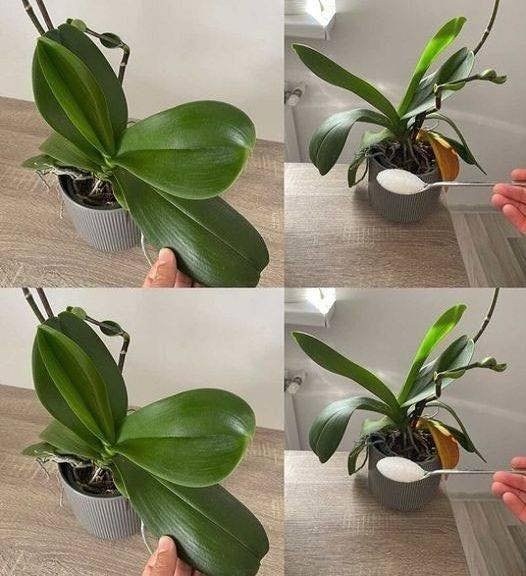
What’s wrong with the “1 tablespoon miracle fertilizer” claim
- It doesn’t specify what fertilizer or concentration
- Orchids are very sensitive to over-fertilizing
- A single dose cannot trigger continuous blooming
- “Non-stop blooming” is biologically unrealistic for most orchids
In fact, too much fertilizer can burn orchid roots and reduce flowering.
What actually helps orchids bloom
1. Proper Light
Orchids need bright, indirect light. Too little light is one of the most common reasons they don’t flower.
2. Correct Temperature Difference
Many Orchid species need:
- Warm days
- Slightly cooler nights
This temperature shift often triggers blooming.
3. Light, Regular Fertilizing
Instead of a “1 tablespoon trick,” experts recommend:
- Balanced orchid fertilizer (e.g., 20-20-20 or orchid-specific mix)
- Weak dilution (often 1/4 to 1/2 strength)
- Every 1–2 weeks during active growth
Overfeeding is worse than underfeeding.
4. Proper Watering
- Water when roots turn silvery
- Avoid leaving roots sitting in water
- Good drainage is essential
5. Rest Periods
Orchids naturally have:
- Bloom phases
- Rest phases
“Non-stop blooming” does not match their natural cycle.
Common viral “fertilizer tricks” you should be careful with
People often promote:
- Sugar water
- Banana peel water
- Vinegar mixes
- “1 spoon miracle solutions”
These are not scientifically proven for orchids and can encourage bacteria or root rot.
Bottom line
An Orchid will not bloom continuously from a single tablespoon of anything. Healthy, repeated flowering comes from consistent care, especially light and proper diluted feeding over time—not shortcuts.
If you want, I can give you a real orchid blooming schedule that actually helps Phalaenopsis orchids rebloom reliably.