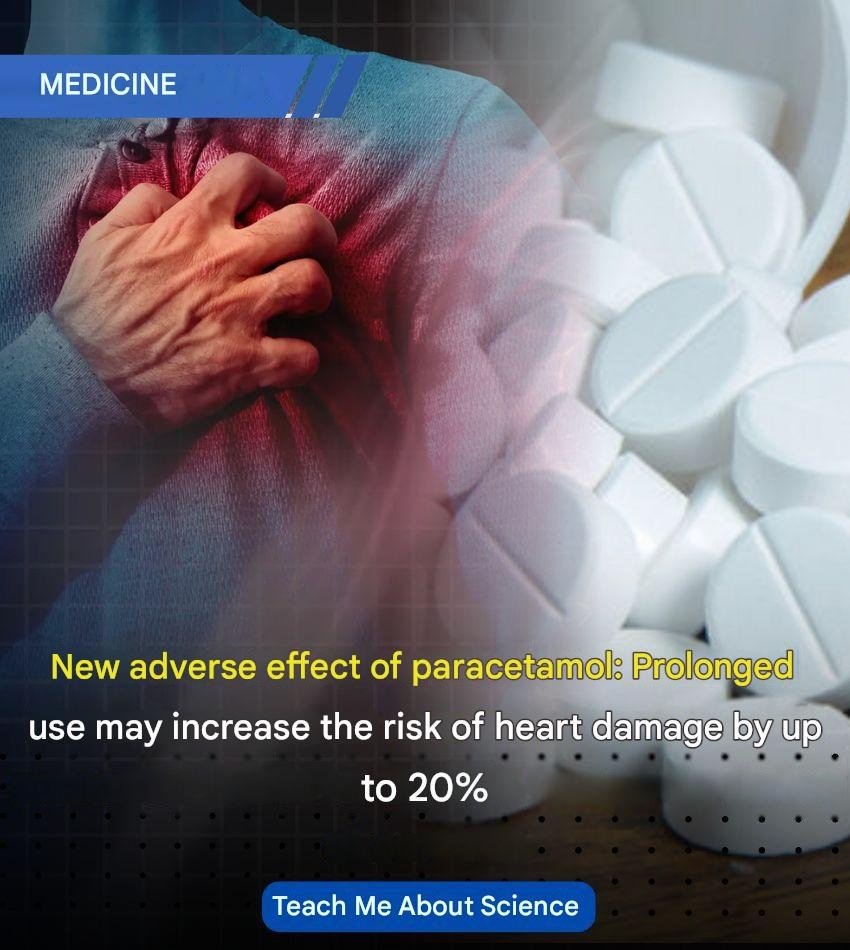
Claim: “Paracetamol increases heart damage risk by 20%” — What’s actually true?
This statement is partly based on real research, but it’s misleading if taken at face value. Here’s the accurate breakdown.
Where the “20% risk” comes from
A clinical study found that long-term use of paracetamol (acetaminophen) can raise blood pressure in some people—especially those who already have hypertension.
Since high blood pressure is a major risk factor for heart disease and stroke, researchers estimated this could increase cardiovascular risk by about 20%.
👉 Important:
- This is an indirect risk (via blood pressure)
- Not direct “heart damage” caused by the drug itself
What newer research suggests
- Some observational studies link long-term, high-dose use to higher rates of:
- Heart problems
- Stroke
- Kidney disease
- Risk appears to increase with dose and duration (the more and longer you take it, the higher the risk).
- In specific groups (like older adults or those with heart conditions), there may be stronger associations with cardiovascular events.
What the claim gets wrong
1. It’s not about normal use
- Occasional use (for fever, headache, etc.) is still considered safe for most people
- The concern is regular, long-term use (e.g., daily for chronic pain)
2. It’s not proven “cause = effect”
- Many studies show association, not direct causation
- People taking paracetamol long-term often already have health issues, which can skew results
3. It’s not a universal 20% risk
- That figure applies to specific study conditions, not everyone
- Risk varies based on:
- Age
- Existing health conditions
- Dose and duration
Practical takeaway
- ✔ Safe: occasional use for pain or fever
- ⚠ Use caution: daily or long-term use, especially if you have:
- High blood pressure
- Heart disease
- Kidney issues
- ✔ Best approach:
- Use the lowest effective dose
- Avoid prolonged use without medical advice
Bottom line
The headline is over-sensationalized. A more accurate version would be:
Long-term, regular use of paracetamol may slightly increase cardiovascular risk in some people—mainly by raising blood pressure—not by directly “damaging the heart.”
If you want, I can break down which painkillers are safer alternatives depending on your situation.