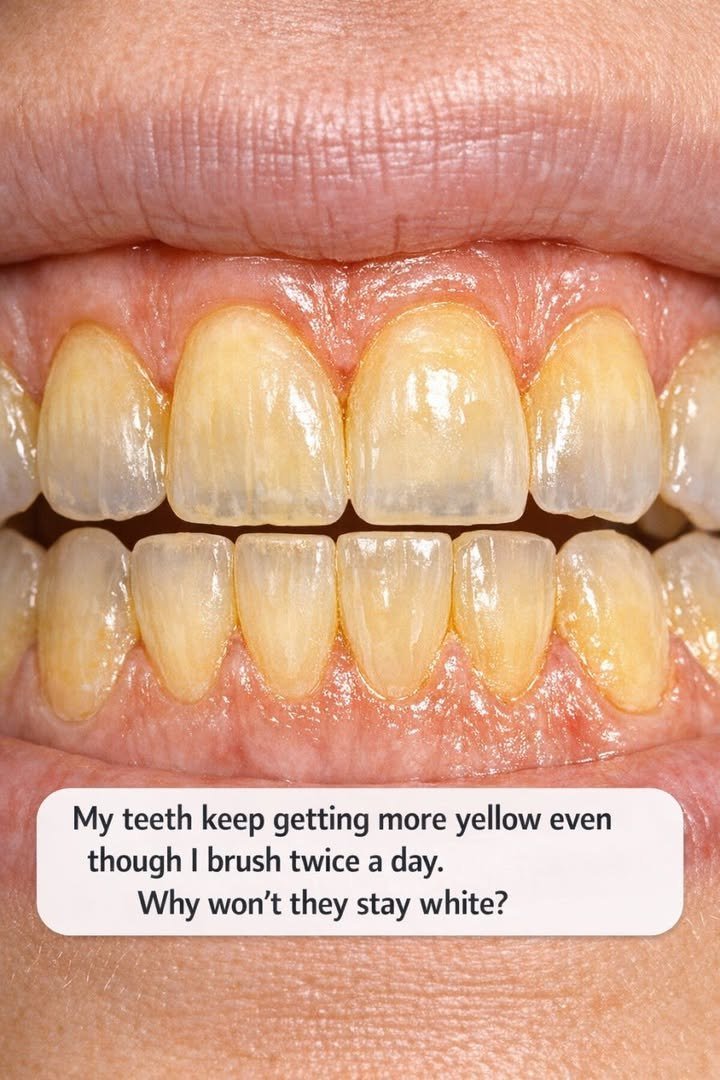
Brushing twice a day is good, but it doesn’t guarantee white teeth. Yellowing can still happen for several reasons—some completely normal and others fixable.
1. Surface Stains Build Up Over Time
Even with regular brushing, certain foods and drinks stain enamel:
- Tea, coffee, cola
- Spices (like curry, turmeric)
- Smoking
These stains can gradually make teeth look yellow. Regular toothpaste often isn’t strong enough to fully remove them.
2. Your Enamel May Be Thinning
The outer layer of your teeth (enamel) is naturally white, but underneath is dentin, which is yellow.
As enamel wears down, more of the yellow dentin shows through. This can happen due to:
- Aggressive brushing
- Acidic foods and drinks (sodas, citrus)
- Teeth grinding
3. Plaque and Early Tartar
If plaque isn’t fully removed, it can harden into tartar, which looks yellow or brown—especially near the gums. Brushing alone can’t remove tartar once it forms.
4. Your Toothpaste Might Not Be Doing Much
Some toothpastes are mainly for cavity protection, not whitening. If yours doesn’t contain mild polishing agents or whitening ingredients, it won’t noticeably brighten your teeth.
5. Technique Matters More Than Frequency
Brushing twice daily is good, but:
- Are you brushing for a full 2 minutes?
- Are you reaching the gumline and back teeth?
- Are you flossing daily?
Poor technique leaves behind plaque that dulls color.
6. Natural Tooth Color Varies
Not everyone has naturally bright white teeth. Some people naturally have slightly yellow-toned dentin, and that’s completely normal.
7. Age-Related Changes
Teeth tend to yellow gradually with age as enamel thins and stains accumulate.
What You Can Do
Improve Cleaning
- Use proper brushing technique (gentle, circular motions)
- Floss daily
- Consider an electric toothbrush
Reduce Staining
- Rinse your mouth after tea/coffee
- Use a straw for staining drinks
Try Safe Whitening Options
- Whitening toothpaste (for mild stains)
- Over-the-counter whitening strips
Get a Professional Cleaning
A dentist can remove tartar and deep stains—this alone can make a big difference.
When to Look Deeper
If yellowing is sudden or uneven, or you notice sensitivity or spots, it’s worth getting checked—there could be enamel damage or other issues.
Bottom Line
Brushing keeps teeth clean and healthy, but whitening depends on diet, enamel condition, and stain buildup. The issue usually isn’t that brushing “isn’t working”—it’s that whitening requires a slightly different approach.
If you want, tell me your routine and I can point out exactly what might be causing it in your case.