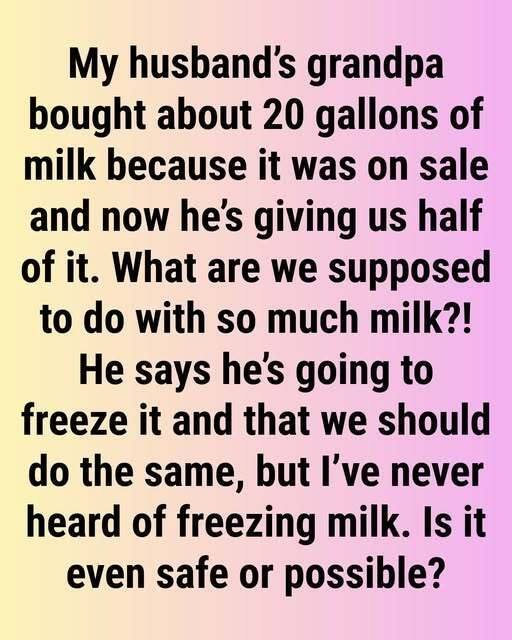
Yes—freezing milk is safe and commonly done, but there are a few things you should know so you don’t end up wasting it.
Can you freeze milk?
Yes. Milk freezes safely at home and remains safe to drink after thawing as long as it was fresh when frozen and handled properly.
It works best with:
- Cow milk (whole, 2%, skim)
- Pasteurized store-bought milk
What changes after freezing?
Freezing does NOT make milk unsafe, but it can change:
- Texture may become slightly grainy or separated
- Fat and water can separate when thawed
- Taste is usually fine after mixing well
- Color stays the same
These changes are normal, not spoilage.
How to freeze milk properly
- Don’t freeze in a full container
Milk expands when frozen, so leave space (about 10–15% empty). - Use airtight containers
Or freezer-safe bottles. - Label it
Write the date so you use older milk first. - Freeze quickly
Put it in the coldest part of the freezer.
How to thaw milk safely
- Thaw in the refrigerator (best method)
- Shake or stir well after thawing
- Use within 2–3 days after thawing
- Do NOT refreeze once thawed
How long can frozen milk last?
- Best quality: up to 1 month
- Still safe: up to 3 months in a freezer (0°F / -18°C or below)
When NOT to freeze milk
Do not freeze if:
- Milk is already close to expiry or smells off
- It has already been left out too long
- It is repeatedly thawed and refrozen
Practical ways to use excess milk
If you’re overwhelmed by quantity, you can also:
- Make yogurt or curd
- Make cheese or paneer
- Use in baking (cakes, pancakes, muffins)
- Share with neighbors/family
Bottom line
Yes, freezing milk is completely safe and a smart way to handle a large amount. The only downside is a slight texture change, but it’s still fine for drinking and cooking after thawing.
If you want, I can also give you easy recipes to use up milk fast (desserts, drinks, and Pakistani-style options) so nothing goes to waste.