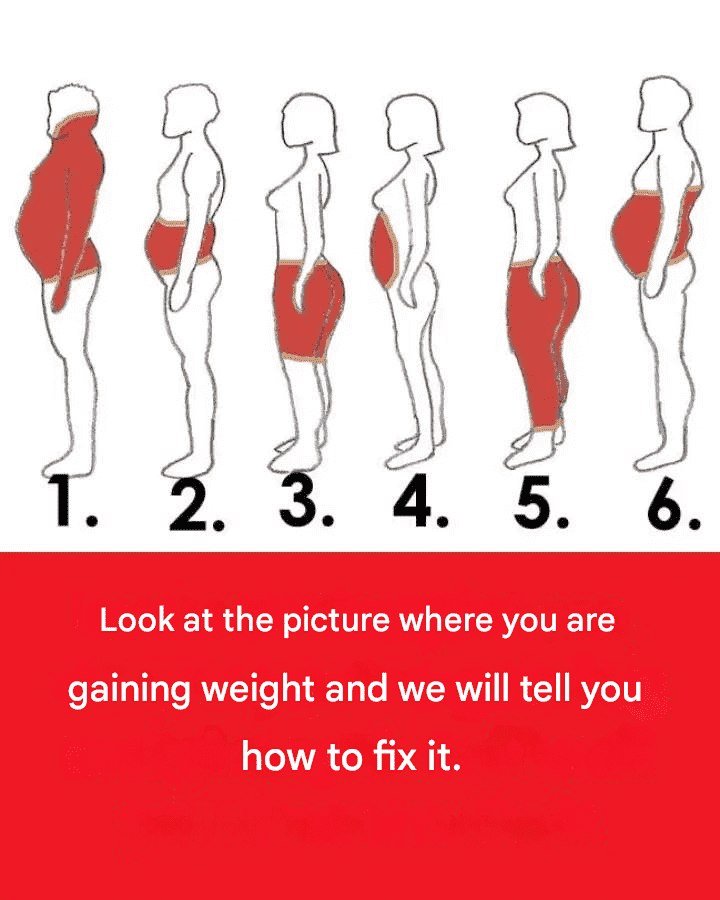
That type of claim is oversimplified. Where you gain weight can give hints about lifestyle or health factors, but it cannot “diagnose” you or provide a one-step fix. Fat distribution is influenced by genetics, hormones, age, sleep, stress, and diet.
Here’s what different patterns can generally suggest—and what actually helps.
1. Belly (abdominal) weight gain
Common links:
- High sugar or refined carb intake
- Stress (high cortisol)
- Low physical activity
- Poor sleep
What helps:
- Reduce sugary drinks and processed foods
- Walk daily + core exercises
- Improve sleep routine
- Manage stress
2. Hip and thigh weight gain
Common links:
- Genetics (very common in women)
- Hormonal patterns
- Lower overall activity
What helps:
- Full-body strength training
- Regular walking or cycling
- Balanced diet (not extreme restriction)
3. Upper body (arms, back, chest)
Common links:
- Overall calorie surplus
- Lack of resistance training
- Sedentary lifestyle
What helps:
- Strength training (upper + lower body)
- Protein-rich balanced diet
- Reduce ultra-processed foods
4. Face or neck weight gain
Common links:
- Water retention (salt, alcohol)
- Poor sleep
- Weight gain overall
What helps:
- Reduce salt and alcohol
- Stay hydrated
- Improve sleep quality
Important truth
There is no “quick fix” based only on where fat appears. Spot reduction (losing fat from one area only) is not possible. Fat loss happens across the whole body through:
- Calorie balance
- Physical activity
- Hormonal and lifestyle improvements
Final truth
Body fat distribution can give clues, but it is not a diagnosis tool. The only reliable way to improve body composition is consistent diet, movement, sleep, and stress management over time.
If you want, I can create a simple fat-loss plan based on your specific body type and lifestyle.