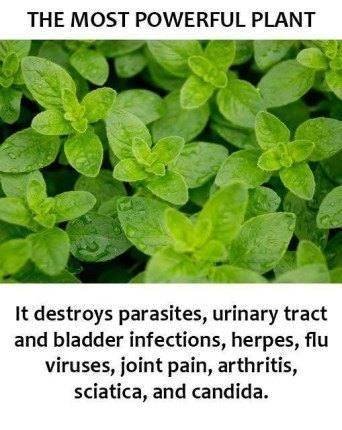
It shows a plant (often oregano or a similar herb) and says it can “destroy” a wide range of serious diseases and infections. That statement is not scientifically valid.
What the claim gets wrong
Saying a plant “destroys” all of these:
- parasites
- urinary tract infections
- herpes
- flu viruses
- arthritis
- sciatica
- candida
…is medically incorrect. These conditions are caused by very different mechanisms:
- Urinary tract infection → usually needs antibiotics when bacterial
- Influenza → viral illness, sometimes antivirals/supportive care
- Herpes simplex → chronic viral infection managed with antivirals
- Arthritis → immune or wear-and-tear condition
- Sciatica → nerve compression, not infection
- Candidiasis → fungal overgrowth, treated with antifungals
A single plant extract cannot realistically treat all of these completely different diseases.
What herbs can do (in reality)
Some plants like oregano, turmeric, garlic, and others may:
- Show mild antimicrobial effects in lab studies
- Support general immune function
- Reduce inflammation slightly
- Be useful as complementary (not primary) support
But “lab dish effects” do not equal curing human diseases.
Why these posts spread
These claims usually:
- Take early lab research or traditional use
- Exaggerate it into “cures everything”
- Remove medical context and dosage limits
- Turn it into viral health content
Bottom line
No plant—including the one in the image—is a universal cure. Serious conditions like infections, nerve pain, or viral diseases require proper diagnosis and targeted treatment, not a single herbal remedy.
If you want, I can break down which natural herbs actually have strong, moderate, or weak scientific evidence, so you can see what’s useful and what’s just internet hype.