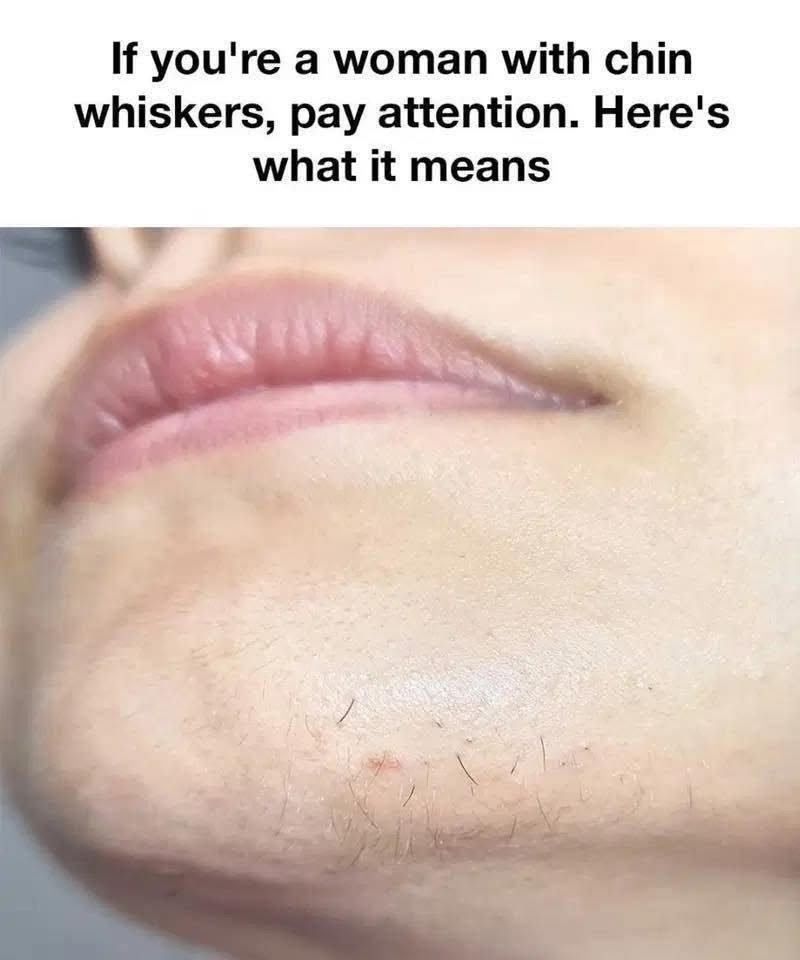
Chin Hair in Women: What It Means and When to Pay Attention
Posts claiming “If you’re a woman with chin whiskers, pay attention” often sound alarming, but the reality is more nuanced. Chin hair in women is usually harmless and very common. In some cases, it can reflect hormonal changes or underlying conditions, but most of the time it is a normal variation.
Normal Causes of Chin Hair in Women
Hormonal variation
Women naturally produce small amounts of androgens (male-type hormones). These can stimulate coarse hair growth on the chin or jawline. Small changes in hormone balance over time can make these hairs more noticeable.
Age-related changes
As women age, especially during perimenopause and menopause, estrogen levels decline. This can shift the balance toward androgens, leading to increased facial hair growth.
Genetics
Family history plays a major role. If close relatives have similar facial hair patterns, it is often inherited rather than medical.
Medical Conditions That Can Contribute
Polycystic ovary syndrome (PCOS)
Polycystic ovary syndrome is the most common medical cause of increased facial hair in women. It is associated with:
- Irregular menstrual cycles
- Acne
- Increased facial or body hair
- Sometimes weight changes or fertility issues
Not all women with chin hair have PCOS, but it is considered if other symptoms are present.
Hormonal imbalances
Conditions affecting the ovaries or adrenal glands can increase androgen levels. These are less common but may lead to more noticeable hair growth.
Medications
Certain medications that influence hormones can sometimes contribute, although this is relatively rare.
When Chin Hair Is Usually Not a Concern
In most cases, chin hair is:
- Gradual in development
- Limited to a few strands
- Stable over time
- Not associated with other symptoms
This is typically considered a normal cosmetic variation rather than a medical issue.
When to Seek Medical Advice
It is worth discussing with a healthcare provider if you notice:
- Sudden or rapid increase in facial hair
- Irregular or missed periods
- New or worsening acne
- Hair thinning on the scalp
- Other signs of hormonal imbalance
These combinations may suggest an underlying condition such as PCOS or other endocrine changes.
Summary
Chin hair in women is usually a normal and harmless occurrence related to hormones, aging, or genetics. While conditions like PCOS can be associated with increased facial hair, most cases do not indicate a serious medical problem. Attention is only needed when hair growth is sudden, rapidly progressing, or accompanied