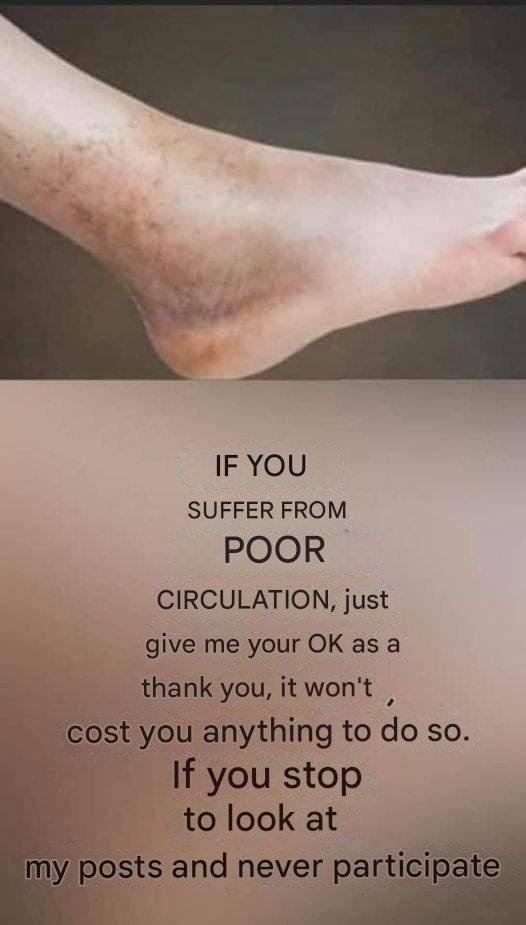
That kind of line—“here is the solution”—is another red flag. Poor circulation isn’t a single problem with a single fix.
When people say “poor circulation in the legs,” they could be talking about very different conditions, like:
- Peripheral Artery Disease (narrowed arteries reducing blood flow)
- Chronic Venous Insufficiency (blood not flowing back up the legs properly)
- Diabetic Neuropathy (often confused with circulation issues)
Each has a different cause—and a different treatment.
Common symptoms people describe
- cold feet or legs
- tingling or numbness
- swelling
- leg pain when walking
- skin discoloration
What actually helps (depending on the cause)
There’s no miracle tea or herb that fixes circulation, but these do have real impact:
1. Movement
Regular walking is one of the most effective ways to improve blood flow—especially for artery-related issues.
2. Managing underlying conditions
- Controlling blood sugar (important for diabetes)
- Lowering cholesterol and blood pressure
3. Compression & elevation
Helpful for vein-related problems like swelling.
4. Medical treatment
In some cases, doctors may prescribe medication—or even procedures to restore blood flow.
About “natural remedies”
Things like herbal teas (including guava leaves) might support general health, but:
- they don’t reopen blocked arteries
- they don’t repair damaged veins
- they don’t reverse nerve damage
When to take it seriously
You shouldn’t ignore symptoms if you have:
- pain in legs while walking that improves with rest
- non-healing wounds on feet
- severe numbness or weakness
Those can signal something that needs proper evaluation.
If you want, describe exactly what the legs “feel like” (numb, heavy, burning, swollen, etc.), and I can help narrow down what’s more likely—and what’s actually worth doing.