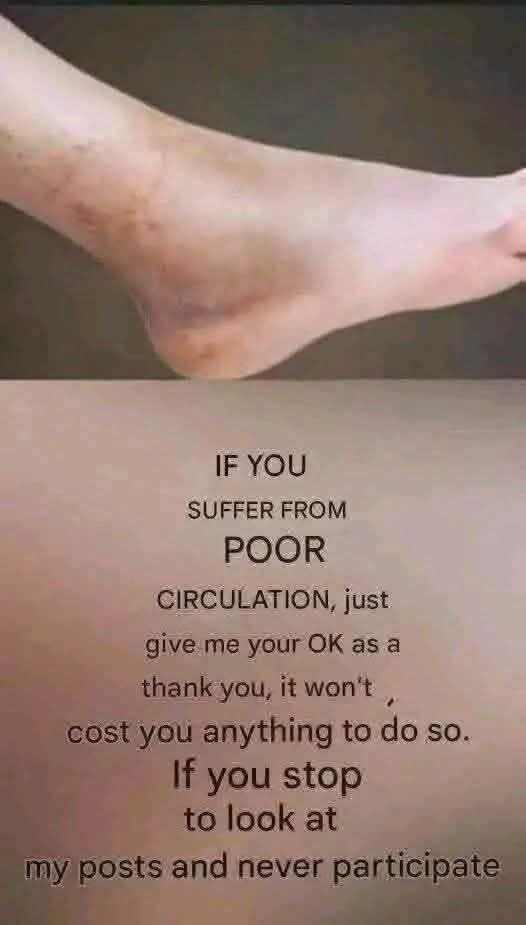
What “poor circulation” actually refers to
Poor circulation usually means reduced blood flow, often related to conditions such as:
- Peripheral artery disease (PAD)
- Venous insufficiency
- Diabetes-related vascular damage
- Sedentary lifestyle effects
These are medical issues, not something a quick remedy can reverse.
Warning signs you shouldn’t ignore
If someone truly has circulation problems in the legs, symptoms may include:
- Leg pain when walking (claudication)
- Numbness or tingling
- Cold feet or legs
- Swelling in ankles or calves
- Slow-healing wounds
Severe cases may indicate a condition like Peripheral Artery Disease, which requires medical evaluation.
Why “one solution fixes it all” claims are misleading
Posts like this usually:
- Show swollen or discolored legs for shock value
- Promise instant reversal
- Promote a tea, supplement, or exercise as a cure
- Ignore underlying medical causes
Real circulation problems don’t work that way.
What actually helps improve circulation
1. Movement and exercise
Regular walking is one of the most effective ways to improve leg circulation. Even short, frequent walks help.
2. Medical management
Depending on the cause, doctors may use:
- Blood pressure control
- Cholesterol-lowering medication
- Blood thinners in some cases
- Treatment for diabetes
3. Lifestyle changes
- Stop smoking (very important)
- Maintain healthy weight
- Reduce long periods of sitting
4. Compression therapy (when appropriate)
Compression socks can help certain venous conditions, but should be used based on medical advice.
Bottom line
If someone is trying to sell a “quick fix” for poor circulation in the legs, it’s not reliable. Circulation problems have real causes and need proper diagnosis.
If you want, I can break down whether a specific remedy or product you’ve seen online is actually safe or just marketing.