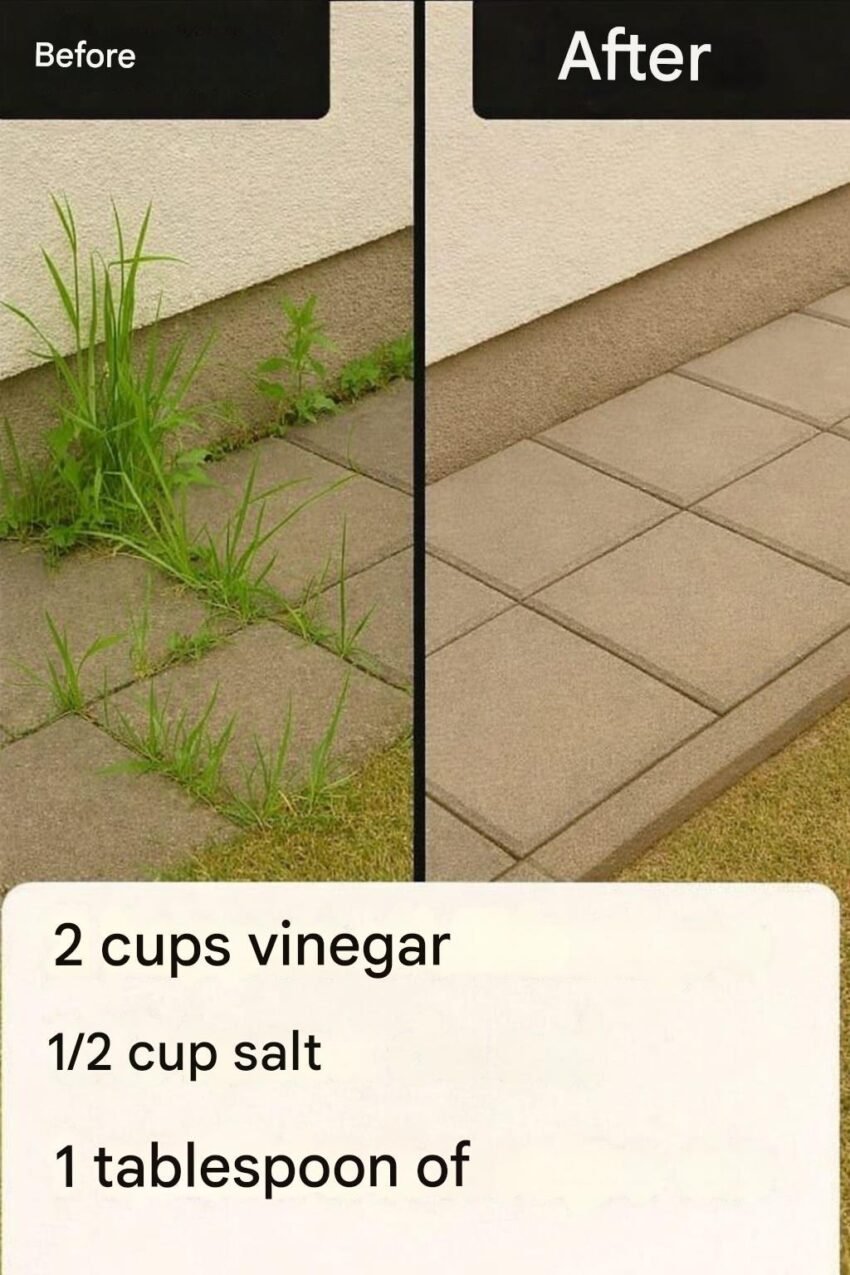
A “super effective homemade herbicide” is usually just a combination of household acids, salt, and surfactants that damage plant tissues. It can work well on small weeds in cracks, paths, and driveways, but it is not selective and can permanently affect soil if misused.
Here is the most commonly used and effective DIY version.
🌿 Homemade Non-Selective Herbicide (Basic Recipe)
Ingredients
- White vinegar (5–10% acetic acid)
- Table salt (sodium chloride)
- Dish soap (acts as a surfactant)
🧪 Mixing Instructions
- 1 liter of white vinegar
- 2–3 tablespoons of salt
- 1 teaspoon of liquid dish soap
Mix until salt dissolves, then pour into a spray bottle.
🌞 How to use it properly
- Spray directly on leaves and stems of weeds
- Apply on a dry, sunny day for best effect
- Avoid spraying before rain (it will wash away)
- Reapply after 2–3 days if needed
⚠️ Important warnings (very important)
1. It is non-selective
This mixture will kill:
- weeds
- grass
- any plant it touches
2. It can damage soil
- Salt can make soil infertile for a long time
- Repeated use in the same spot can prevent future plant growth
3. Not effective on deep-rooted weeds
It works best on:
- young weeds
- surface weeds
- cracks in concrete
It is weaker against:
- dandelions with deep roots
- persistent perennials
🌱 Why it works
- Vinegar burns plant tissue (acetic acid effect)
- Salt dehydrates cells
- Soap helps solution stick to leaves
✔️ Better long-term alternatives
If you want a more sustainable approach:
- manual removal (best for roots)
- mulch to block light
- boiling water for pavement weeds
- proper lawn care to prevent regrowth
Bottom line
This DIY herbicide is:
- effective for small surface weeds
- cheap and easy
- but not environmentally selective or long-term safe for soil
If you want, tell me where the weeds are (lawn, driveway, garden beds), and I can suggest the best method for that specific situation.