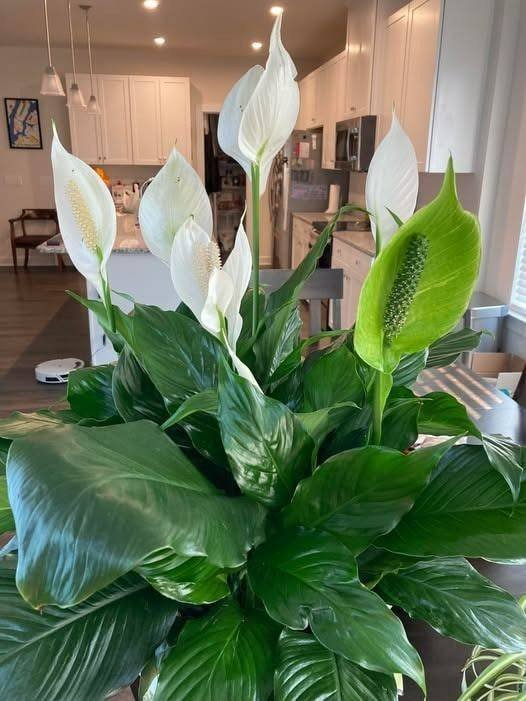
A Peace Lily can look healthy with glossy leaves—but still refuse to bloom. That usually means one or two key conditions are off. Here’s how to nudge it into producing those elegant white flowers more often:
🌿 Give it bright, indirect light
This is the #1 factor for blooms.
- Too little light = lots of leaves, no flowers
- Place near a window with filtered light (sheer curtain works well)
- Avoid harsh direct sun—it can scorch leaves
💧 Water consistently—but don’t overdo it
- Keep soil slightly moist, not soggy
- Let the top inch dry before watering again
- Use room-temperature water if possible
Tip: Peace lilies droop when thirsty—but frequent extremes stress the plant and reduce flowering.
🌱 Feed it lightly during growing season
- Use a balanced liquid fertilizer (every 4–6 weeks in spring/summer)
- Too much fertilizer = leafy growth, fewer blooms
🪴 Repot only when needed
- Peace lilies actually bloom better when slightly root-bound
- Repot only when roots are crowded or coming out of drainage holes
- Choose a pot just 1–2 inches larger
🌡️ Keep conditions stable
- Ideal temperature: 18–27°C
- Avoid cold drafts, AC vents, or sudden changes
- They prefer moderate to high humidity (a tray of water or misting helps)
✂️ Remove old flowers properly
- Cut spent blooms down to the base of the stem
- This encourages the plant to redirect energy into new flowers
⚠️ One important reality check
Many store-bought peace lilies are treated with growth hormones to bloom. After that, they may take time (sometimes months) to flower again naturally—so patience matters.
✔️ Quick checklist for more blooms
- Bright indirect light ✔️
- Even watering ✔️
- Light feeding ✔️
- Slightly root-bound ✔️
- Stable environment ✔️
If yours still isn’t blooming, tell me what it’s currently getting (light, watering, pot size), and I can pinpoint exactly what’s holding it back.