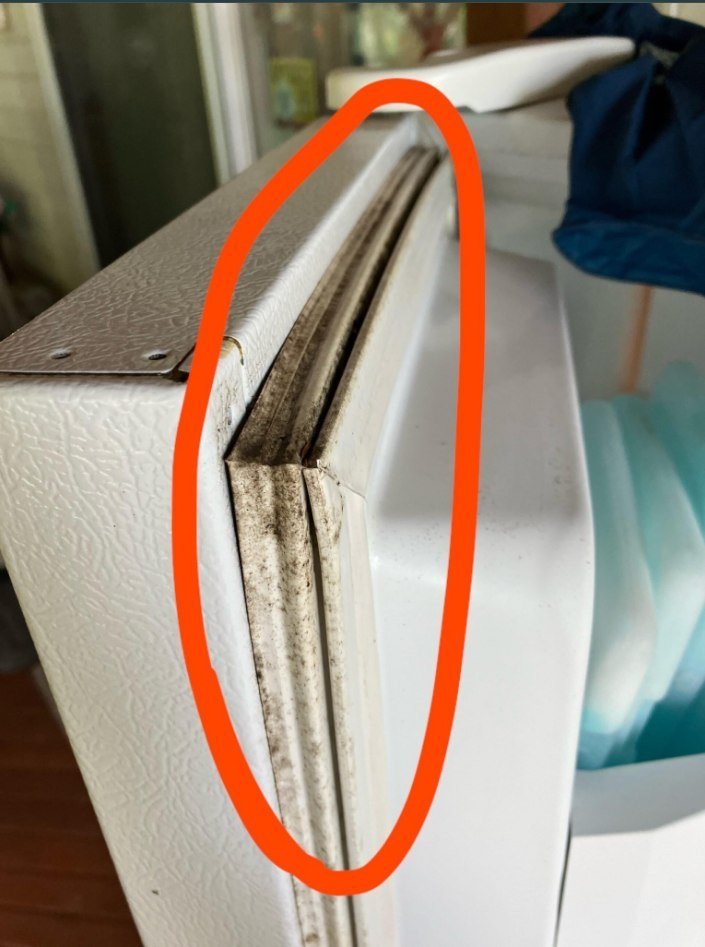
Here’s a clear, practical guide.
What you’re dealing with
Black mold on rubber seals is often surface mold that feeds on moisture and food particles. If caught early, it can usually be cleaned without replacing the gasket.
However, if the rubber is cracked, deeply stained, or smells strongly of mold even after cleaning, replacement may be needed.
Safety first
Before cleaning:
- Unplug the refrigerator or be careful around electrical parts
- Wear gloves
- Ensure good ventilation
Quick cleaning method (effective in minutes)
Step 1: Basic wipe-down
- Mix warm water with a few drops of dish soap
- Use a soft cloth or sponge
- Wipe the gasket thoroughly to remove surface dirt and grease
Step 2: Kill the mold
Choose ONE of the following:
Option A: White vinegar (recommended)
- Use undiluted white vinegar
- Spray or apply with a cloth
- Let sit for 5–10 minutes
- Wipe clean
Option B: Baking soda paste
- Mix baking soda + small amount of water
- Apply to moldy areas
- Scrub gently with a toothbrush
Option C: Hydrogen peroxide (3%)
- Apply directly
- Let sit for 5–10 minutes
- Wipe off
Step 3: Deep clean the grooves
- Use an old toothbrush or cotton swab
- Focus on folds and corners of the gasket
- These areas trap the most mold
Step 4: Dry completely
- Wipe dry with a clean cloth
- Leave the fridge door open for a few minutes if possible
Moisture is what allows mold to return.
How to prevent mold from coming back
- Keep gasket dry after cleaning spills
- Clean the seal every 2–3 weeks
- Don’t overload the fridge (poor air circulation increases moisture)
- Check door sealing—if it leaks, moisture builds up
- Occasionally wipe with diluted vinegar solution
When cleaning is not enough
You may need to replace the gasket if:
- Mold keeps returning quickly
- Rubber is cracked or sticky
- There is a persistent musty smell inside the fridge
Bottom line
Black mold on a refrigerator gasket can usually be removed in minutes using vinegar, baking soda, or hydrogen peroxide plus light scrubbing. The key is cleaning the folds thoroughly and keeping the area dry afterward to prevent it from coming back.
If you want, I can also give you a fast “no-scrub” method for very light mold or a deep-clean routine for the entire fridge interior.