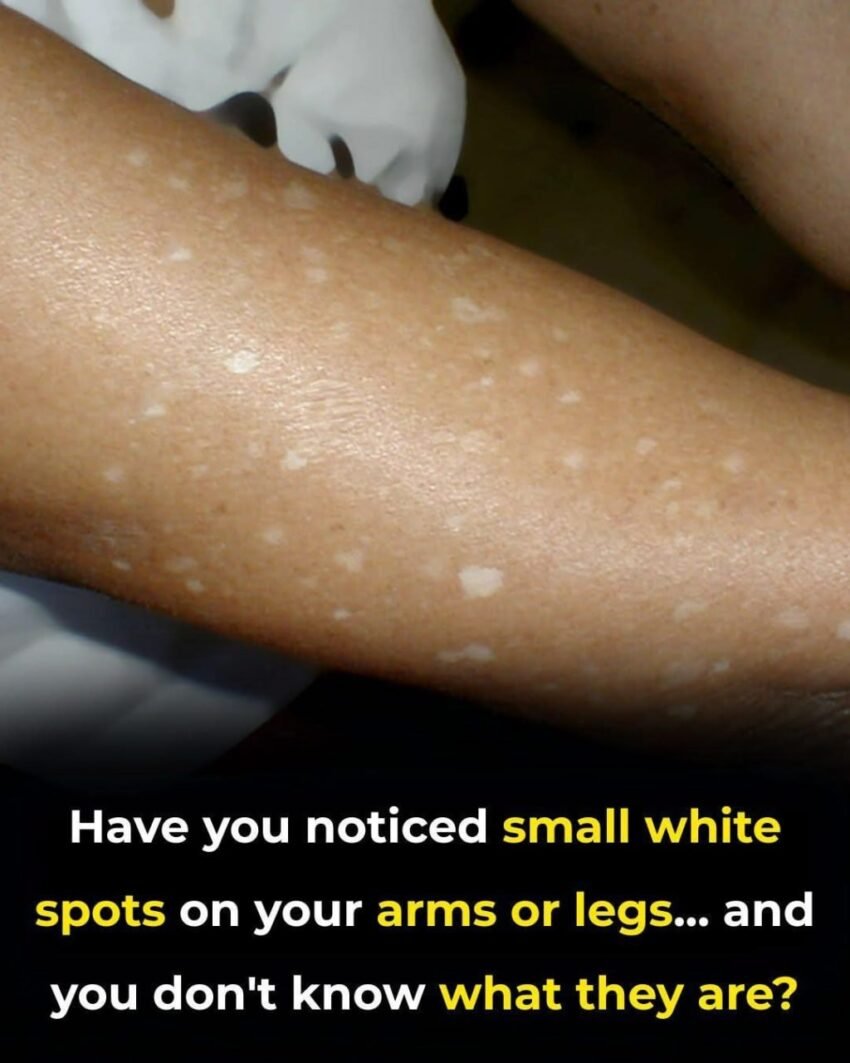
Have You Noticed Small White Spots on Your Arms or Legs? Here’s What It Could Mean
Introduction
Small white spots on the skin are fairly common and can appear on the arms, legs, or other sun-exposed areas. While they often look concerning, many causes are harmless. However, some may need medical attention, especially if the spots are spreading or changing.
1. Idiopathic Guttate Hypomelanosis (Most Common Cause)
One of the most frequent reasons for small white spots in adults is a condition called idiopathic guttate hypomelanosis. It is harmless and often related to sun exposure and aging.
Typical features:
- Small white or light-colored flat spots
- Common on arms and legs
- More noticeable in older adults
- Slowly increases over time
It does not cause pain or itching and is mainly a cosmetic concern.
2. Fungal Skin Infection
A mild fungal infection can also cause light patches on the skin. This is often related to conditions like tinea versicolor.
Possible signs:
- Slightly scaly patches
- Mild itching in some cases
- More visible after sun exposure
This condition is treatable with antifungal creams or shampoos.
3. Post-Inflammatory Hypopigmentation
Sometimes the skin loses pigment after:
- Minor injuries
- Rashes
- Acne or irritation
The skin gradually returns to normal, but it can take time.
4. Vitiligo (Less Common but Important)
Another possible cause is vitiligo, a condition where the skin loses pigment due to immune system activity.
Key signs:
- Sharply defined white patches
- Can slowly spread
- May affect any part of the body
It is not dangerous but may require medical management.
When You Should See a Doctor
You should consult a dermatologist if:
- Spots are spreading quickly
- New patches keep appearing
- There is itching, redness, or scaling
- You are unsure about the cause
Can You Prevent Them?
Not all causes are preventable, but you can reduce risk by:
- Using sunscreen regularly
- Treating skin infections early
- Avoiding harsh skin irritation
Final Thoughts
Small white spots on the skin are usually harmless, but they can have different causes. The most important step is proper identification rather than guessing. If the spots change or spread, a dermatologist can provide a clear diagnosis and treatment plan.