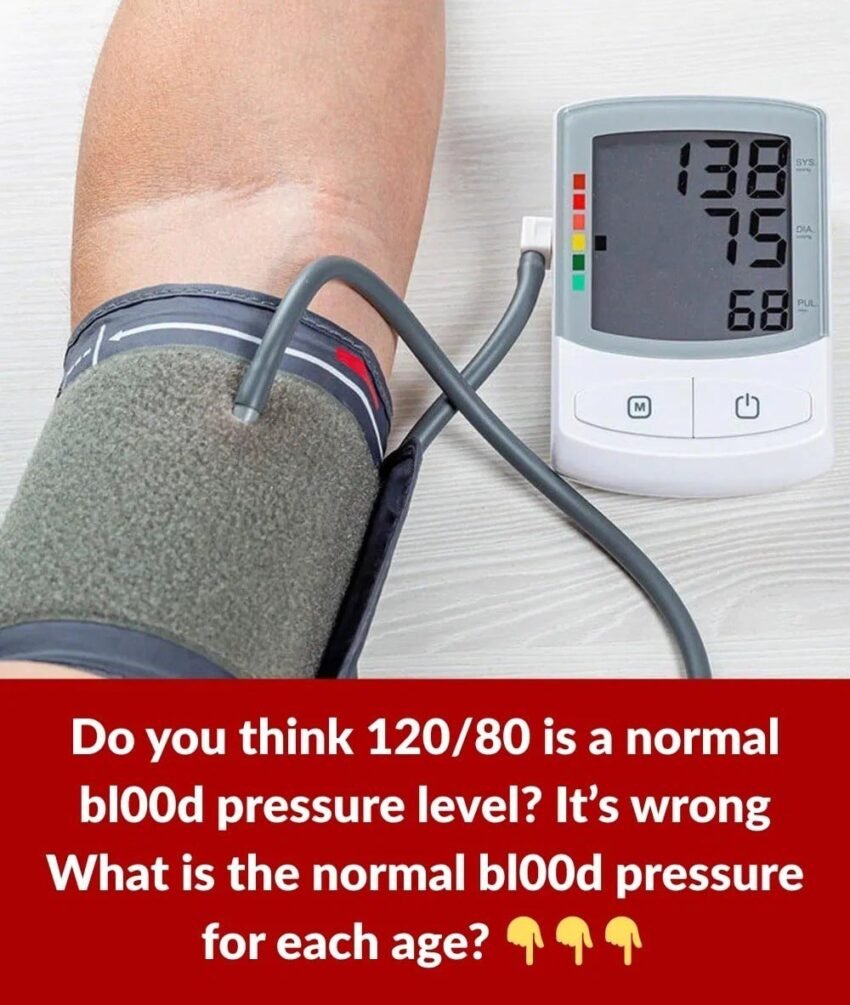
120/80 mmHg is still considered normal blood pressure for adults in modern medical guidelines. It’s not “wrong”—it’s just a simplified reference point.But there’s an important nuance: “normal” doesn’t really change by age the way many people think. What changes is the risk threshold for treatment, not what is physiologically ideal.
🩺 Standard blood pressure categories (adults)
According to major guidelines (like the American Heart Association):
- Normal: less than 120 / 80
- Elevated: 120–129 / less than 80
- High blood pressure (Stage 1): 130–139 / 80–89
- High blood pressure (Stage 2): ≥140 / ≥90
- Hypertensive crisis: ≥180 / ≥120 (urgent)
So 120/80 is actually the upper end of “normal,” not a dangerous number.
👶 Children and teens (normal ranges vary by height + age)
For kids, blood pressure is not a single fixed number. It depends on age, height, and sex percentiles.
Rough general ranges:
- Newborns: ~60–90 / 30–60
- Infants (1 year): ~80–100 / 50–65
- Children (6–12): ~90–110 / 55–75
- Teens: gradually approaches adult levels (around 110–120 / 70–80)
Doctors use percentile charts rather than one “normal number.”
🧓 Older adults
This is where confusion often comes from:
- Ideal is still below 120/80
- But treatment targets may be relaxed (for example, under 130–140 systolic) depending on health and fall risk
So:
- Aging does not make high blood pressure “normal”
- It just changes what doctors safely aim for
⚠️ Key misconception to clear up
A common myth is:
“Blood pressure should rise with age”
That is not medically correct. What actually happens is:
- Arteries stiffen with age
- So hypertension becomes more common
- But it’s still considered a disease, not a normal part of aging
Bottom line
- 120/80 is normal for most adults
- Normal ranges for children vary by growth stage
- “Normal with age” is a myth—risk increases, but ideal pressure does not
If you want, I can also explain:
- why some people feel dizzy at “normal” BP
- or what blood pressure is actually considered best for long-term heart protection (there’s a bit of nuance there)