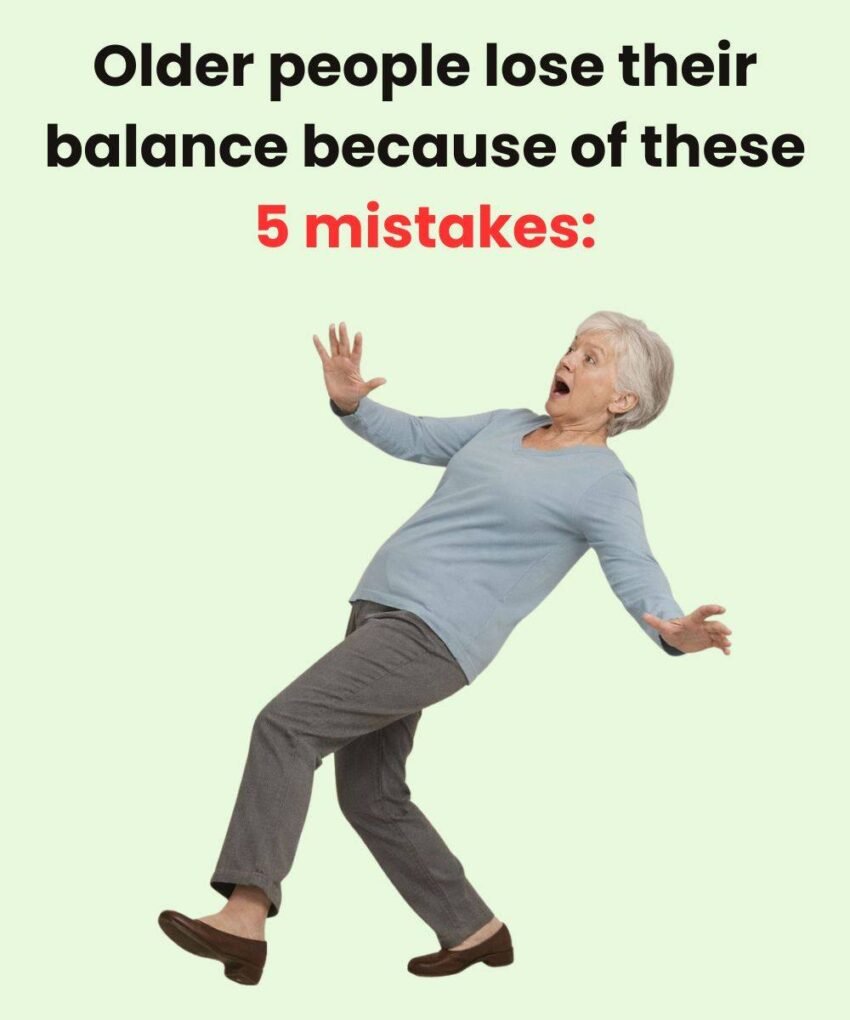
Common Mistakes That Affect Balance in Older Adults
Balance problems become more common with age, but many falls and instability issues are actually linked to avoidable habits, not just aging itself. Understanding these mistakes can help reduce fall risk and improve confidence while moving.
1. Avoiding Physical Activity
Not staying active leads to:
- Weak leg muscles
- Poor coordination
- Reduced stability
Even simple walking helps maintain balance.
2. Wearing Unsafe Footwear
Shoes that are:
- Loose
- Slippery
- Very flat or high-heeled
can increase the risk of slipping or tripping.
3. Poor Lighting at Home
Dim or uneven lighting can cause:
- Misjudging steps
- Tripping over objects
- Difficulty walking at night
4. Ignoring Vision Changes
Poor eyesight affects:
- Depth perception
- Ability to see obstacles
Not updating glasses regularly increases fall risk.
5. Standing Up Too Quickly
Sudden position changes may cause dizziness due to a drop in blood pressure (orthostatic hypotension).
6. Not Drinking Enough Water
Dehydration can lead to:
- Weakness
- Lightheadedness
- Confusion
All of these affect balance.
7. Side Effects of Medications
Some medicines may cause:
- Drowsiness
- Dizziness
- Reduced alertness
Regular review with a doctor is important.
8. Ignoring Inner Ear Problems
The inner ear helps control balance. Conditions like vertigo can cause:
- Spinning sensation
- Unsteady walking
9. Lack of Strength and Balance Exercises
Without exercise:
- Core muscles weaken
- Coordination declines
- Reaction time slows
10. Cluttered Living Spaces
Common hazards include:
- Loose rugs
- Electrical cords
- Unorganized furniture
These increase trip and fall risk.
Simple Ways to Improve Balance
- Walk daily or do light exercise
- Use proper footwear
- Keep home well-lit and clutter-free
- Stay hydrated
- Do gentle balance training (like standing with support)
- Get regular eye and health checkups
Final truth
Balance issues in older adults are often influenced by daily habits, environment, and health factors—not just aging. Small changes in lifestyle and home safety can significantly reduce fall risk and improve independence.