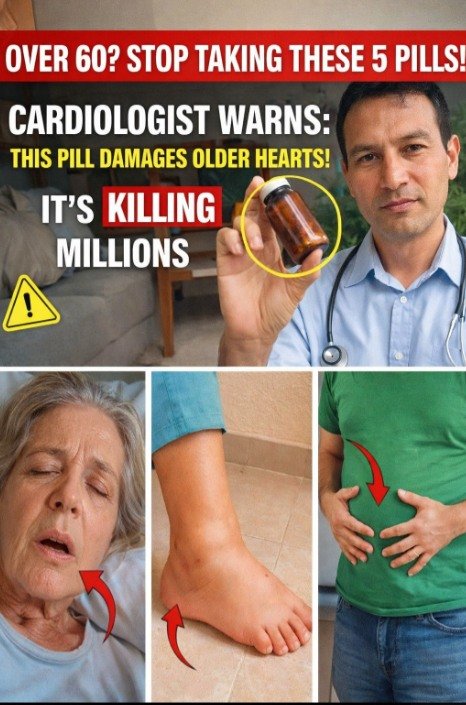
Cardiologist WARNS: “This Pill Is Damaging the Hearts of Older Adults!” — What the Claim Really Means
Headlines like this are designed to sound urgent, but they are usually overgeneralized or misleading. There is no single “mystery pill” that damages every older adult’s heart. What cardiologists actually warn about is something more nuanced: certain commonly used medications can increase heart risk in specific people, especially older adults or those with pre-existing conditions.
What doctors are actually concerned about
Cardiologists often focus on drug side effects, interactions, and long-term use, not one specific “danger pill.”
Research and clinical guidance show that risk tends to come from:
1. Painkillers (NSAIDs)
Nonsteroidal anti-inflammatory drugs such as ibuprofen or naproxen.
Why they matter:
- Can raise blood pressure
- May cause fluid retention
- Can increase strain on the heart in long-term use
2. Sleep and anxiety medications
Certain sedatives (like benzodiazepines).
Concerns:
- Increased risk of falls in older adults
- Drowsiness and slowed reaction time
- Possible dependence with long-term use
3. Some acid-reflux medicines (PPIs)
Used for heartburn and stomach acid.
Possible long-term issues:
- Low magnesium levels
- Vitamin B12 deficiency
- Potential indirect effects on bone and heart health in long-term heavy use
4. Blood pressure or heart medications (dose-sensitive)
These are not “dangerous” by default—but can become problematic if not adjusted with age.
Doctors note that:
- Over-lowering blood pressure can cause dizziness or falls
- Kidney function changes with age may require dose adjustments
5. Decongestants in cold medicines
Some over-the-counter cold remedies contain stimulants.
Why they matter:
- Can raise blood pressure
- May increase heart rate
- Not ideal for people with heart disease
The key medical concept: “polypharmacy”
A major concern in older adults is not one pill, but many.
Doctors call this:
Polypharmacy
This means taking multiple medications at once, which can:
- Increase drug interactions
- Raise side-effect risk
- Make dosing more complicated
- Increase heart-related complications indirectly
What reputable medical sources say
Experts emphasize:
- Many medications are beneficial and life-saving when used correctly
- Risks depend on dose, duration, and individual health conditions
- Regular medication reviews are important in older adults
Even heart drugs like statins or blood pressure medicines are often protective—not harmful—when properly prescribed .
Why these headlines go viral
These videos and posts usually:
- Do not name one specific proven “danger pill”
- Mix real medical facts with exaggeration
- Ignore context (dose, age, condition, and supervision)
- Aim for attention rather than medical accuracy
Bottom line
There is no single pill secretly damaging all older adults’ hearts. What cardiologists actually warn about is:
- Certain medication classes can increase heart risk in some people
- Risk depends on age, dosage, and existing health conditions
- Taking many medications together can increase complications
- Regular doctor review is essential
If you want, I can break down which common everyday medicines are safest vs risky for heart health in simple terms, or explain whether a specific pill you’ve heard about is actually a concern.