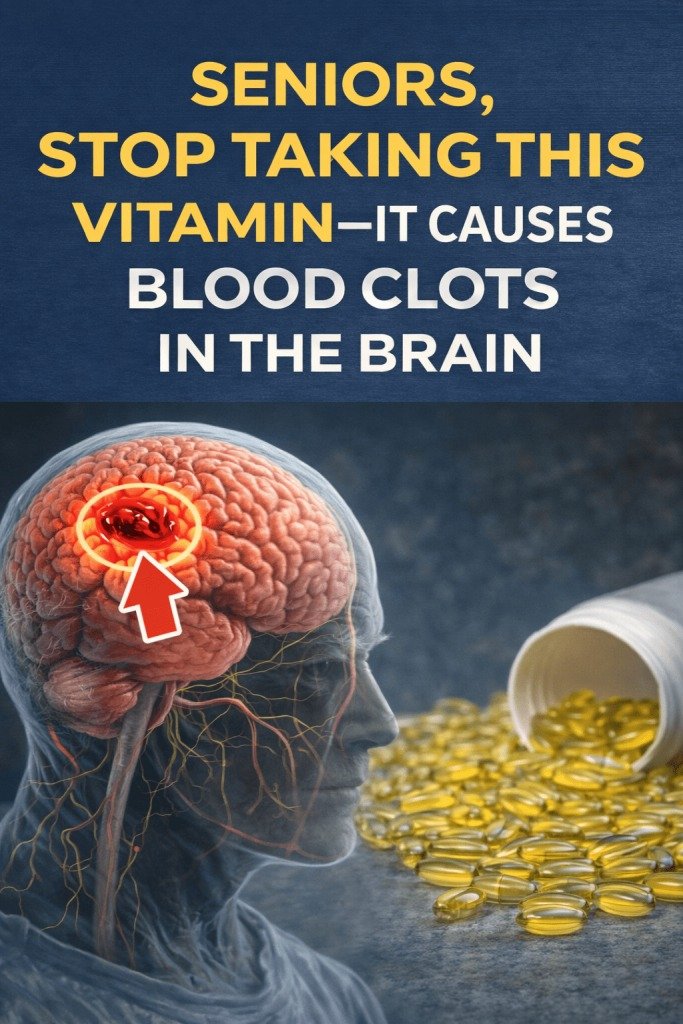
“As a Brain Doctor, I’m Shocked This Common Vitamin Could Raise Stroke Concerns for Seniors” — What’s Actually True?
This kind of headline is designed to sound alarming, but it often mixes partial truths with exaggeration. There is no strong medical evidence that a normal vitamin intake suddenly “raises stroke risk” in seniors. What research actually shows is more nuanced.
What doctors and research actually say
Certain B vitamins (especially B6, B9/folate, and B12) are involved in brain and blood vessel health. In some studies, higher intake or better blood levels are linked with lower stroke risk, not higher risk.
For example:
- Higher intake of B vitamins has been associated with reduced stroke risk in large population studies
- Some research suggests B-vitamin combinations may modestly reduce stroke risk in certain groups
However, results are not perfectly consistent, and benefits depend on the person’s baseline nutrition, kidney health, and existing medical conditions.
Where the confusion comes from
Some confusion in viral claims comes from three real but misinterpreted points:
1. Very high-dose supplements can be harmful
Excess supplementation of certain vitamins (not normal dietary intake) may cause problems. For example, too much vitamin E or some B vitamins in supplement form can have side effects in specific situations.
2. Kidney disease changes vitamin effects
In people with kidney disease, certain B-vitamin combinations behave differently, which is sometimes misreported as “vitamins increasing risk.”
3. Correlation is not causation
Some studies show that people with poor health already have lower vitamin levels, which can falsely look like “low vitamins cause disease” or vice versa.
What about seniors specifically?
In older adults, nutrition matters more because absorption decreases with age. Deficiencies in vitamins like B12 can actually be linked with:
- Nerve problems
- Memory issues
- Higher vascular risk markers
In fact, some research shows low B-vitamin status may be associated with higher stroke risk rather than lower risk
The real takeaway
- Normal vitamin intake from food is not a stroke risk
- Standard doses of vitamins are not proven to increase stroke risk
- Extremely high-dose supplements without medical supervision can be risky in some cases
- Overall diet quality matters far more than any single vitamin
Bottom line
Headlines like this are usually designed to trigger fear. The scientific reality is much more balanced:
B vitamins are essential for brain and vascular health, and deficiency is more concerning than normal intake.
If you want, I can break down which vitamins are actually risky in high doses vs which are generally safe, so you can see what truly deserves caution.