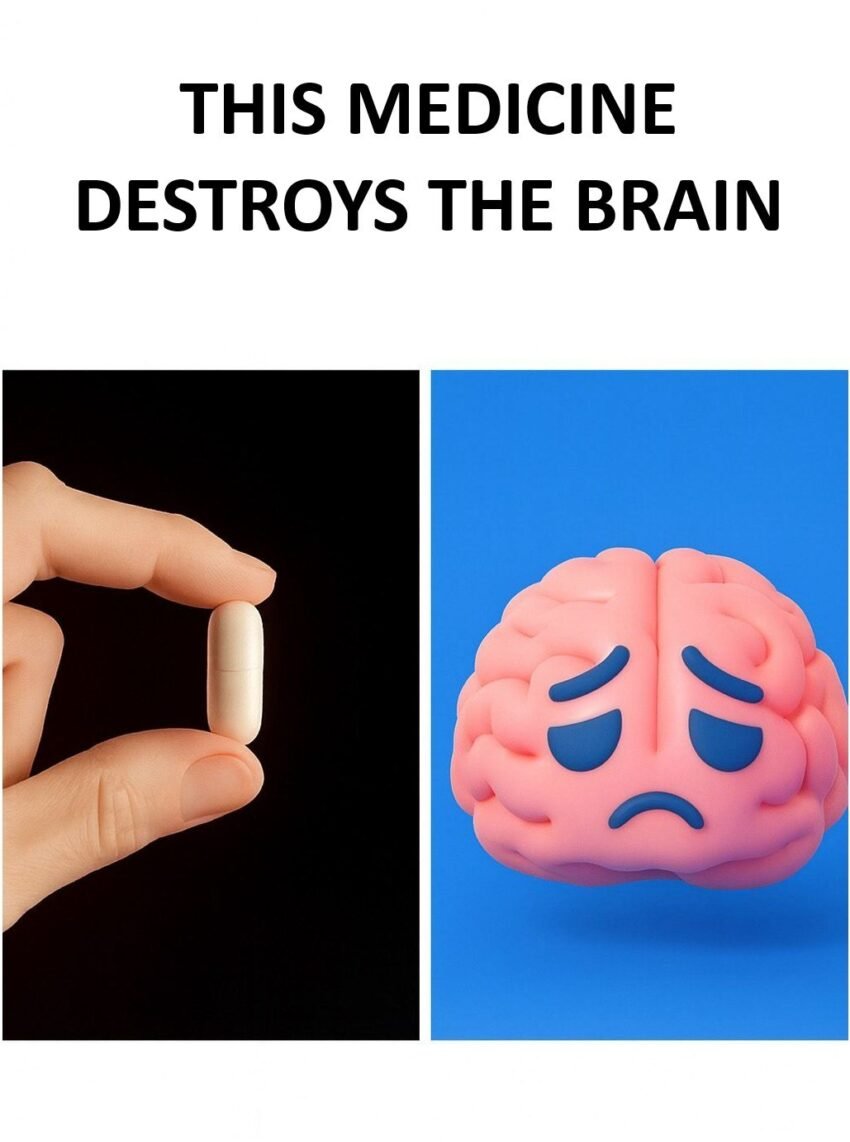
Alert: 8 Drug Types Linked to Higher Dementia Risk
Introduction
Headlines like “8 drugs that cause dementia” are designed to grab attention—but they often oversimplify the science. Most research does not prove these drugs directly cause dementia. Instead, studies show an association, especially with long-term or high-dose use in older adults.
This article breaks down the commonly cited drug categories, what the evidence actually says, and what you should know before getting concerned.
1. Anticholinergic Medications
These are the most strongly linked group.
They work by blocking acetylcholine, a chemical essential for memory and learning.
Common examples:
- Older antihistamines (like diphenhydramine)
- Tricyclic antidepressants
- Bladder control medications
What research shows:
- Long-term use is associated with increased dementia risk
- Higher cumulative doses raise the risk further
2. Benzodiazepines (Anxiety and Sleep Medications)
These drugs slow brain activity and are used for anxiety or insomnia.
Examples:
- Diazepam
- Alprazolam
Evidence:
- Linked to memory problems and possible increased dementia risk, especially with prolonged use
3. Sleeping Pills (Sedative Hypnotics)
Includes both benzodiazepine-like drugs and “Z-drugs.”
Concerns:
- Can impair memory and cognition
- May increase confusion in older adults
These effects may contribute to long-term cognitive decline.
4. Opioid Pain Medications
Used for moderate to severe pain.
Examples:
- Morphine
- Oxycodone
Why they matter:
- Affect brain chemistry and memory centers
- Long-term use may contribute to cognitive decline
5. Tricyclic Antidepressants (TCAs)
An older class of antidepressants with strong anticholinergic effects.
Examples:
- Amitriptyline
- Doxepin
Risk:
- Can impair memory and thinking
- Associated with higher dementia risk due to their brain effects
6. Antipsychotic Medications
Used for psychiatric conditions such as schizophrenia or severe agitation.
Concerns:
- Can worsen confusion
- Linked to cognitive decline in older adults
Some studies show these drugs are still widely used despite risks in dementia patients.
7. Proton Pump Inhibitors (PPIs)
Used for acid reflux and heartburn.
Examples:
- Omeprazole
Evidence:
- Some studies suggest a possible link to dementia
- Findings are mixed and not conclusive
8. Anti-Seizure (Antiepileptic) Drugs
Used to control seizures and sometimes nerve pain.
Effects:
- May interfere with normal brain signaling
- Can affect memory, especially at high doses
Important Reality Check
It’s crucial to understand:
- These drugs do not directly “cause” dementia
- Most evidence shows correlation, not causation
- Risk depends on:
- Dose
- Duration of use
- Age and overall health
In many cases, the underlying condition (like anxiety, insomnia, or chronic illness) may also contribute to dementia risk.
Who Should Be Most Careful?
Higher risk groups include:
- Adults over 65
- People taking multiple medications
- Those with existing memory problems
Long-term use and combining several high-risk drugs increases concern.
What You Should Do
- Do not stop any medication suddenly
- Review your medications with a doctor regularly
- Ask if safer alternatives are available
- Use the lowest effective dose for the shortest time
Conclusion
The idea of “8 drugs that cause dementia” is an oversimplification. A more accurate message is:
- Some medications—especially those affecting brain chemistry—may increase risk over time
- The biggest concern is long-term, high-dose use in older adults
- Careful medical guidance can significantly reduce risk
If you’re worried about a specific drug, share it, and I can explain its actual risk in plain terms.
What Is the Normal Blood Pressure for Each Age?
Introduction
Blood pressure is one of the most important indicators of heart health. It measures how forcefully blood pushes against the walls of your arteries. While people often ask for “normal blood pressure by age,” medical guidelines today focus more on healthy ranges for all adults, rather than drastically different targets for each age group.
Understanding Blood Pressure Readings
A blood pressure reading has two numbers:
- Systolic pressure (top number): Pressure when the heart beats
- Diastolic pressure (bottom number): Pressure when the heart rests
Example: 120/80 mmHg
Standard Blood Pressure Categories (Adults)
According to widely accepted guidelines:
- Normal: Less than 120/80
- Elevated: 120–129 / less than 80
- High Blood Pressure (Hypertension) Stage 1: 130–139 / 80–89
- Stage 2: 140/90 or higher
These categories generally apply to adults of all ages.
Blood Pressure by Age Group
While the “ideal” range stays similar, what is typical can vary slightly with age.
Children (6–12 years)
- Normal varies based on height and sex
- Rough average: 90–110 / 55–75
Teenagers (13–19 years)
- Typical range: 100–120 / 60–80
Adults (20–40 years)
- Ideal: Below 120/80
- Most healthy individuals fall within this range
Adults (40–60 years)
- Slight increases are common
- Aim to stay below 130/80
Older Adults (60+ years)
- Blood vessels become less flexible with age
- Many doctors accept slightly higher systolic values (up to ~130–139) if overall health is stable
However, overly high readings should still be managed carefully.
Why Blood Pressure Changes With Age
Several natural changes occur over time:
- Arteries become stiffer
- Plaque may build up in blood vessels
- The heart works harder to pump blood
These factors can gradually increase blood pressure.
When to Be Concerned
You should pay attention if:
- Readings are consistently 130/80 or higher
- You experience symptoms like headaches, dizziness, or chest pain
- There is a history of heart disease or stroke
High blood pressure often has no symptoms, which is why it’s called a “silent condition.”
Tips to Maintain Healthy Blood Pressure
- Eat a balanced, low-salt diet
- Exercise regularly
- Maintain a healthy weight
- Limit smoking and alcohol
- Manage stress
- Monitor blood pressure regularly
Conclusion
There isn’t a completely different “normal” blood pressure for each age. Instead:
- Below 120/80 is ideal for most adults
- Slight increases can occur with age
- Consistently high readings may indicate Hypertension
The most important step is regular monitoring and early management to protect heart and brain health over time.
Alert: 8 Drug Types Linked to Serious Dementia Risk
Introduction
Headlines claiming “8 drugs that cause dementia” are often misleading. The scientific reality is more nuanced: most studies show an association—not direct causation. In many cases, the dose, duration, and overall health of the patient matter more than the drug itself.
Still, certain medication groups are repeatedly linked to higher risk of cognitive decline, especially in older adults. Here’s a clear, evidence-based breakdown.
1. Anticholinergic Medications (Strongest Evidence)
These drugs block acetylcholine, a brain chemical essential for memory and learning.
Common types:
- Older antihistamines
- Bladder control drugs
- Some antidepressants
What studies show:
- Long-term use is associated with up to 30% higher dementia risk
- Risk increases with years of exposure (4–20 years in some cases)
2. Benzodiazepines (Anxiety and Sleep Drugs)
Used for anxiety, insomnia, and seizures.
Examples:
- Diazepam
- Alprazolam
Evidence:
- Some studies suggest increased risk, especially with long-term use
- Others show mixed or no clear causal link
3. Sleeping Pills (Sedative-Hypnotics)
Includes “Z-drugs” and similar sleep aids.
Concerns:
- Can cause confusion and memory issues
- Long-term use may contribute to cognitive decline
These effects are especially noticeable in older adults.
4. Tricyclic Antidepressants (TCAs)
An older class of antidepressants with strong anticholinergic effects.
Risk:
- Can impair thinking and memory
- Often included in studies linking medications to dementia risk
5. Antipsychotic Medications
Used for schizophrenia, severe depression, or agitation.
Concerns:
- May worsen confusion
- Linked to cognitive decline in vulnerable patients
These drugs are sometimes still prescribed in dementia patients despite risks.
6. Bladder Control Medications
Used for overactive bladder and incontinence.
Why they matter:
- Many have strong anticholinergic effects
- Linked to increased dementia risk in long-term users
7. Antiepileptic (Anti-Seizure) Drugs
Used for seizures and nerve pain.
Evidence:
- Some studies show associations with dementia risk
- Especially when combined with other high-risk medications
8. Parkinson’s Disease Medications (Anticholinergic Type)
Certain older Parkinson’s treatments affect brain signaling.
Findings:
- Linked to higher dementia rates in some studies
- Risk depends on dosage and duration
Important Reality Check
Here’s what most viral posts leave out:
- These drugs do not directly “cause” dementia
- Many studies only show correlation, not causation
- Underlying conditions (like anxiety, depression, or bladder disease) may also contribute
In fact, one large study found:
- Only certain high-burden anticholinergic drugs showed a clear association
- Many others showed little or no effect
Who Is Most at Risk?
Higher risk is seen in:
- Adults over 65
- People taking multiple medications
- Long-term or high-dose users
- Those with existing memory problems
What You Should Do
- Do not stop medications suddenly
- Review your prescriptions regularly with a doctor
- Ask about safer alternatives if concerned
- Use the lowest effective dose
Conclusion
The phrase “8 drugs that cause serious dementia” is an oversimplification. A more accurate takeaway:
- Certain medications—especially those affecting brain chemistry—may increase risk over time
- The biggest concern is long-term, combined use in older adults
- Proper medical supervision can significantly reduce any potential risk
If you want, tell me a specific medication, and I’ll explain its actual dementia risk in plain language.