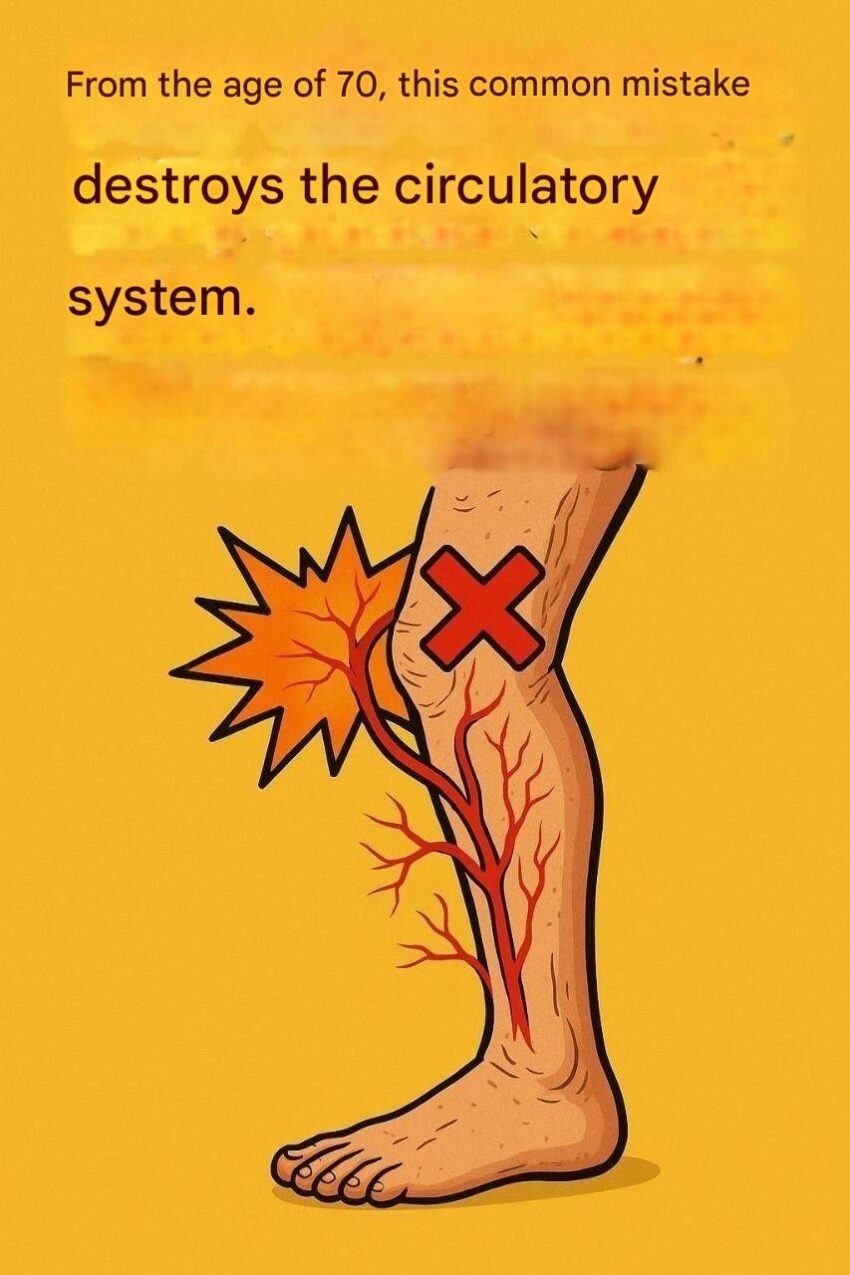
One common mistake that can negatively impact circulation in older adults is sitting or standing for prolonged periods without moving. This seemingly harmless habit can have a significant effect on your vascular health, especially after 70 years of age. Here’s why this happens, and how it can be avoided:
The Dangers of Prolonged Inactivity
- Reduced Blood Flow:
- When you remain in one position for too long, whether sitting or standing, your muscles aren’t working to help pump blood back to the heart. This can lead to pooled blood, especially in the lower extremities (legs and feet), which increases the risk of blood clots and swelling.
- Without movement, veins can become less efficient at returning blood to the heart, leading to poor circulation and a greater risk of developing deep vein thrombosis (DVT), a condition where blood clots form in the deep veins, often in the legs.
- Decreased Venous Tone:
- Venous tone refers to the ability of veins to constrict and push blood back toward the heart. Prolonged inactivity can weaken the veins, causing them to stretch and lose their ability to efficiently move blood. Over time, this can lead to varicose veins, where veins become swollen and twisted.
- Increased Risk of Heart Disease:
- Sedentary behavior contributes to poor cardiovascular health by increasing the risk of high blood pressure, high cholesterol, and obesity—all factors that can lead to reduced circulation and heart disease.
- Reduced Muscle Pumping Action:
- Our muscles act as a “pump” to help blood flow back to the heart. When you’re sitting or standing still for long periods, your muscles aren’t contracting and working, which can hinder circulation and cause discomfort, fatigue, and even pain in the legs.
- Swelling and Edema:
- Lack of movement can cause fluid to accumulate in the legs, resulting in swelling or edema. This happens because gravity causes blood and fluid to pool in the lower extremities when you don’t move, which can be uncomfortable and lead to further circulation issues.
How to Avoid This Mistake and Improve Circulation:
- Take Regular Breaks:
- If you’re sitting for long periods—whether working, watching TV, or traveling—make it a habit to stand up, stretch, and walk around every 30 minutes. Even short 1-2 minute breaks to walk or stretch can significantly improve circulation.
- Move Your Legs:
- Even if you can’t get up, try moving your legs to stimulate circulation. Simple exercises like ankle circles, foot pumps, or leg lifts can help.
- Seated exercises are especially helpful for those with limited mobility.
- Exercise Regularly:
- Incorporate aerobic exercise (like walking, swimming, or cycling) into your routine. Strength training also helps improve circulation by building muscle, which in turn helps pump blood more effectively.
- Aim for at least 150 minutes of moderate-intensity exercise per week, or 75 minutes of vigorous activity.
- Elevate Your Legs:
- When resting, especially if you feel your legs becoming swollen or heavy, try elevating them above the level of your heart for 15-20 minutes. This helps reduce the pressure in your veins and promotes better circulation.
- Stay Hydrated:
- Drinking plenty of water helps maintain the volume and flow of blood, which is vital for circulation. Dehydration can make blood thicker and more difficult to circulate, which could worsen circulation problems.
- Wear Compression Stockings:
- For individuals who experience swelling or have a higher risk of developing DVT, wearing compression stockings can help improve circulation. These stockings apply gentle pressure on the legs, helping blood flow back toward the heart and preventing blood from pooling in the veins.
- Maintain a Healthy Weight:
- Carrying excess weight can put additional strain on your heart and blood vessels, impairing circulation. A healthy diet, along with regular exercise, can help maintain a healthy weight, thus supporting better circulation.
- Avoid Smoking:
- Smoking damages blood vessels and reduces circulation. Quitting smoking is one of the best ways to improve circulation and reduce the risk of stroke and heart disease.
- Eat Circulation-Boosting Foods:
- Certain foods can help improve circulation by promoting healthy blood flow and reducing inflammation. Foods like dark chocolate, citrus fruits, garlic, ginger, turmeric, and berries are rich in compounds that promote healthy blood vessels and circulation.
Conclusion:
After 70 years of age, it’s crucial to avoid the common mistake of prolonged sitting or standing without movement. Inactivity can drastically impair circulation and lead to serious health conditions like blood clots, varicose veins, and heart disease. By adopting habits that encourage movement, exercise, and proper circulation, you can improve your vascular health and reduce the risk of complications related to poor blood flow.
Remember, small changes in your daily routine—such as taking breaks, moving your legs, staying hydrated, and eating a heart-healthy diet—can have a significant impact on maintaining strong, healthy circulation as you age.