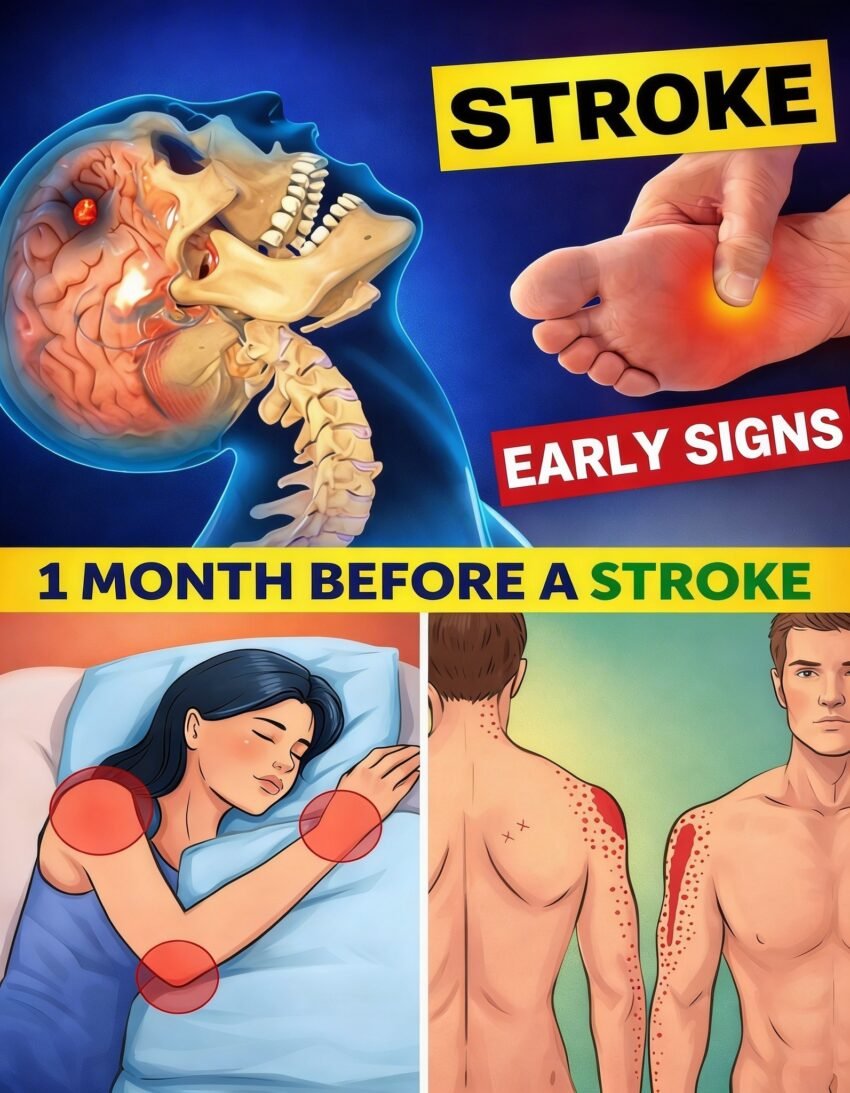
8 Warning Signs of Stroke That May Appear One Month Before
and 9 Tips to Prevent It
A stroke is a serious medical emergency that happens when blood flow to part of the brain is interrupted. While strokes can occur suddenly, some people experience early warning signs days or even weeks before. Recognizing them early can save lives.
8 Early Warning Signs of Stroke (May Appear Weeks Before)
These symptoms may come and go, and are often linked to a temporary blockage called a transient ischemic attack (TIA)—sometimes called a “mini-stroke.”
1. Sudden Weakness or Numbness
Weakness in the face, arm, or leg—especially on one side of the body.
2. Slurred or Confused Speech
Difficulty speaking clearly or understanding others.
3. Sudden Vision Problems
Blurred vision or loss of vision in one or both eyes.
4. Unexplained Dizziness
Feeling off-balance, lightheaded, or unsteady while walking.
5. Severe or Unusual Headache
A sudden, intense headache with no clear cause.
6. Temporary Paralysis or Heaviness
Feeling that one side of the body is “not working properly” for a short time.
7. Memory Confusion
Sudden trouble remembering things or feeling mentally “foggy.”
8. TIA (Mini-Stroke) Symptoms
Brief episodes of stroke-like symptoms that last minutes to hours and then disappear.
Even if symptoms go away, they are a serious warning sign and should never be ignored.
9 Tips to Help Prevent Stroke
Stroke prevention focuses on protecting blood vessels and improving overall health.
1. Control Blood Pressure
High blood pressure is the biggest risk factor. Regular monitoring is essential.
2. Eat a Heart-Healthy Diet
Focus on:
- Fruits and vegetables
- Whole grains
- Lean protein
- Low salt intake
3. Stay Physically Active
At least 30 minutes of moderate exercise like walking daily improves circulation.
4. Avoid Smoking
Smoking damages blood vessels and increases clot risk significantly.
5. Limit Alcohol Intake
Excess alcohol can raise blood pressure and risk of stroke.
6. Manage Diabetes
Keep blood sugar levels under control to protect blood vessels.
7. Maintain Healthy Weight
Excess weight increases strain on the heart and arteries.
8. Reduce Stress
Chronic stress can raise blood pressure and inflammation in the body.
9. Get Regular Health Checkups
Routine screenings help detect risk factors early, especially blood pressure, cholesterol, and heart rhythm issues.
When to Seek Emergency Help
If someone suddenly shows signs of stroke, use the FAST rule:
- Face drooping
- Arm weakness
- Speech difficulty
- Time to call emergency services immediately
Final Truth
Stroke is often preventable when risk factors are managed early. Warning signs may appear before a major event, especially in the form of mini-strokes. Paying attention to these signals and adopting healthy habits can significantly reduce risk and protect brain health.