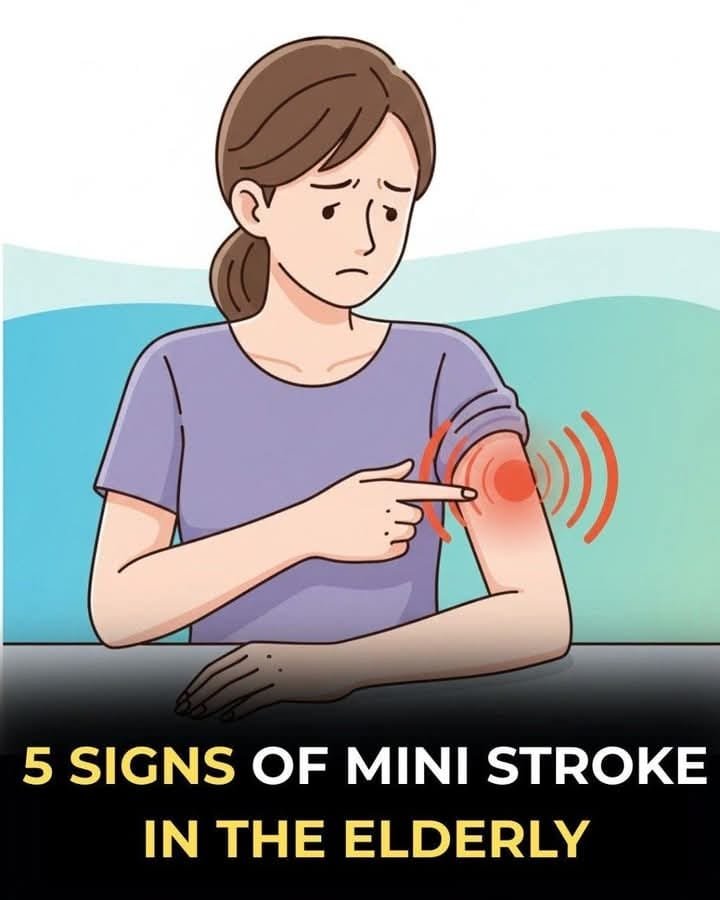
A “mini stroke” is medically called a Transient Ischemic Attack (TIA). It’s a serious warning sign that a full stroke could happen soon—especially in older adults—so recognizing symptoms early is critical.
⚠️ 5 Signs of a Mini Stroke in the Elderly
1. Sudden weakness or numbness
- Often affects one side of the body (face, arm, or leg)
- The person may struggle to lift an arm or feel tingling
2. Trouble speaking or understanding
- Slurred speech
- Difficulty forming words
- Confusion when listening to others
3. Vision problems
- Sudden blurred or double vision
- Temporary loss of vision in one or both eyes
4. Dizziness or loss of balance
- Trouble walking straight
- Sudden coordination issues
- Feeling lightheaded or unsteady
5. Sudden severe headache
- Especially if it comes out of nowhere
- May feel different from usual headaches
🚨 Why this matters
Symptoms of a TIA often last only a few minutes to an hour and then disappear—but that doesn’t mean it’s harmless.
A TIA is a major red flag for a possible **Stroke in the near future (sometimes within days).
⏱️ What to do immediately
- Treat it like an emergency—even if symptoms go away
- Get medical help right away
- Early treatment can prevent a full stroke
🧠 Quick memory tip: FAST
- Face drooping
- Arm weakness
- Speech difficulty
- Time to call emergency services
⚠️ Bottom line
A mini stroke is not “mini” in risk—it’s a critical warning. Acting quickly can save brain function and even a life.
If you want, I can also share risk factors and prevention tips specifically for elderly people.