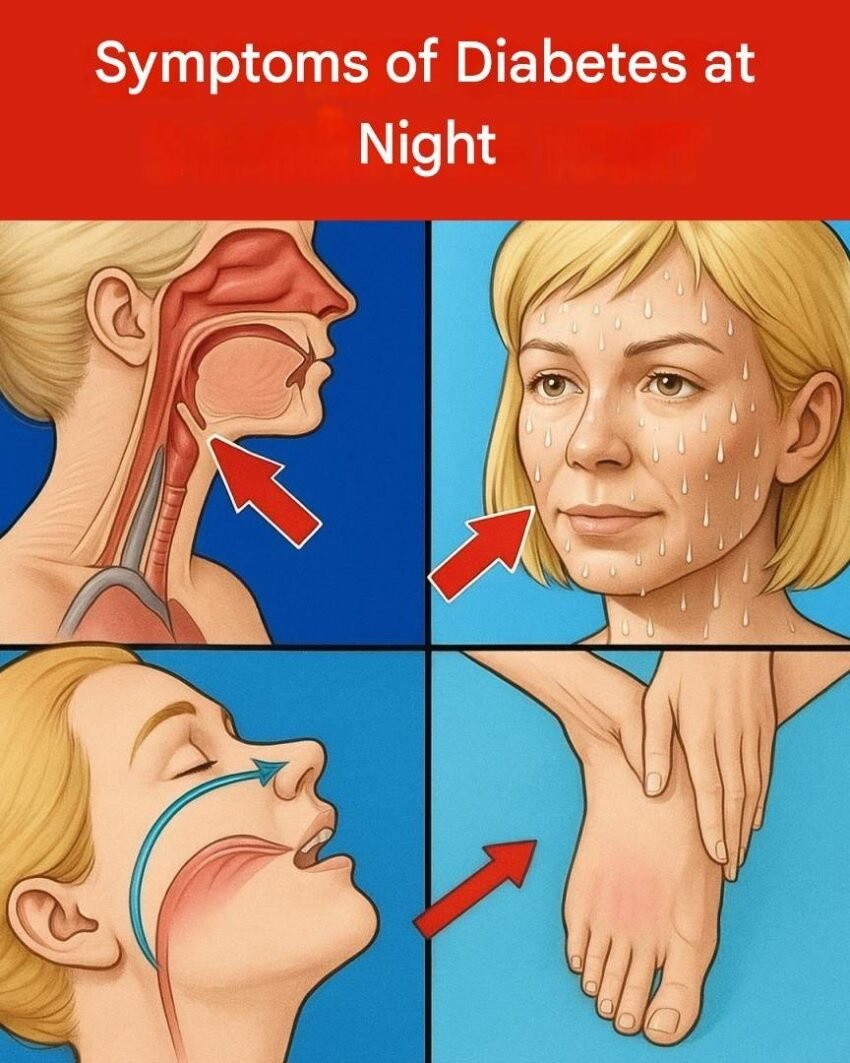
5 Diabetes Symptoms That Appear at Night
Introduction
Many signs of diabetes become more noticeable at night because of changes in blood sugar levels during sleep. These symptoms can disturb rest and sometimes go unnoticed for a long time.
1. Frequent Nighttime Urination
Waking up multiple times to urinate (nocturia) is one of the most common night symptoms. When blood sugar is high, the kidneys work harder to remove excess glucose, increasing urine production.
What you may notice:
- Waking up 2–4+ times at night
- Feeling unable to sleep through the night
- Increased thirst after urinating
2. Night Sweats or Sudden Sweating
Fluctuating blood sugar—especially drops during sleep—can trigger sweating episodes.
Possible causes:
- Low blood sugar (hypoglycemia) during the night
- Hormonal response to glucose imbalance
You may wake up feeling damp or overheated.
3. Nighttime Hunger or Cravings
Low blood sugar during sleep can signal the brain that the body needs fuel.
Signs include:
- Sudden hunger at night
- Waking up needing to eat
- Difficulty staying asleep without snacking
4. Restless Sleep or Frequent Waking
Blood sugar instability can interfere with normal sleep cycles.
You may experience:
- Light, broken sleep
- Difficulty staying asleep
- Feeling unrefreshed in the morning
Poor sleep can also worsen insulin resistance over time.
5. Tingling or Burning in Feet
Nerve-related symptoms may feel more noticeable at night when the body is at rest.
This can be related to diabetic nerve damage, known as diabetic neuropathy.
Common sensations:
- Tingling or “pins and needles”
- Burning pain in feet or legs
- Increased discomfort when lying down
When to Take These Symptoms Seriously
You should consider medical testing if you experience:
- Multiple night symptoms together
- Excessive thirst and urination during the day
- Unexplained fatigue or weight changes
- Slow-healing wounds
Conclusion
Nighttime symptoms like frequent urination, sweating, hunger, sleep disturbance, and nerve discomfort can be early indicators of diabetes. While they can also have other causes, persistent patterns should not be ignored and may warrant medical evaluation.