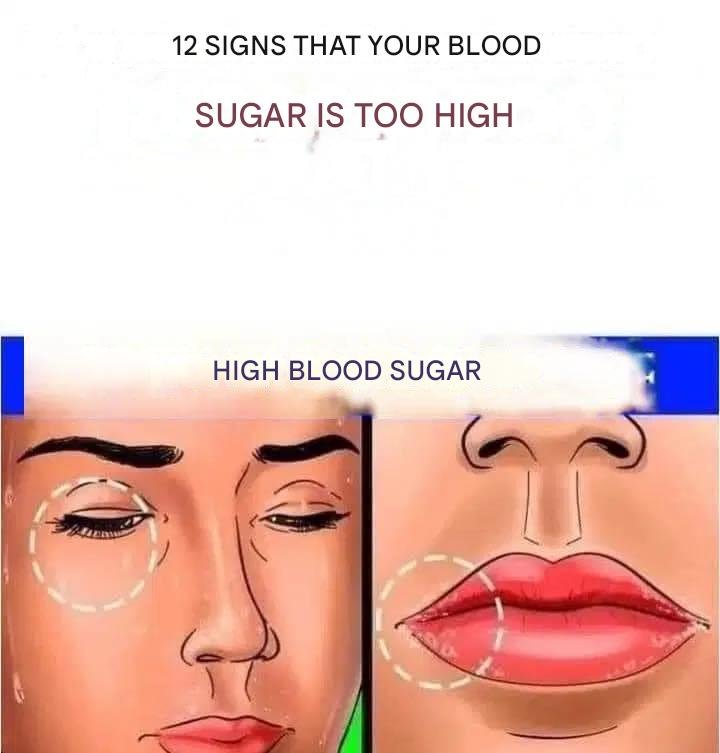
12 Signs That Your Blood Sugar Is Too High
High blood sugar (hyperglycemia) happens when the body cannot properly use or produce enough insulin. It is commonly linked to diabetes or prediabetes. When blood sugar stays high, the body starts showing warning signs.
Here are 12 common symptoms to watch for.
1. Frequent Urination
You may need to urinate more often than usual, especially at night.
2. Excessive Thirst
Feeling very thirsty even after drinking water is a key sign.
3. Fatigue
High blood sugar makes it harder for the body to use energy properly, causing tiredness.
4. Blurred Vision
Extra sugar can affect the eye’s fluid balance, leading to vision changes.
5. Slow Healing Wounds
Cuts or injuries may take longer to heal than normal.
6. Increased Hunger
Despite eating, you may still feel hungry because glucose is not being used effectively.
7. Unexplained Weight Loss
The body may start breaking down fat and muscle for energy.
8. Tingling or Numbness
High blood sugar can damage nerves over time, especially in hands and feet.
9. Dry Mouth and Skin
Dehydration from frequent urination can lead to dryness.
10. Frequent Infections
High sugar levels can weaken the immune system, increasing risk of:
- Skin infections
- Urinary tract infections
- Fungal infections
11. Headaches
Fluctuating blood sugar levels may trigger headaches.
12. Difficulty Concentrating
Also called “brain fog,” this happens when the brain does not get stable energy.
When to Take It Seriously
Seek medical advice if:
- These symptoms appear frequently
- Blood sugar readings are consistently high
- You feel very weak, dizzy, or confused
Simple Ways to Help Manage Blood Sugar
- Reduce sugary and refined foods
- Eat more fiber-rich foods (vegetables, whole grains)
- Stay physically active
- Drink enough water
- Follow medical advice if diagnosed with diabetes
Final Truth
High blood sugar often develops slowly, and early symptoms can be easy to ignore. Recognizing these 12 signs early can help prevent complications and support better long-term health through timely care and lifestyle changes.