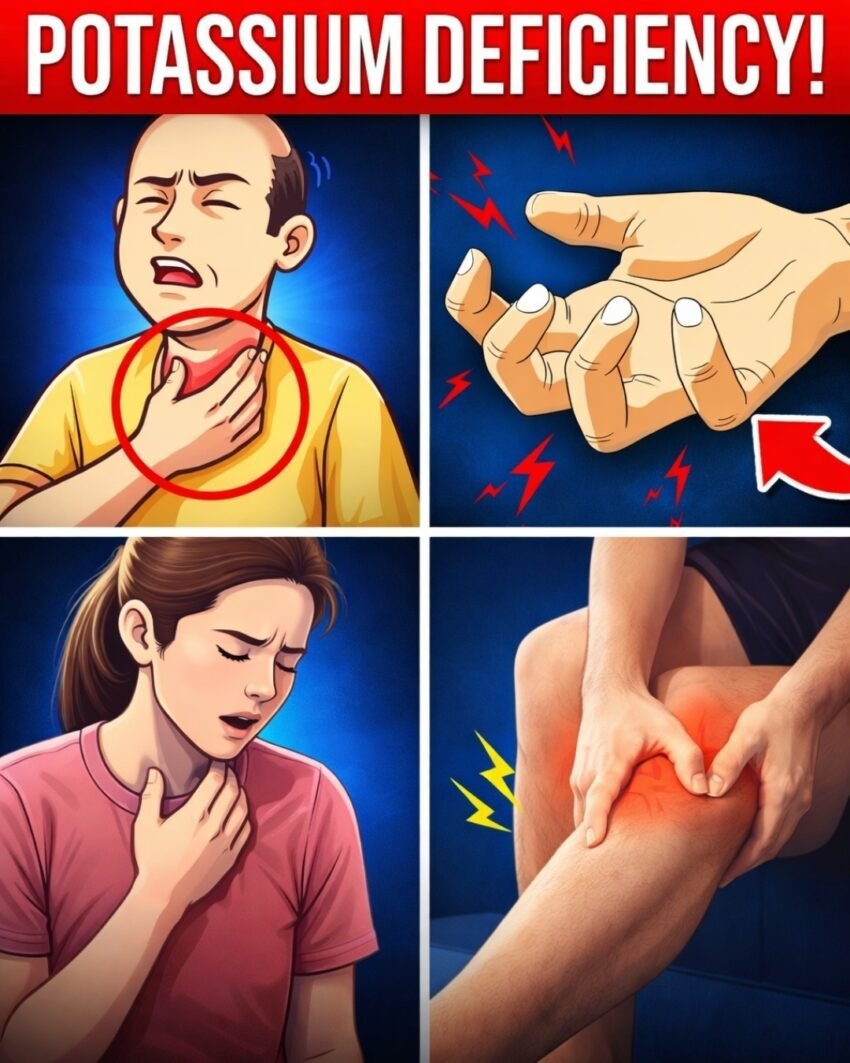
Potassium deficiency (called hypokalemia) means your blood potassium level is too low. Potassium is essential for muscle function, heart rhythm, and nerve signals, so low levels can cause noticeable symptoms.However, these signs are not specific to potassium alone—they can also come from dehydration, magnesium deficiency, kidney issues, or medications.
🧠 11 warning signs of low potassium (hypokalemia)
1) Muscle weakness
- Feeling unusually weak
- Difficulty lifting objects or climbing stairs
2) Muscle cramps or spasms
- Especially in legs or feet
- Can be painful and sudden
3) Fatigue
- Constant tiredness even after rest
4) Constipation
- Slow digestion due to reduced muscle movement in intestines
5) Heart palpitations
- Irregular or fast heartbeat
- Feeling like the heart is “skipping beats”
6) Tingling or numbness
- Usually in arms, legs, or feet
7) Muscle twitching
- Involuntary small movements in muscles
8) Bloating or abdominal discomfort
- Due to slowed intestinal activity
9) Mood changes or irritability
- Low energy can affect mental state
10) Shortness of breath (severe cases)
- Weak respiratory muscles
11) Abnormal heart rhythm (serious sign)
- Can be dangerous if potassium is very low
⚠️ Common causes of potassium deficiency
- Excessive sweating
- Vomiting or diarrhea
- Diuretic (water pill) medications
- Poor diet
- Kidney or hormonal issues
🚨 When to seek medical help urgently
- Chest pain
- Severe weakness
- Fainting or dizziness
- Irregular heartbeat
- Severe muscle paralysis
🥑 Foods rich in potassium
- Bananas
- Oranges
- Spinach
- Potatoes
- Beans and lentils
- Yogurt
🧠 Important truth
👉 Hypokalemia must be confirmed with a blood test
👉 Symptoms alone are not enough for diagnosis
👉 Severe cases can affect the heart and become dangerous
🧾 Bottom line
Low potassium can cause muscle, nerve, and heart-related symptoms—but it should always be diagnosed and treated by a healthcare professional.
If you want, I can also give you a simple potassium-rich diet plan (South Asian foods included) or a safe daily intake guide for older adults.