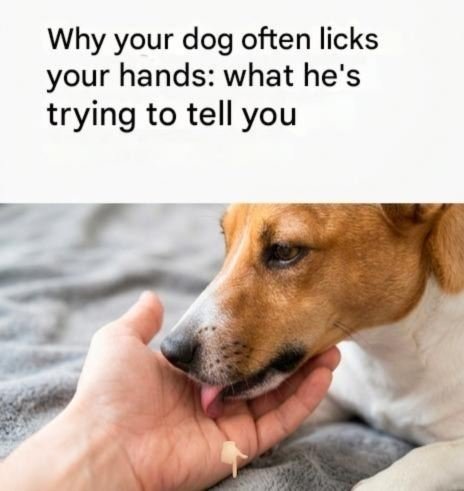
When Your Dog Licks Your Hands, It’s Not Random
Introduction
If your Dog often licks your hands, it’s easy to assume it’s just a quirky habit. In reality, this behavior usually has a purpose. Dogs communicate largely through body language and actions, and licking is one of their natural ways of expressing themselves.
1. A Sign of Affection
Licking is often compared to “kissing” in human terms. Dogs learn this behavior early in life, as puppies lick their mother and littermates. When your dog licks your hands, it can be a way of showing attachment and bonding.
2. Seeking Attention
Dogs quickly learn that licking gets a reaction. Whether you laugh, pet them, or talk to them, they associate licking with attention. If your dog wants interaction, licking your hands is a simple and effective method.
3. Exploring Their Environment
Dogs experience the world through their senses, especially smell and taste. Your hands carry scents from everything you’ve touched—food, objects, or even other animals—making them interesting to investigate.
4. A Sign of Submission or Respect
In canine social behavior, licking can signal respect or submission. A dog may lick your hands as a way of acknowledging you as a leader or expressing non-threatening intentions.
5. They Like the Taste
Human skin can taste slightly salty due to sweat. Your dog may simply enjoy the flavor, especially after you’ve been active or handling food.
6. Stress or Anxiety Relief
Licking can also be a self-soothing behavior. If your dog feels anxious, repetitive licking may help them calm down. In such cases, it’s important to observe whether the behavior becomes excessive.
When to Be Concerned
Occasional licking is completely normal. However, frequent or obsessive licking may indicate:
- Anxiety or boredom
- Skin irritation or allergies
- Compulsive behavior
If the behavior seems excessive or out of context, consulting a veterinarian is a good idea.
Conclusion
When your dog licks your hands, it’s usually a meaningful gesture—ranging from affection and curiosity to communication and comfort. Understanding the context of the behavior helps you better respond to your dog’s needs and strengthen your bond.