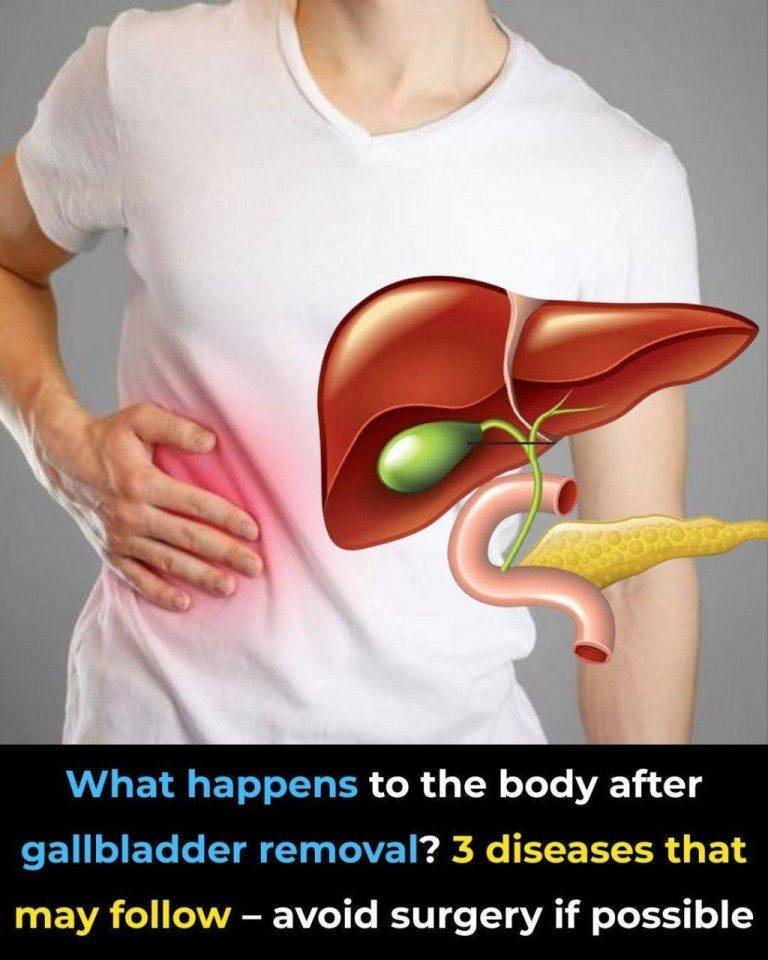
That headline is misleading in an important way. Gallbladder removal is not something to “avoid at all costs,” and for many people it prevents serious complications like recurrent gallstones, infection, or pancreatitis.
The gallbladder’s job is to store bile. After removal, bile flows directly from the liver into the intestine, which most people adapt to very well.
That said, a small number of people can develop certain post-surgery issues or conditions, especially in the months after surgery.
Here are 3 possible conditions after gallbladder removal:
1) Postcholecystectomy diarrhea
Some people experience:
- Loose stools after meals
- Urgency, especially after fatty foods
- Bloating or cramping
Why it happens:
- Bile flows continuously into the intestines instead of being stored
- This can mildly irritate the bowel in some people
Usually improves over time or with diet changes.
2) Postcholecystectomy syndrome
This is a general term for ongoing digestive symptoms after surgery, such as:
- Abdominal pain
- Indigestion or bloating
- Nausea
- Fat intolerance
Possible causes include:
- Changes in bile flow
- Small bile duct stones left behind
- Sphincter of Oddi dysfunction (muscle controlling bile flow)
It does not mean the surgery failed, just that symptoms persist and need evaluation.
3) Bile reflux gastritis
Less common, but can occur when bile flows backward into the stomach:
Symptoms:
- Burning upper abdominal pain
- Nausea or vomiting (sometimes bitter or yellow fluid)
- Persistent indigestion
🧠 Important reality check
Gallbladder removal is usually recommended only when necessary, such as:
- Repeated gallstone attacks
- Infection or inflammation
- Blockage or pancreatitis risk
Without surgery, these conditions can become dangerous or emergency situations.
🥗 What helps after surgery
Most people adjust well with:
- Smaller, low-fat meals at first
- Gradual reintroduction of fats
- High-fiber foods to stabilize digestion
- Staying hydrated
🚨 When to seek medical help after surgery
- Severe or persistent abdominal pain
- Jaundice (yellow skin or eyes)
- Ongoing vomiting
- Persistent diarrhea that doesn’t improve
🧾 Bottom line
After gallbladder removal, most people live completely normal lives. A small number may experience:
- Diarrhea
- Digestive discomfort (postcholecystectomy syndrome)
- Bile reflux
These are manageable in most cases and do not outweigh the risks of leaving serious gallbladder disease untreated.
If you want, I can also explain:
- Who actually needs gallbladder surgery
- Or how to prevent symptoms after removal
- Or what foods are best for long-term digestion health