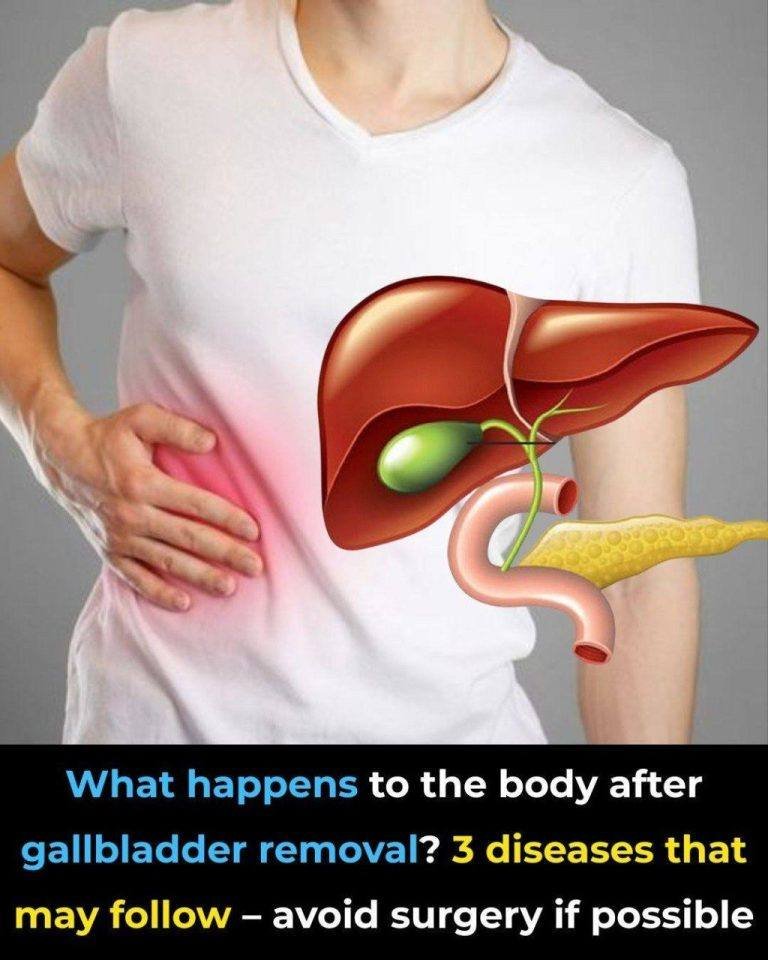
🧠 What the gallbladder actually does
The gallbladder is a small organ that:
- Stores bile (made by the liver)
- Releases bile when you eat fatty food
- Helps digest fats efficiently
After removal, bile flows continuously from the liver into the intestine instead of being stored.
🩺 What happens to the body after gallbladder removal
1. Digestion changes (most common effect)
After surgery:
- Bile drips steadily instead of being released in bursts
- Fat digestion becomes less “efficient” at first
- Some people experience bloating or loose stools
Typical symptoms (usually temporary):
- Gas or bloating
- Mild diarrhea after fatty meals
- Sensitivity to greasy food
Most people adapt within weeks to months.
2. Post-cholecystectomy diarrhea
A small percentage of people develop ongoing diarrhea.
Why it happens:
- Extra bile enters the intestines continuously
- Bile acids can irritate the colon
Treatment:
- Dietary fat reduction
- Bile acid binders (if needed, prescribed by a doctor)
3. Bile reflux gastritis (less common)
Some people may experience:
- Burning in upper stomach
- Nausea
- Bitter taste
This happens when bile flows backward into the stomach.
It is uncommon, but treatable.
4. Increased risk of bile duct stones (rare)
Even without a gallbladder:
- Stones can still form in bile ducts (choledocholithiasis)
- This is much less common than gallbladder stones
5. “Post-cholecystectomy syndrome”
A broad term used when symptoms persist after surgery:
- Indigestion
- Abdominal pain
- Bloating
Important note:
- This is not a single disease
- Often due to other underlying digestive conditions, not just gallbladder removal itself
⚠️ About the claim “3 diseases may follow”
Online posts often exaggerate this idea. In reality:
- Most people do not develop new diseases after surgery
- Some experience digestive adjustment symptoms, not dangerous conditions
- Serious complications are uncommon when surgery is properly indicated
🥗 Can you avoid surgery?
Only in specific cases.
Surgery is usually recommended when:
- Gallstones cause repeated pain (biliary colic)
- Gallbladder infection or inflammation occurs
- Blockage of bile ducts happens
- Pancreatitis is triggered by stones
Non-surgical options (limited use):
- Diet changes (low-fat diet)
- Medications (rarely effective for large stones)
- Observation (only if asymptomatic)
Important reality:
Once gallstones cause symptoms, surgery is usually the safest long-term solution.
Delaying needed surgery can increase risk of:
- Severe infection
- Pancreatitis
- Emergency hospitalization
🧠 Bottom line
After gallbladder removal:
- Most people live completely normal lives
- Some have temporary digestion changes
- A small number develop manageable long-term symptoms
The claim that surgery should generally be avoided is not supported by medical evidence. In most cases, removal prevents more serious complications than it causes.
If you want, I can also explain:
- What foods to eat after gallbladder removal (first week vs long-term)
- How to prevent diarrhea after surgery
- Or signs that gallbladder problems are becoming urgent before surgery is needed