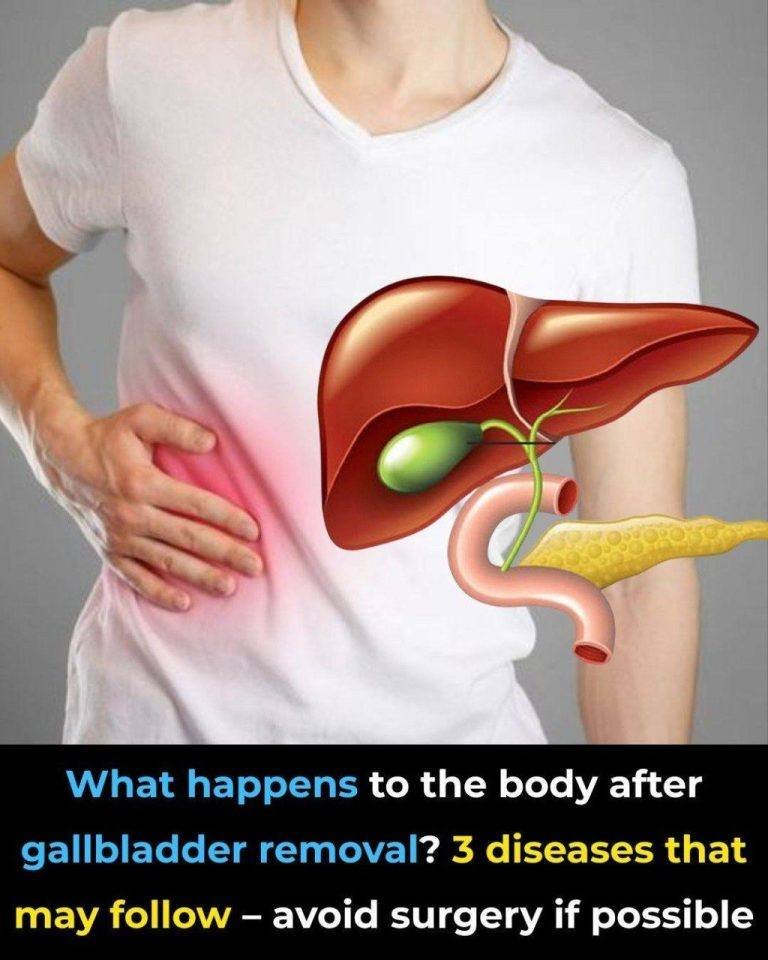
What Happens to the Body After Gallbladder Removal?
The gallbladder is a small organ that stores bile, which helps digest fats. When it is removed in a surgery called cholecystectomy, most people live completely normal lives afterward.
However, like any surgery, there can be changes in digestion—and in a smaller group of people, certain long-term issues may develop.
Let’s separate fact from fear-based claims.
What the Gallbladder Actually Does
The gallbladder:
- Stores bile made by the liver
- Releases it in controlled amounts when you eat fatty food
After removal:
- Bile flows directly from the liver into the intestine
- There is no storage system anymore
So digestion still works—but the timing is different.
What Most People Experience After Surgery
Common and normal changes:
- Loose stools for a few weeks
- Mild bloating or gas
- Difficulty digesting very fatty meals at first
These symptoms usually improve as the body adapts.
The Truth About “3 Diseases After Gallbladder Removal”
Some online claims say removal causes multiple diseases. That is misleading. Most people do not develop new diseases. However, a small number may experience certain complications or related conditions.
Here are the real possibilities doctors monitor:
1. Post-Cholecystectomy Diarrhea
Some people experience ongoing loose stools.
Why it happens:
- Bile flows continuously into the intestine
- It can irritate the bowel in sensitive individuals
This is usually manageable with diet changes or medication.
2. Bile Reflux Gastritis
In some cases, bile can flow backward into the stomach, causing irritation.
Symptoms:
- Burning in upper abdomen
- Nausea
- Bitter taste
This is less common but treatable.
3. Sphincter of Oddi Dysfunction (Rare)
This involves a valve controlling bile flow.
Possible symptoms:
- Upper abdominal pain
- Digestive discomfort after meals
It is uncommon and often over-diagnosed online.
Important Reality Check
These issues are:
- Not guaranteed
- Often mild or temporary
- Much less common than internet posts suggest
For most people, gallbladder removal improves quality of life—especially if they had painful gallstones.
Why Surgery Is Usually Recommended
Gallbladder removal is typically done for:
- Repeated gallstone attacks
- Infection or inflammation
- Blockage of bile ducts
Leaving the problem untreated can sometimes lead to:
- Severe pain
- Infection
- Pancreatitis (a serious condition)
Can You “Avoid Surgery”?
Sometimes yes, sometimes no.
Possible non-surgical approaches (only in selected cases):
- Dietary fat reduction
- Medications to dissolve small stones (limited use)
- Monitoring if symptoms are mild
But if complications are frequent or severe, surgery is often the safest option.
How to Live Well Without a Gallbladder
Most people adjust easily by:
- Eating smaller, low-fat meals initially
- Avoiding very oily or fried foods
- Gradually reintroducing normal diet
- Staying hydrated
The liver still produces bile continuously, so digestion continues normally.
Final Takeaway
Gallbladder removal through cholecystectomy does not usually cause new diseases in most people. A small number may experience digestive changes like diarrhea or reflux, but these are often manageable.
The idea that surgery should always be avoided is not accurate—the decision depends on symptoms, risks, and medical evaluation.
If you want, I can explain:
- Signs your gallbladder problem is becoming dangerous
- Or a diet plan for before and after gallbladder surgery