Let’s break down what actually happens in the body and what risks are real vs exaggerated.
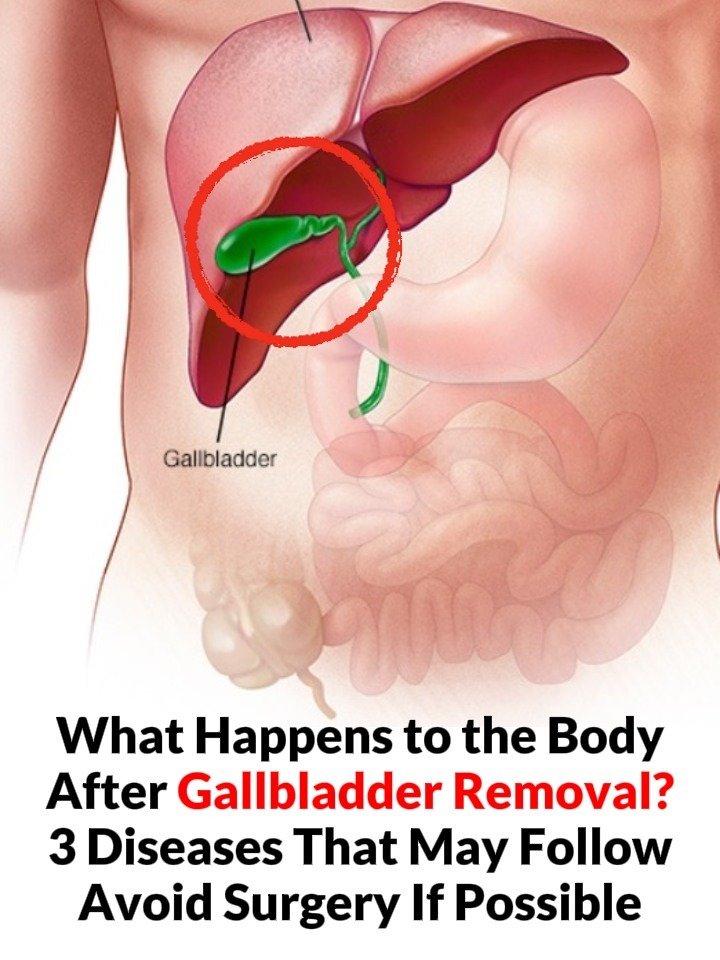
🫀 What the gallbladder does
The gallbladder stores and concentrates bile, which helps digest fats.
After removal, bile no longer gets stored—it flows directly from the liver into the small intestine.
Most people digest food normally after adaptation.
🩺 What happens after gallbladder removal
1. Changes in digestion (common, usually mild)
Some people notice:
- loose stools or diarrhea (especially after fatty meals)
- bloating or gas
- difficulty digesting very greasy foods initially
This is called post-cholecystectomy adjustment and often improves over weeks to months.
2. Bile flow becomes continuous
Instead of being stored and released in bursts, bile flows steadily.
This can make fatty meals harder to handle at first but usually the body adapts.
3. Liver continues normal function
The liver still produces bile normally. There is no “loss” of digestive function—only a change in how bile is delivered.
⚠️ Conditions sometimes discussed after surgery (what is real)
1. Post-cholecystectomy syndrome
Some patients report:
- abdominal discomfort
- bloating
- indigestion
However, this is often due to:
- underlying digestive issues that existed before surgery
- bile duct sensitivity
- unrelated gastrointestinal conditions
2. Bile reflux or gastritis (less common)
A small number of people may experience bile irritating the stomach or esophagus, causing discomfort.
3. Chronic diarrhea (minor subset of patients)
A small percentage experience ongoing bile-acid diarrhea, which can often be treated with medication.
❌ Important correction: “3 diseases caused by removal”
There is no strong scientific evidence that gallbladder removal directly causes new major diseases in most people.
What is often misrepresented online:
- symptoms that were already present before surgery
- temporary digestive adjustment
- unrelated conditions developing with age
Large medical studies show that cholecystectomy is generally safe and improves quality of life in patients with gallstones or inflammation.
🧠 When surgery is actually necessary
Doctors recommend gallbladder removal when there are:
- repeated gallstones causing pain
- gallbladder inflammation (cholecystitis)
- blocked bile ducts
- pancreatitis due to gallstones
In these cases, avoiding surgery can be more dangerous than having it.
⚖️ Bottom line
- The body can function normally without a gallbladder
- Some temporary digestive changes are common
- Serious long-term problems are uncommon
- Surgery is recommended when medically necessary—not optional in many cases
If you want, I can also explain:
- foods to eat after gallbladder removal
- how long digestion takes to normalize
- or warning signs that actually require urgent medical attention before surgery