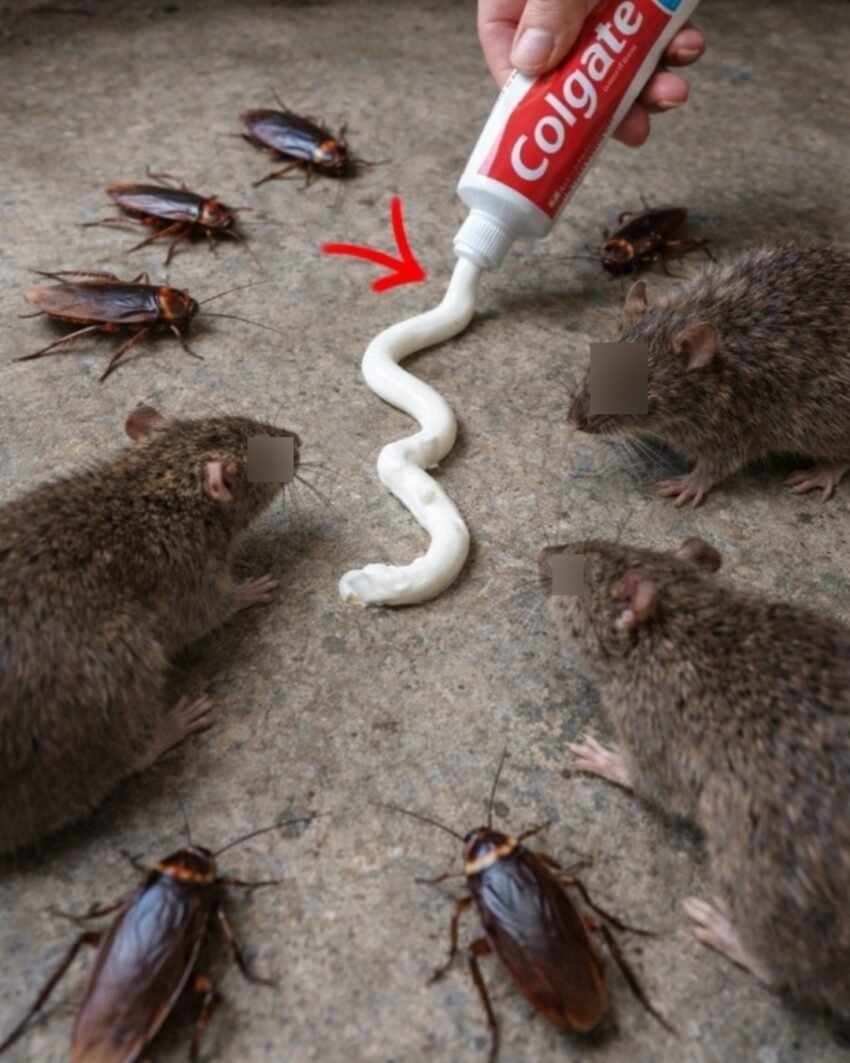
Does toothpaste really kill mice, cockroaches, or ants?
No. There is no scientific evidence that toothpaste effectively repels or eliminates:
- Mice
- Cockroaches
- Ants
Toothpaste may contain mild mint oils or abrasives, but it is not an insecticide or rodent control method.
At best, strong mint smells might temporarily deter ants in a very small area, but it does not solve an infestation.
Why this myth spreads
These videos usually rely on:
- Short-term anecdotal effects (a few ants avoid a spot briefly)
- Misinterpretation of scent masking
- Editing that hides the real outcome over time
In reality, pests adapt quickly and return.
What actually works for pest control
Ants
- Seal entry points (cracks, windows)
- Use bait traps (they carry poison back to the colony)
- Keep food sealed and surfaces clean
Cockroaches
- Gel baits (most effective long-term)
- Reduce moisture (fix leaks, dry sinks)
- Professional-grade insecticides if infestation is heavy
Mice
- Seal holes larger than 6 mm
- Use snap traps or electronic traps
- Store food in airtight containers
When to call professionals
Consider pest control services if:
- You see pests during the day (sign of heavy infestation)
- You find droppings repeatedly
- DIY traps don’t reduce activity after 1–2 weeks
Bottom line
Toothpaste is for dental hygiene, not pest control. It may smell strong, but it does not eliminate infestations of mice, cockroaches, or ants in any reliable way.
If you want, tell me which pest you’re dealing with and your home setup, and I can suggest a targeted, low-cost solution that actually works.