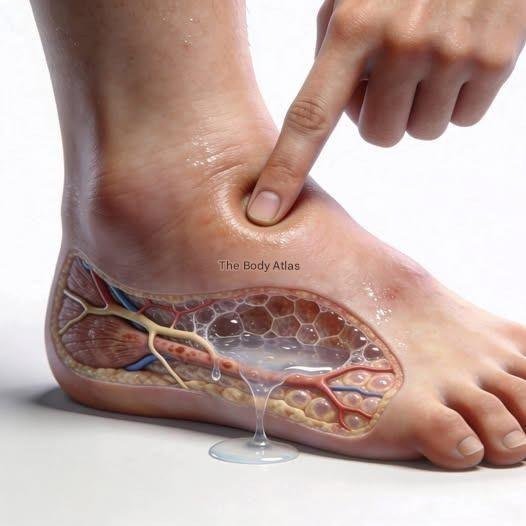
This image vividly illustrates pitting edema, where pressing the skin leaves a visible indentation that slowly fills back in. The fluid buildup shown under the skin highlights how excess fluid collects in tissues, often in the lower legs and feet.
Consequences of Dealing with Edema (Fluid Retention)
Edema can arise from various causes, and if left untreated, it may lead to significant health problems:
1. Discomfort and Reduced Mobility
- Swollen tissues can cause pain, tightness, and heaviness, making walking or movement difficult.
2. Skin Changes and Infections
- Stretched skin becomes fragile, prone to cracks, ulcers, or infections like cellulitis.
3. Underlying Health Issues
- Edema often signals chronic conditions such as:
- Heart failure: When the heart can’t pump blood effectively, fluid accumulates.
- Kidney disease: Impaired filtration leads to fluid retention.
- Liver disease: Reduced protein production causes fluid leakage into tissues.
- Venous insufficiency: Poor vein function causes blood and fluid pooling.
4. Complications from Severe or Chronic Edema
- Long-term swelling can cause tissue fibrosis (hardening).
- Increased risk of blood clots (deep vein thrombosis).
- Reduced oxygen delivery to tissues, impairing healing.
What To Do If You Notice Edema
- Consult a healthcare professional to determine the underlying cause.
- Elevate legs to reduce swelling.
- Compression stockings may improve circulation.
- Limit salt intake to reduce fluid retention.
- Manage chronic diseases carefully with medical guidance.
Key Takeaway
Pitting edema, shown in the image, is not just swelling — it reflects fluid buildup due to possible underlying health problems. Early diagnosis and treatment are essential to prevent serious complications.
If you want, I can provide a detailed guide on edema causes, symptoms, and treatments for deeper understanding.