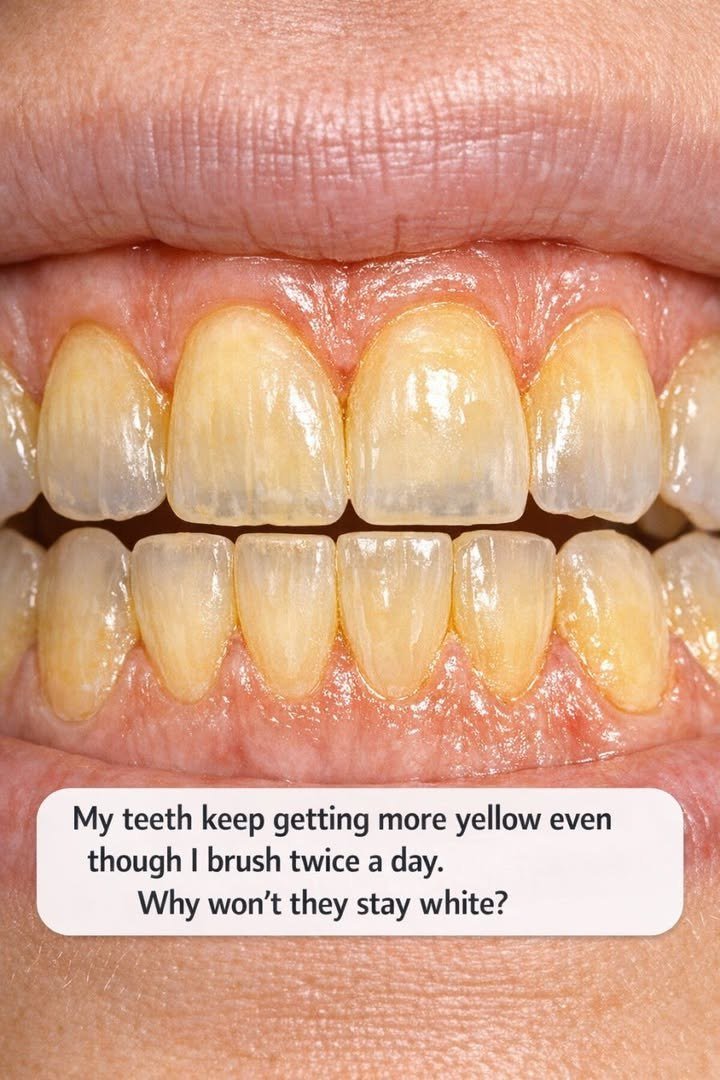
Why Your Teeth Are Getting Yellow Even If You Brush Twice a Day
Brushing twice a day is an important habit, but it doesn’t always guarantee bright white teeth. Tooth color is influenced by multiple factors—some within your control and others not. Understanding the causes can help you choose the right solution.
1. Surface Stains From Food and Drinks
Certain foods and beverages contain pigments that stick to your enamel (the outer layer of your teeth). Over time, these stains build up.
Common culprits include:
- Coffee and tea
- Cola and dark sodas
- Red wine
- Berries
- Tomato-based sauces
Even if you brush regularly, these substances can stain teeth faster than brushing can remove them—especially if consumed daily.
2. Plaque and Tartar Buildup
Brushing alone may not fully remove plaque, a sticky film of bacteria. When plaque hardens, it turns into tartar (calculus), which has a yellow or brown appearance.
Tartar cannot be removed by brushing at home—it requires professional cleaning. If you’re missing spots while brushing or not flossing, buildup can occur even with good intentions.
3. Brushing Technique and Tools
It’s not just about how often you brush, but how well you do it.
Common issues:
- Brushing too quickly (less than 2 minutes)
- Missing areas, especially along the gumline
- Using a worn-out toothbrush
- Not flossing
A manual brush used incorrectly can leave behind plaque that contributes to yellowing.
4. Natural Tooth Color and Aging
Teeth are not naturally pure white. Beneath the enamel is a yellowish layer called dentin. As you age, enamel thins, making the dentin more visible.
This means your teeth may appear more yellow over time—even if they are healthy and clean.
5. Smoking or Tobacco Use
Nicotine and tar from cigarettes or chewing tobacco stain teeth deeply. These stains are often resistant to regular brushing and can cause significant discoloration.
6. Toothpaste Limitations
Not all toothpaste is designed to whiten teeth. Many standard toothpastes focus on cleaning and cavity prevention, not stain removal.
Whitening toothpastes can help with surface stains but usually won’t change deeper discoloration.
7. Medication and Health Factors
Certain medications and medical conditions can affect tooth color.
Examples include:
- Antibiotics like tetracycline (especially during childhood)
- Excess fluoride exposure (fluorosis)
- Some antihistamines or blood pressure medications
These types of discoloration often occur beneath the enamel and are harder to treat.
8. Enamel Wear
Brushing too hard or using a hard-bristled toothbrush can wear down enamel. When enamel thins, the yellow dentin underneath becomes more visible.
Ironically, aggressive brushing can make teeth look more yellow instead of whiter.
How to Keep Your Teeth Whiter
Improve Your Oral Hygiene Routine
- Brush for at least 2 minutes twice daily
- Use a soft-bristled toothbrush
- Floss daily to remove plaque between teeth
- Replace your toothbrush every 3 months
Adjust Your Diet
- Limit staining foods and drinks
- Rinse your mouth with water after consuming them
- Use a straw for beverages like coffee or soda
Consider Whitening Options
- Whitening toothpaste for mild stains
- Over-the-counter whitening strips
- Professional whitening treatments from a dentist
Schedule Regular Dental Cleanings
Professional cleanings remove tartar and surface stains that brushing can’t handle.
When to See a Dentist
If your teeth are becoming noticeably yellow despite good oral care, it may be time to consult a dentist. Persistent discoloration could indicate:
- Tartar buildup
- Enamel erosion
- Internal staining that needs professional treatment
Conclusion
Brushing twice a day is essential, but it’s only one piece of the puzzle. Tooth color depends on diet, hygiene technique, natural aging, and even genetics. If your teeth are getting more yellow, it doesn’t necessarily mean you’re doing something wrong—it may just mean you need to adjust your routine or explore additional care options.