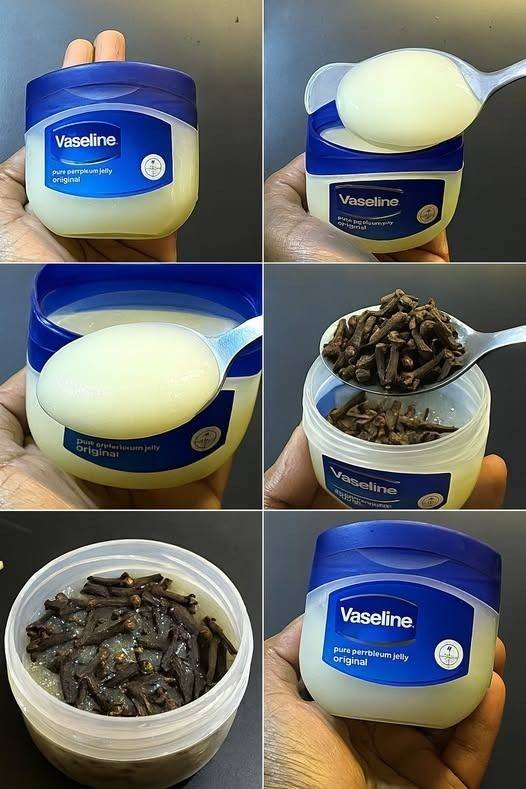
Cloves and Petroleum Jelly Mixture: What It Is, What It Does, and What You Should Know
Introduction
The idea of mixing cloves with petroleum jelly is often shared online as a “secret remedy” for pain, skin issues, or inflammation. While both ingredients have individual properties, it is important to understand that this mixture is not a medically proven treatment for any disease.
This article explains what each ingredient does, how the mixture is used, and its real limitations.
What the Mixture Is Supposed to Be Used For
People commonly claim that a mixture of ground cloves and petroleum jelly can help with:
- Joint or muscle pain
- Skin irritation
- Minor infections
- Itching or inflammation
However, these uses are based on traditional or anecdotal beliefs rather than clinical evidence.
Ingredients Breakdown
Cloves
Cloves contain a natural compound called eugenol, which has been studied for:
- Mild pain-relieving properties
- Antimicrobial activity in laboratory settings
- Temporary numbing effects when used in concentrated form
In medicine, eugenol is used in controlled dental preparations, not homemade mixtures.
Petroleum Jelly
Petroleum jelly is an occlusive moisturizer, meaning it:
- Locks moisture into the skin
- Protects the skin barrier
- Reduces dryness and irritation
It does not have antibacterial, anti-inflammatory, or pain-relieving properties.
How the Mixture Is Typically Prepared
Although not medically recommended, the common homemade preparation is:
- Take a small amount of petroleum jelly
- Add a pinch of finely ground cloves or clove powder
- Mix thoroughly until evenly blended
- Apply a thin layer to the skin
Claimed Benefits vs Reality
Claimed Benefits
- Pain relief
- Reduced inflammation
- Treatment of infections
- Skin healing
What Evidence Actually Shows
- Cloves may provide mild, temporary numbing when used directly in concentrated forms
- Petroleum jelly helps moisturize and protect skin
- There is no scientific evidence that the mixture treats underlying medical conditions
Any relief experienced is usually:
- temporary
- superficial
- related to skin hydration or mild sensory effects
Possible Risks and Side Effects
This mixture is not risk-free. Potential issues include:
- Skin irritation or burning sensation from clove oil compounds
- Allergic reactions in sensitive individuals
- Delayed treatment of real medical conditions if used as a substitute
- Increased skin sensitivity with repeated use
Cloves are particularly strong and can be irritating when not properly diluted.
When It Should Not Be Used
Avoid using this mixture for:
- Open wounds
- Severe joint or nerve pain
- Skin infections requiring medical treatment
- Chronic inflammatory conditions
Medical Perspective
While cloves have bioactive compounds and petroleum jelly is useful for skin protection, combining them does not create a clinically recognized treatment. Health professionals do not recommend this mixture as a substitute for evidence-based care.
Conclusion
The clove and petroleum jelly mixture is a popular home remedy with limited and mostly anecdotal use. It may provide mild, temporary soothing effects for the skin, but it does not treat underlying medical conditions or replace proper medical care. Anyone experiencing persistent pain, inflammation, or skin problems should seek professional medical advice rather than rely on unproven remedies.