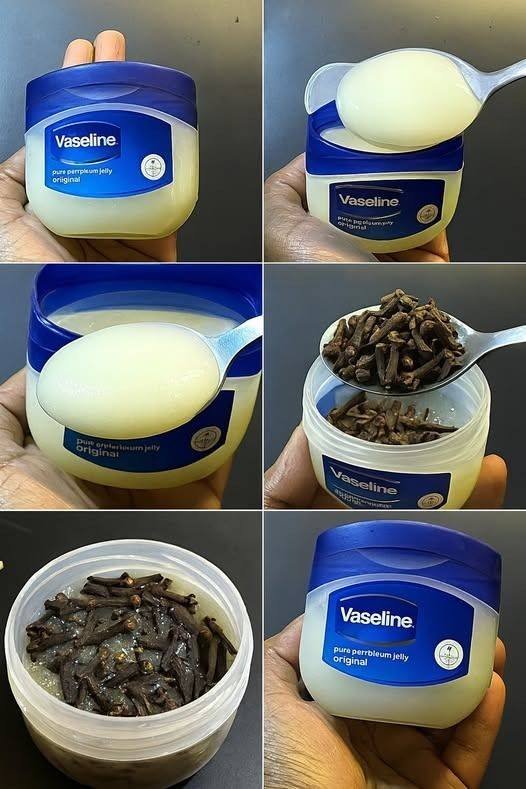
Cloves + petroleum jelly — what it really is
petroleum jelly is commonly used in skincare to lock in moisture and protect dry skin.cloves (or clove oil) contain a strong compound called eugenol, which can have mild antimicrobial properties—but it is also highly irritating to skin in concentrated form.
What happens when you mix them?
People online claim this mixture can:
- remove wrinkles
- fade dark spots
- treat acne
- “rejuvenate skin”
But in reality:
Possible effects
- Temporary warming or tingling sensation
- Mild masking of dryness (from petroleum jelly)
- No proven anti-aging or skin-repair benefits
Real risks
- Skin irritation or burning
- Allergic reactions (especially from clove oil)
- Damage to sensitive facial skin
- Worse irritation around eyes and lips
Why this trend is misleading
- Petroleum jelly only seals moisture; it does not treat skin problems
- Cloves are a strong spice, not a cosmetic ingredient
- Combining them does not create a medical or dermatological treatment
There is no clinical evidence supporting this mixture for wrinkles, acne, or pigmentation.
Safer alternatives that actually work
For dry skin:
- Plain petroleum jelly on damp skin
- Ceramide-based moisturizers
For dark spots or aging:
- Sunscreen (most important)
- Vitamin C serums
- Retinoids (doctor-approved anti-aging treatment)
For acne:
- Salicylic acid
- Benzoyl peroxide (if needed)
Important warning
Do NOT apply clove oil or strong clove mixtures to:
- face
- under eyes
- broken or sensitive skin
It can cause chemical irritation.
Final takeaway
Mixing cloves with petroleum jelly is a viral home remedy with no proven skincare benefits and real risk of irritation. Petroleum jelly is useful on its own—but cloves are not a safe cosmetic ingredient.
If you want, I can give you:
- a safe anti-aging nighttime routine
- or natural remedies that actually have evidence behind them