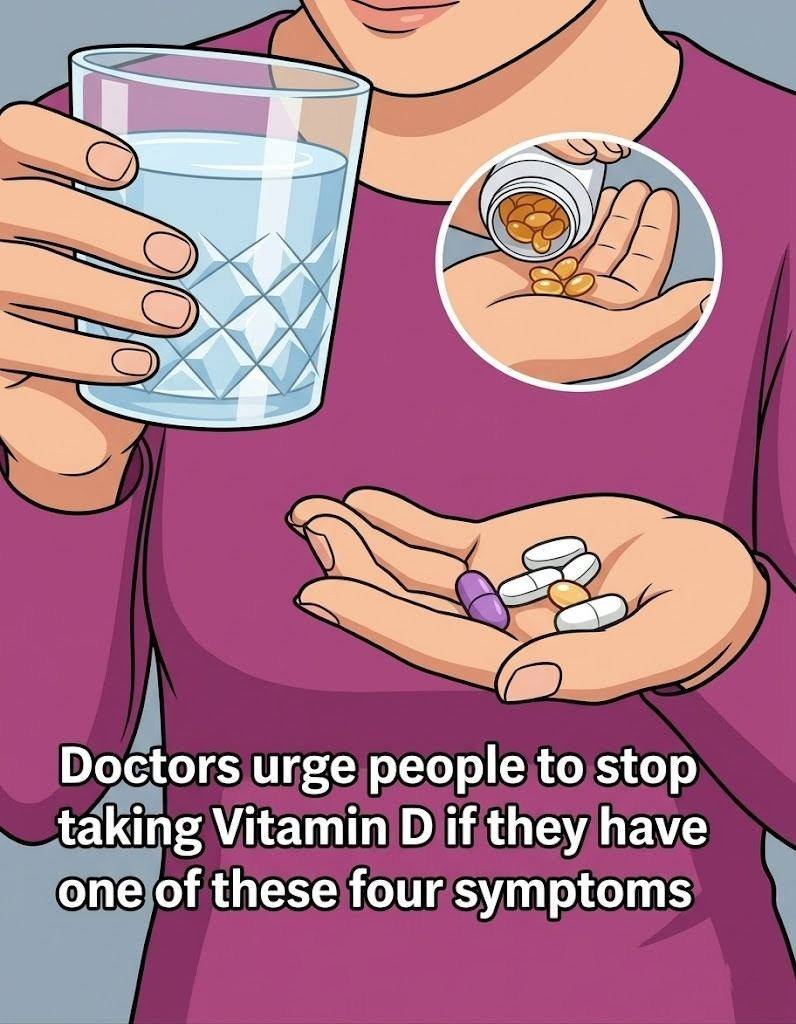
Important Warning About Vitamin D: What Doctors Actually Say
Headlines like “stop taking vitamin D immediately if you have these 4 symptoms” are typically oversimplified and misleading. Vitamin D is important for bone health, immune function, and muscle strength—but too much of it can be harmful in rare cases.
The key issue doctors watch for is not vague symptoms, but a condition called vitamin D toxicity, which leads to high calcium levels in the blood.
When Vitamin D Can Become a Problem
Excess intake of Vitamin D can lead to hypercalcemia, meaning too much calcium in the bloodstream.
Hypercalcemia can occur if someone takes extremely high doses over time, usually far above recommended amounts.
This is rare and usually happens only when:
- Taking very high-dose supplements for weeks or months
- Accidentally doubling doses
- Using multiple supplements containing vitamin D
Symptoms That May Signal Too Much Vitamin D
Doctors don’t rely on a “viral list,” but these are the real symptoms associated with high calcium from excess vitamin D:
1. Digestive symptoms
- Nausea
- Vomiting
- Loss of appetite
- Constipation
2. Excess thirst and urination
- Feeling unusually thirsty
- Frequent urination
3. Fatigue and weakness
- Feeling unusually tired
- Muscle weakness
4. Confusion or brain fog (in more severe cases)
- Difficulty concentrating
- Irritability or confusion
Important Clarification
These symptoms are not specific to vitamin D. They can also be caused by:
- Dehydration
- Infections
- Kidney issues
- Other medical conditions
That’s why diagnosis requires a blood test, not symptom guessing.
What Doctors Actually Recommend
- Most adults only need moderate daily doses of vitamin D (often 600–2000 IU, depending on age and health)
- Toxicity usually occurs at very high long-term doses (often above 10,000 IU daily for months)
- Blood levels can be checked with a simple test if there is concern
What You Should Do (If You’re Taking Vitamin D)
- Do not stop supplements suddenly unless advised by a doctor
- Check the total dose across all vitamins you take
- Avoid “megadose” self-treatment unless medically prescribed
- Talk to a doctor if you have symptoms or are unsure about dosage
Bottom Line
Vitamin D is safe and beneficial when taken correctly. Serious problems are rare and usually linked to excessive dosing over time, not normal supplementation.
The “stop immediately” warnings online are usually exaggerated. The real message from doctors is simpler: take the right dose, not too much, and get tested if you’re unsure.
If you want, tell me the dose you’re taking and I can help you check whether it’s within a safe range.