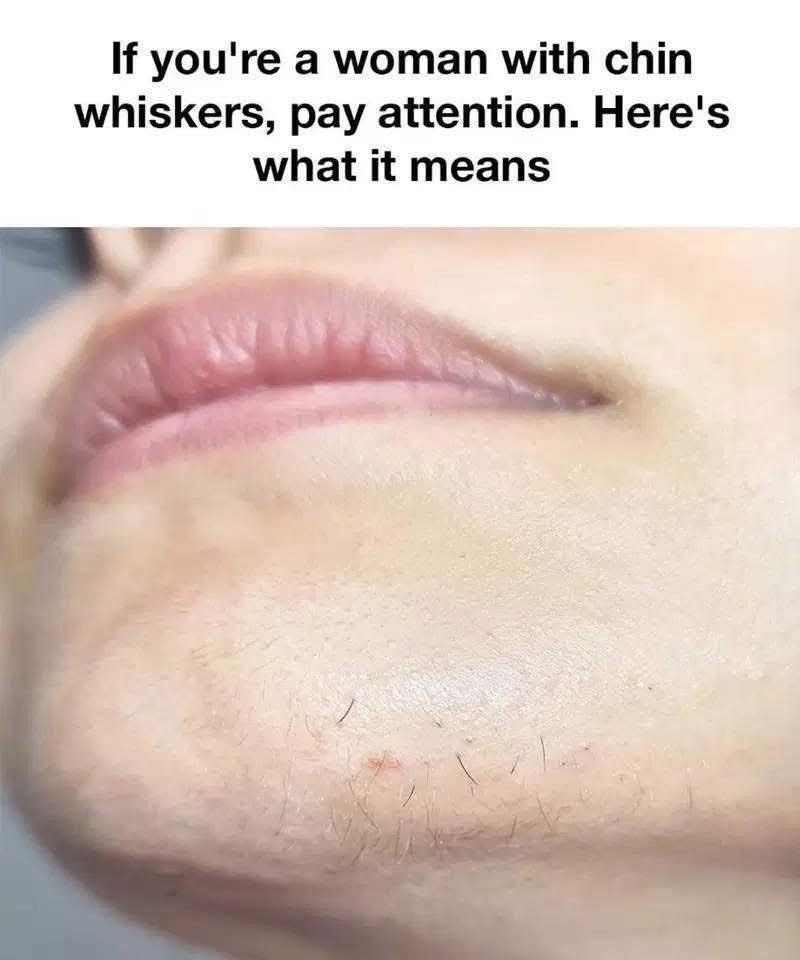
That headline is exaggerated, but there is a real medical basis behind chin hair in women. It’s usually not dangerous, but sometimes it can reflect hormonal changes.
🧠 What chin whiskers in women can mean
1) Normal aging and hormonal shift (most common)
- After age 40–50, estrogen levels gradually decrease
- Male hormones (androgens) become relatively more noticeable
- This can cause a few coarse chin hairs
2) Genetics
- Very common if female relatives have it
- Completely harmless in most cases
3) Menopause-related changes
- Hormonal fluctuations during and after menopause
- Can increase facial hair growth slightly
⚠️ When it may indicate a health issue
4) Polycystic Ovary Syndrome (PCOS)
More likely if chin hair comes with:
- Irregular periods
- Acne
- Weight gain
- Hair thinning on scalp
5) Hormonal imbalance
- Increased androgen levels
- Can occur due to stress, medications, or endocrine disorders
6) Rare conditions
- Adrenal or ovarian disorders
- Usually accompanied by other strong symptoms
🚨 When to see a doctor
Seek medical advice if:
- Hair growth increases suddenly or rapidly
- You also have menstrual irregularities
- There are acne or voice changes
🧠 Simple truth
- A few chin hairs in women are very common and usually harmless
- Concern is only needed when changes are sudden, excessive, or combined with other symptoms
👍 What can be done
- Threading, waxing, or laser removal for cosmetic reasons
- Lifestyle and weight management if hormonal imbalance is suspected
- Medical evaluation if PCOS or endocrine issues are suspected
🧾 Bottom line
Chin whiskers are usually a normal part of aging or genetics, but sometimes they can signal hormonal imbalance, especially when accompanied by other symptoms.
If you want, I can give you a simple checklist to tell normal aging facial hair from PCOS-related signs.