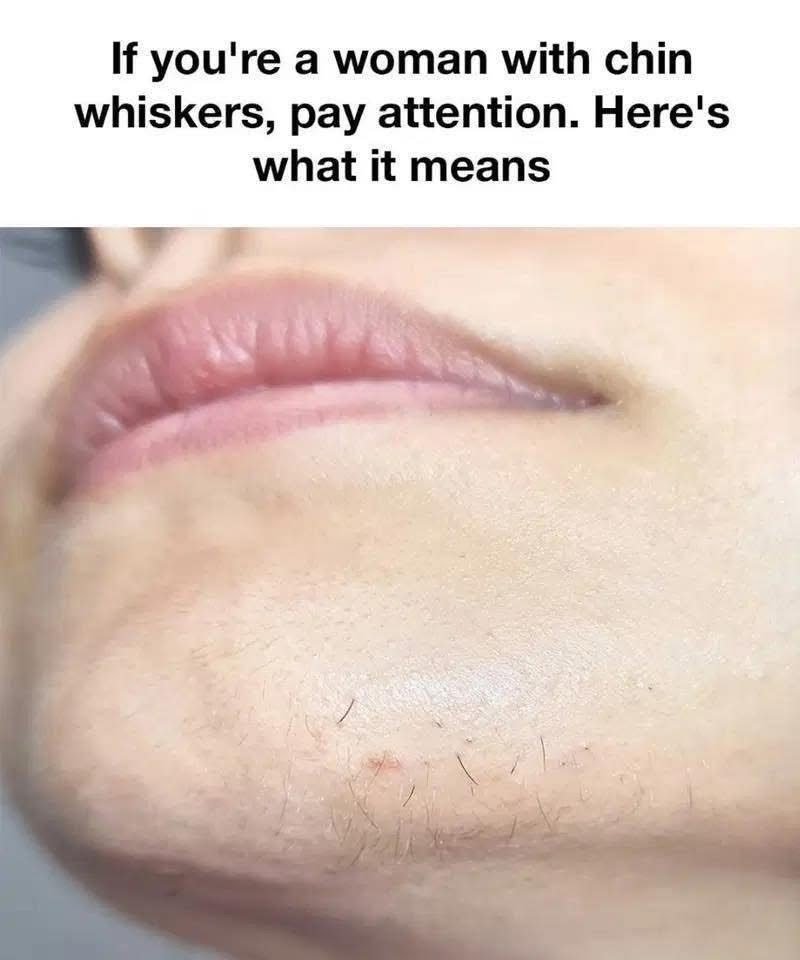
What chin whiskers in women actually mean
Hirsutism is the medical term for noticeable coarse hair growth in areas like the chin.It usually reflects hormone sensitivity or imbalance, not a serious hidden disease in most cases.
Common reasons for chin hair in women
1. Normal hormonal changes with age
As women age (especially after 40–50):
- Estrogen levels gradually decline
- Androgens (male-type hormones) may have a stronger effect
- Result: a few coarse chin hairs can appear
This is very common after menopause.
2. Genetics (family tendency)
If close female relatives have similar hair growth:
- It is often hereditary
- Not related to illness
3. Polycystic ovary syndrome (PCOS)
In some cases, excess chin hair may be linked to:
Polycystic Ovary Syndrome
Other possible signs include:
- Irregular periods
- Acne
- Thinning scalp hair
- Weight changes
Not everyone with chin hair has PCOS, but it is one possible cause in younger women.
4. Medications or medical conditions (less common)
Sometimes linked to:
- Certain hormone medications
- Rare adrenal or ovarian conditions
- Long-term steroid use
These cases are uncommon and usually come with other symptoms.
When it is NOT a concern
Chin hair is usually harmless if:
- It appears slowly over years
- It is just a few coarse hairs
- There are no other hormonal symptoms
When to see a doctor
It is worth checking if:
- Hair growth appears suddenly or rapidly
- There are menstrual changes
- There is acne or voice changes
- Hair growth becomes excessive over time
Bottom line
Chin whiskers in women are usually a normal age-related or genetic change, not a warning sign. In some cases, they can be linked to hormonal conditions, but most of the time they are harmless and cosmetic.
If you want, I can explain safe ways to remove or reduce chin hair or how hormones influence facial hair in simple terms.