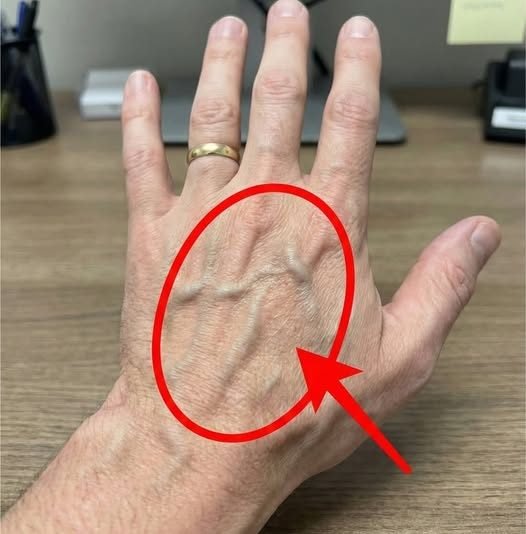
If You Have Visible Veins, What It Really Means
Introduction
Many social media posts claim that visible veins reveal hidden truths about your health or body. In reality, vein visibility is influenced by several normal physical factors and is rarely a sign of anything unusual.
What Visible Veins Are
Vein are part of the circulatory system. Their job is to return blood from the body back to the heart. Sometimes, these veins become more noticeable under the skin.
Common Reasons Veins Become Visible
1. Low Body Fat
One of the most common reasons is a lower amount of fat under the skin. When there is less fat, veins naturally become easier to see.
2. Physical Activity
During or after exercise, blood flow increases and muscles expand slightly. This makes veins appear more prominent, especially in the arms and legs.
3. Heat and Temperature
Warm weather causes blood vessels to expand. This can temporarily make veins look larger and more visible.
4. Genetics
Some people are naturally more prone to visible veins due to inherited skin thickness and vascular structure.
5. Age-Related Changes
As people age, the skin becomes thinner and loses elasticity, which can make veins more noticeable.
When Visible Veins Are Normal
In most cases, visible veins are completely normal. They are often seen in:
- Athletes or physically active individuals
- People with lean body composition
- Individuals exposed to heat or after exercise
When to Be Careful
Although usually harmless, there are situations where visible veins may indicate a medical issue:
- Painful or swollen veins
- Sudden changes in appearance
- Redness or warmth in the area
- One limb affected more than the other
These signs may be related to conditions such as varicose veins or circulation problems.
What Visible Veins Do NOT Mean
Despite viral claims, visible veins do not mean:
- You are unhealthy
- You are toxic or “detoxing”
- You have a special condition or ability
- You are automatically fit or unfit
These interpretations are not supported by medical science.
Conclusion
Visible veins are usually a normal variation in human anatomy influenced by body fat, activity level, temperature, genetics, and age. They are not a reliable indicator of overall health on their own.
If veins become painful, swollen, or suddenly change, it is best to seek medical advice.