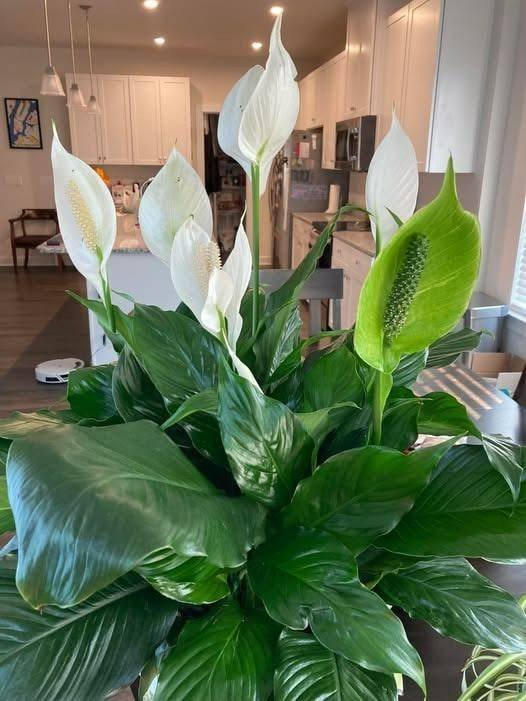
A Peace Lily can absolutely bloom more often—but only if its basic conditions are right. The plant people call a “peace lily” is usually Spathiphyllum, and its flowers (white “spathes”) are actually a response to good light, maturity, and proper care—not just random luck.
Here’s how to encourage more blooms:
1. Give it bright, indirect light (most important)
- Too little light = lots of green leaves, no flowers
- Too much direct sun = leaf burn
- Best spot: near a bright window with filtered light
If your plant hasn’t flowered in a long time, light is usually the reason.
2. Don’t overwater (or underwater)
- Keep soil lightly moist, not soggy
- Water when the top 2–3 cm of soil is dry
- Poor drainage = root stress = fewer blooms
3. Use the right fertilizer
- During growing season (spring/summer), feed every 4–6 weeks
- Use a balanced or slightly higher phosphorus fertilizer (supports flowering)
- Avoid over-fertilizing—this can stop blooming
4. Keep it slightly root-bound
Peace lilies often bloom better when:
- They are a bit snug in their pot
- Not constantly repotted into large containers
If it’s extremely root-bound, though, repotting is needed.
5. Maintain warm, stable conditions
- Ideal temperature: 18–27°C
- Avoid cold drafts or sudden temperature changes
- Stress = fewer flowers
6. Remove old flowers and yellow leaves
- Trim spent blooms at the base
- This redirects energy into new growth and future flowers
7. Increase humidity
- Peace lilies like humid environments
- Dry air can reduce blooming
- You can mist lightly or place near a water tray
8. Be patient (maturity matters)
Young plants may take time before flowering regularly. A mature Spathiphyllum naturally produces more blooms when conditions are right.
Bottom line
To get more flowers, focus on:
bright indirect light + proper watering + light feeding + stable conditions
No “secret hack” works if light and care basics aren’t right.
If you want, tell me what your plant currently looks like (lots of leaves but no flowers? drooping? yellow tips?), and I can diagnose exactly what’s holding it back.