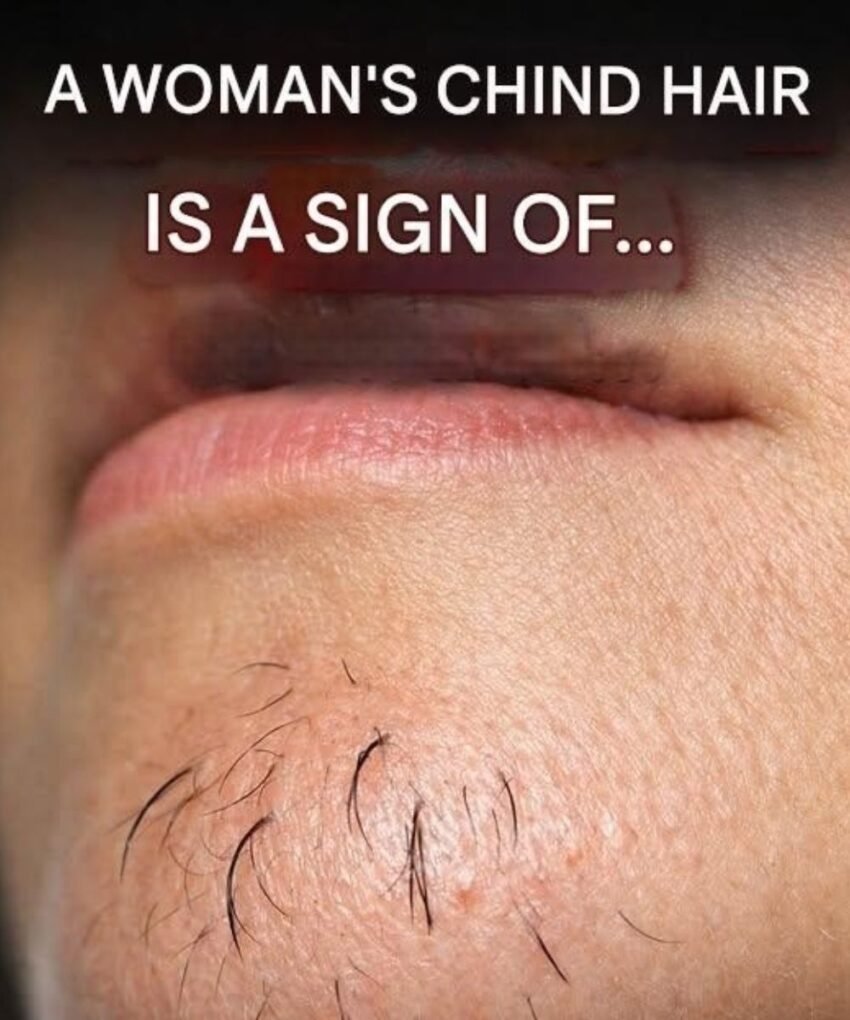
A Woman’s Chin Hair Is a Sign of… What It Actually Means
Introduction
Posts like “a woman’s chin hair is a sign of…” usually try to imply something dramatic, but in most cases the reality is much simpler: chin hair in women is common and often harmless. Whether it means anything medically depends on how much hair there is, when it started, and whether other symptoms are present.
1. Most Common Cause: Normal Hormonal Variation
Women naturally produce small amounts of androgens (male-type hormones). With age or hormonal shifts:
- Estrogen levels gradually decline
- Androgens may have a slightly stronger effect
- Coarser facial hairs can appear on the chin or upper lip
This is especially common:
- During and after menopause
- In midlife hormonal changes
- Due to genetics
In many cases, this is simply a normal part of aging, not a disease.
2. Genetics Plays a Big Role
Some women naturally have more visible facial hair due to inherited traits.
- Family history is often a strong factor
- Certain ethnic backgrounds may have more visible hair growth patterns
- This is not linked to any illness
3. When It May Indicate a Medical Condition
If chin hair is new, increasing, or unusually thick, it may be linked to excess androgen activity, a condition known as Hirsutism.
Possible underlying causes include:
Polycystic Ovary Syndrome (PCOS)
A common hormonal condition where:
- Androgen levels are higher than normal
- Irregular periods may occur
- Acne or weight changes may also be present
This is associated with Polycystic Ovary Syndrome.
Hormonal imbalance
- Stress, weight changes, or endocrine issues can affect hormone levels
- This may increase facial hair growth over time
Rare medical conditions
- Adrenal or ovarian disorders
- Certain hormone-secreting tumors (rare)
These are uncommon and usually come with other noticeable symptoms.
4. Medication or External Factors
Some medications may contribute to facial hair growth, including:
- Certain steroids
- Hormone treatments
- Some anti-seizure medications
These effects vary widely between individuals.
5. When You Should Pay Attention
You should consider medical advice if:
- Hair growth appears suddenly or rapidly increases
- You also notice:
- Irregular menstrual cycles
- Acne or oily skin
- Hair thinning on the scalp
- Voice deepening
These may suggest a hormonal imbalance that needs evaluation.
Important Reality Check
- A few chin hairs are very common and usually harmless
- It does not automatically indicate disease or serious illness
- Most cases are related to normal aging or genetics
Conclusion
Chin hair in women is not automatically a “sign” of something serious. Most often, it reflects normal hormonal changes or genetics. In some cases, it can be associated with conditions like Hirsutism or Polycystic Ovary Syndrome, but those cases usually come with additional symptoms.
The key is not the presence of a single hair, but the pattern, timing, and overall health context.