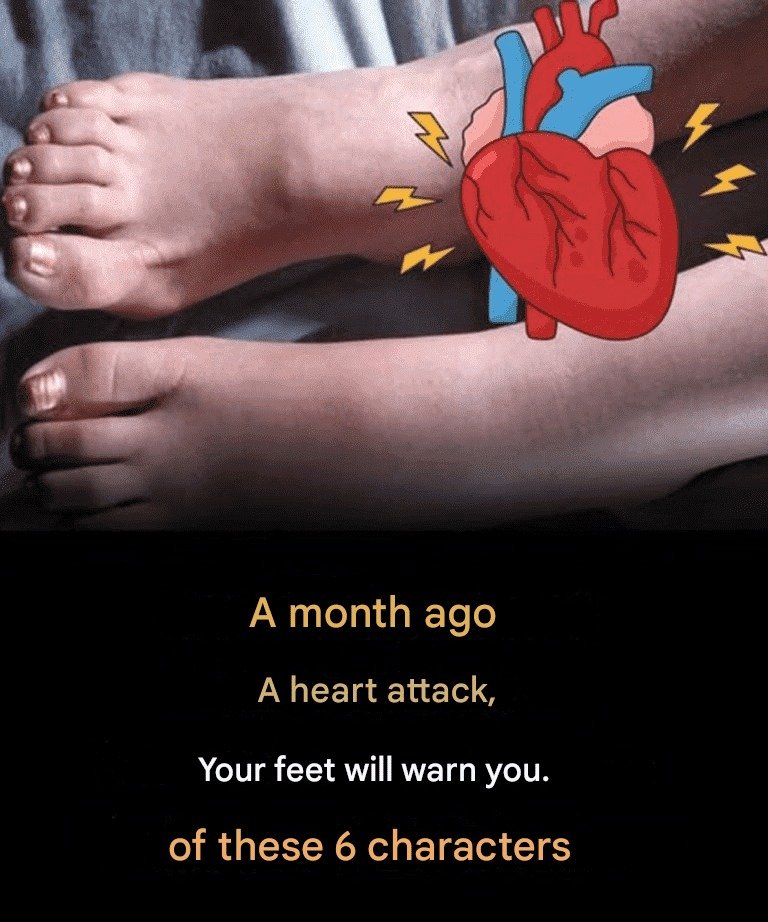
Do Your Feet Warn You About a Heart Attack a Month in Advance?
Introduction
You may have seen claims that your feet can predict a heart attack weeks in advance. That idea is misleading. There isn’t a reliable set of “six foot signs” that can predict a heart attack a month before it happens. However, certain changes in your feet and legs can signal underlying circulation or heart-related problems that deserve attention.
Understanding the Real Condition Behind Foot Symptoms
Many foot-related warning signs are linked to Peripheral Artery Disease, a condition where narrowed arteries reduce blood flow to the limbs. This shares risk factors with heart disease and can increase your risk of a Heart Attack.
Possible Foot and Leg Signs to Watch
1. Swelling in Feet or Ankles
Persistent swelling (edema) can occur when the heart isn’t pumping efficiently, causing fluid to build up in the lower extremities.
2. Cold Feet or Temperature Differences
Feet that feel unusually cold compared to the rest of your body may indicate poor circulation.
3. Pain While Walking (Claudication)
Cramping or pain in the feet or calves during walking that improves with rest is a classic symptom of circulation problems.
4. Slow-Healing Wounds
Cuts or sores on the feet that take a long time to heal can signal reduced blood flow.
5. Discoloration of the Skin
Bluish, pale, or reddish skin on the feet may point to oxygen supply issues.
6. Numbness or Weak Pulses
A tingling sensation or difficulty feeling a pulse in your feet can also indicate vascular problems.
Important Reality Check
These signs do not specifically mean a heart attack is imminent, nor do they reliably appear “a month before.” They are general warning signs of poor circulation or cardiovascular strain.
A heart attack often presents with more direct symptoms such as:
- Chest pain or pressure
- Shortness of breath
- Pain radiating to arm, jaw, or back
- Nausea or dizziness
When to Seek Medical Help
You should consult a healthcare professional if you notice:
- Persistent swelling or pain
- Non-healing wounds
- Sudden changes in skin color or temperature
Seek emergency care immediately if you experience chest pain or other classic heart attack symptoms.
How to Protect Your Heart and Circulation
- Stay physically active
- Maintain a balanced diet
- Avoid smoking
- Manage blood pressure and cholesterol
- Get regular health checkups
Conclusion
Foot symptoms can provide clues about your circulation and overall cardiovascular health, but they are not a reliable early warning system for an upcoming heart attack. Treat them as signals to check your health, not as a countdown.