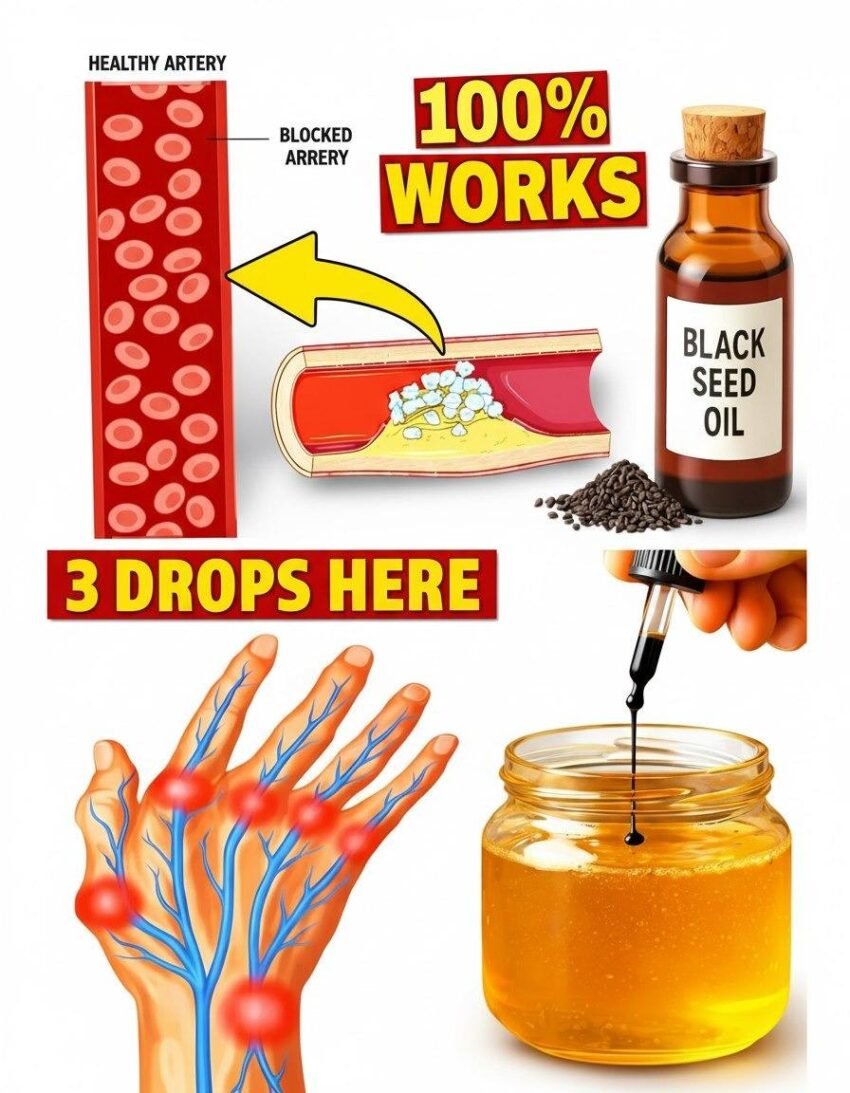
The ingredient being referred to is black seed oil, from Nigella sativa (also called black cumin). It has been used in traditional medicine for centuries—but the idea that “3 drops in honey fixes 13 problems” is not supported by clinical evidence.
What is true about black seed oil
Research on Nigella sativa shows it may have:
- mild anti-inflammatory effects
- antioxidant properties
- possible small benefits for blood sugar and cholesterol in some studies
- antimicrobial activity in lab settings
But these effects are:
- modest
- dose-dependent
- not “cures”
What it does NOT do (despite viral claims)
There is no scientific evidence that it can “fix” or cure:
- infections on its own
- diabetes
- high blood pressure
- asthma
- autoimmune diseases
- viral illnesses
- or multiple unrelated conditions simultaneously
Honey also does not transform it into a universal treatment.
Why these claims spread
They usually come from:
- traditional medicine sayings taken out of context
- modern social media exaggeration
- “ancient remedy” marketing
- supplement sales content
The phrase “3 drops fix 13 problems” is not medical language—it’s advertising-style simplification.
Possible real benefits (limited and specific)
Some studies suggest Nigella sativa may help slightly with:
- mild allergic symptoms
- small improvements in cholesterol markers
- blood sugar control (as an add-on, not replacement)
But effects vary and are not strong enough to replace standard treatment.
Safety note
Black seed oil can:
- interact with blood pressure or diabetes medications
- cause stomach upset in high doses
- lower blood sugar or blood pressure too much in some cases
So “more is better” is not safe.
Bottom line
Black seed oil is a traditional supplement with some mild evidence-backed effects, but the claim that it “fixes 13 problems with 3 drops in honey” is not medically credible.
If you want, I can break down:
- what black seed oil actually helps with in human studies, vs
- what is pure social-media myth (side-by-side).