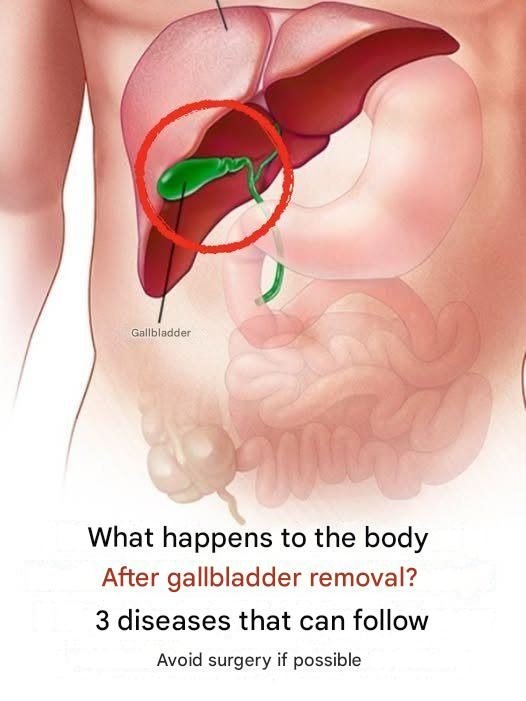
What changes in the body?
The gallbladder normally stores and concentrates bile, releasing it in controlled bursts when you eat (especially fatty foods). After removal:
- Bile flows continuously from the liver into the small intestine
- There is no storage “reservoir” anymore
- Fat digestion still works, but is less tightly regulated, especially right after surgery
Most people adapt well within weeks to months.
3 possible complications
1) Bile acid diarrhea
Without a gallbladder, bile can flow into the intestine in a more constant, less controlled way. In some people, excess bile irritates the colon and draws in water, leading to chronic loose stools or urgency.
This is known as Bile acid diarrhea and can range from mild to persistent.
2) Postcholecystectomy syndrome
A group of symptoms (not a single disease) that can appear after surgery, including abdominal pain, bloating, nausea, or indigestion. It may be caused by bile flow issues, irritation of the bile ducts, or unrelated digestive conditions that were already present.
This is called Postcholecystectomy syndrome.
3) Bile duct stones (retained or new)
Even without a gallbladder, stones can still form in or migrate into the bile ducts. These can block bile flow and cause pain, jaundice, or infection.
This condition is called Choledocholithiasis.
Bottom line
Most people live completely normal lives after gallbladder removal, but the main changes involve how bile is delivered—and a small subset develop digestive symptoms or bile duct complications.
If you want, I can break down what diet changes help most after surgery or how long recovery typically takes.