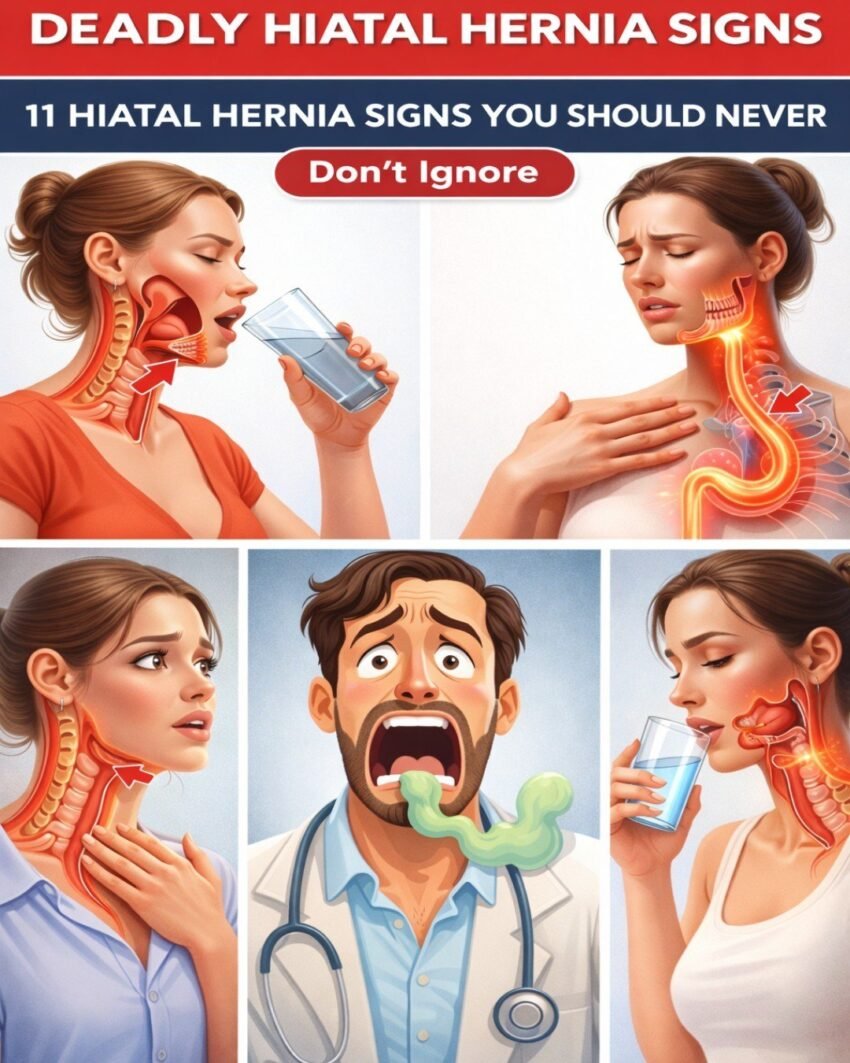
1. Heartburn
One of the most common symptoms of a hiatal hernia is heartburn. The hernia can cause stomach acid to flow back into the esophagus (acid reflux), leading to that familiar burning sensation in your chest or throat.
2. Regurgitation of Food or Sour Liquid
This happens when food or liquid, often accompanied by stomach acid, backs up into your throat or mouth, especially when lying down or after a meal.
3. Chest Pain
Although it’s not typically as severe as the pain from a heart attack, a hiatal hernia can cause discomfort or a feeling of tightness in the chest. This can sometimes be mistaken for heart-related pain.
4. Difficulty Swallowing (Dysphagia)
A hiatal hernia can make it harder to swallow food or liquids. You might feel like food gets stuck or experience a sensation of a lump in your throat.
5. Belching
Excessive burping or belching after meals can occur when a hiatal hernia is present. This is often caused by air that gets trapped in the stomach due to the hernia.
6. Nausea or Vomiting
Some people with a hiatal hernia feel nauseous or even vomit, especially after eating large meals or lying down shortly afterward. This can happen if food or stomach acid backs up into the esophagus.
7. Shortness of Breath
In some cases, the hernia can push on the diaphragm and cause difficulty breathing, especially when lying flat. This can lead to a sensation of shortness of breath or difficulty taking a deep breath.
8. Coughing or Wheezing
A hiatal hernia can also lead to persistent coughing, wheezing, or a hoarse voice, especially after eating. This happens when stomach acid irritates the esophagus and lungs, causing a reflexive cough.
9. Fatigue
Chronic acid reflux or discomfort from a hiatal hernia can disrupt sleep, which in turn can leave you feeling unusually tired or fatigued during the day.
10. Anemia
In severe cases, a hiatal hernia may cause bleeding in the esophagus, which could lead to anemia. Symptoms of anemia include fatigue, weakness, pale skin, and dizziness.
When to See a Doctor:
If you experience persistent or severe symptoms such as difficulty swallowing, chest pain, or unexplained weight loss, it’s important to consult with a healthcare professional. A hiatal hernia can often be managed with lifestyle changes, medications, or, in rare cases, surgery.