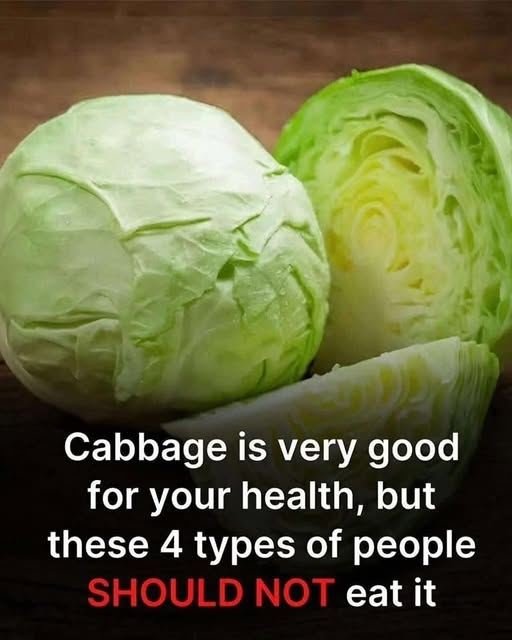
The 4 Types of People Who Shouldn’t Eat Cabbage (Or Should Be Careful)
Introduction
Cabbage is generally a very healthy vegetable—rich in fiber, vitamins C and K, and beneficial plant compounds. However, like many healthy foods, it may not be ideal for everyone in large amounts. Most concerns are about digestion, thyroid function, or specific medical conditions, not toxicity.
1. People With Thyroid Disorders (in large raw amounts)
Raw cabbage contains natural compounds called goitrogens, which can interfere with iodine use in the thyroid if consumed in very large quantities.
Who should be cautious:
- People with Hypothyroidism
- People with iodine deficiency
Important note:
- Normal cooked portions are generally safe
- Cooking significantly reduces goitrogen levels
2. People With Digestive Sensitivity (IBS or bloating issues)
Cabbage is high in fiber and certain fermentable carbohydrates.
Possible issues:
- Gas
- Bloating
- Abdominal discomfort
This is especially relevant for people with sensitive digestion or Irritable Bowel Syndrome.
3. People Taking Blood Thinners
Cabbage is rich in vitamin K, which plays a role in blood clotting.
Why it matters:
- Sudden changes in vitamin K intake may affect medication balance
- Important for people on drugs like warfarin
This does not mean cabbage must be avoided—just eaten consistently.
4. People Prone to Kidney Stones (in some cases)
Cabbage contains oxalates in small amounts.
Who should be careful:
- People with a history of calcium oxalate kidney stones
Reality:
- Cabbage is relatively low in oxalates compared to other foods
- Risk is generally low unless intake is excessive
Important Reality Check
- Cabbage is safe and healthy for most people
- Problems usually occur only with very large amounts or specific health conditions
- Cooking often reduces many potential digestive or thyroid-related concerns
When cabbage is beneficial
For most people, cabbage:
- Supports gut health (fiber)
- Provides antioxidants
- Helps heart health through nutrient density
- Supports weight management due to low calories
Conclusion
The idea that “four types of people shouldn’t eat cabbage” is an oversimplification. In reality:
- Most people can eat it safely
- A few groups may need moderation rather than avoidance
- Preparation (raw vs cooked) makes a big difference
If you want, I can also list who should be careful with other common vegetables like broccoli, spinach, or cauliflower.