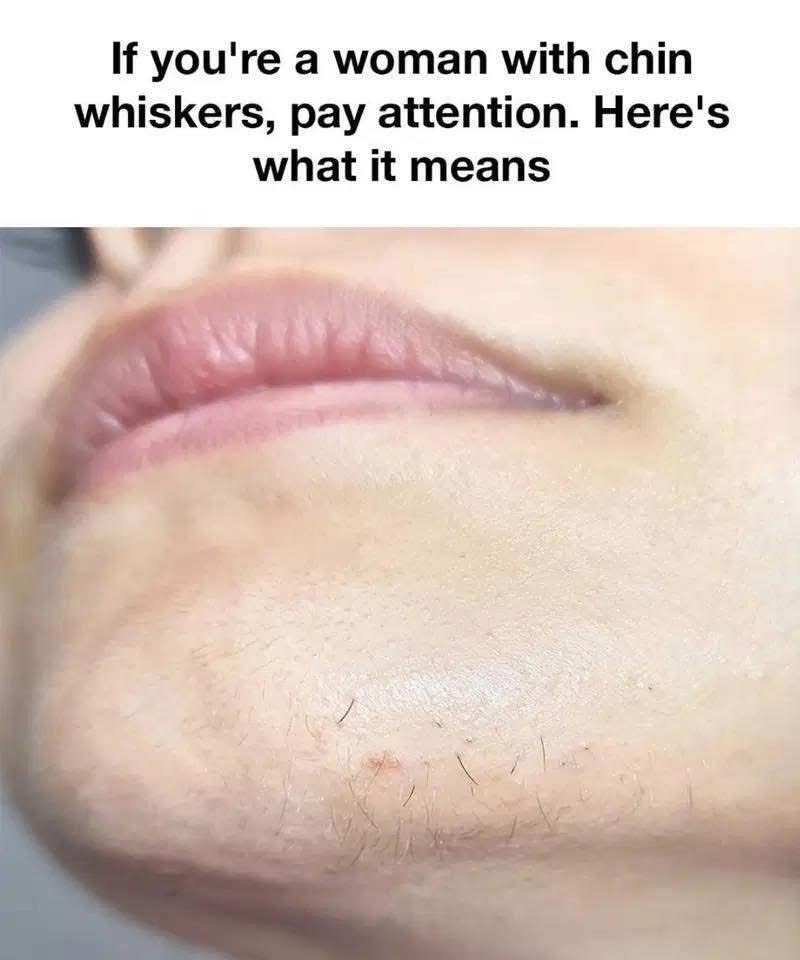
That headline is clickbait and overgeneralized. Chin hair in women is usually common and not a sign of a hidden serious problem in most cases.
What chin whiskers usually mean
Hirsutism is the medical term for excess hair growth in women in a male-like pattern (chin, upper lip, chest).
But having a few chin hairs does NOT automatically mean hirsutism or disease.
Most common causes
1. Normal aging and hormones
As women age (especially after 40–50):
- Estrogen levels slowly decrease
- Androgen effects become relatively more noticeable
- Coarse chin hair may appear
2. Genetics
- Very common in many families
- Some women naturally have more facial hair
- Not a health problem
3. Polycystic Ovary Syndrome (PCOS)
Polycystic Ovary Syndrome
May cause:
- Chin/face hair growth
- Irregular periods
- Acne
- Weight changes
This is one of the more common medical causes in younger women.
4. Hormonal imbalance (other causes)
- Thyroid problems
- Menopause-related changes
- Rare adrenal gland conditions
5. Medications (less common)
Some drugs can increase hair growth, such as:
- Certain steroids
- Some hormone-related medications
When chin hair is NOT a concern
It is usually harmless if:
- Growth is slow and mild
- No other symptoms are present
- It runs in the family
- It appears gradually with age
When to see a doctor
Get checked if chin hair comes with:
- Sudden increase in facial/body hair
- Irregular or missed periods
- Severe acne
- Deepening voice or other hormonal changes
What actually helps
- Gentle hair removal (threading, waxing, laser)
- Managing underlying hormonal issues if present
- Healthy weight and lifestyle (if PCOS-related)
Bottom line
Chin whiskers in women are usually normal and harmless, often related to genetics or aging. Only in some cases do they signal hormonal conditions like PCOS.
If you want, I can explain how to tell normal facial hair vs hormonal hirsutism in a simple checklist.